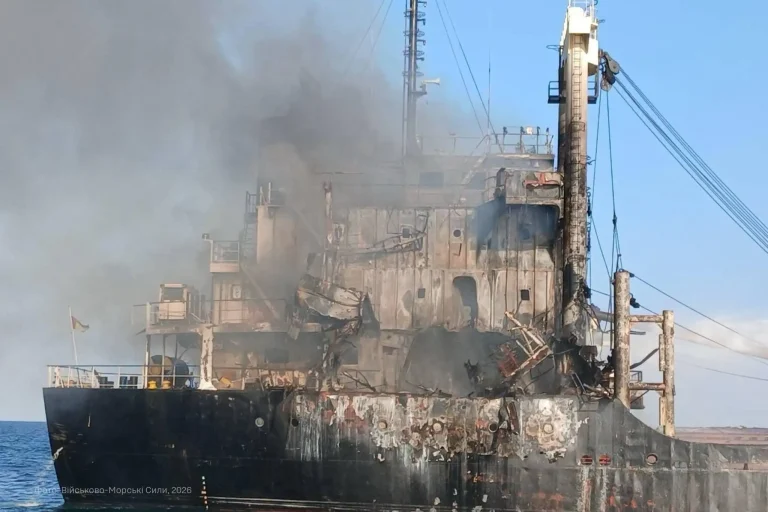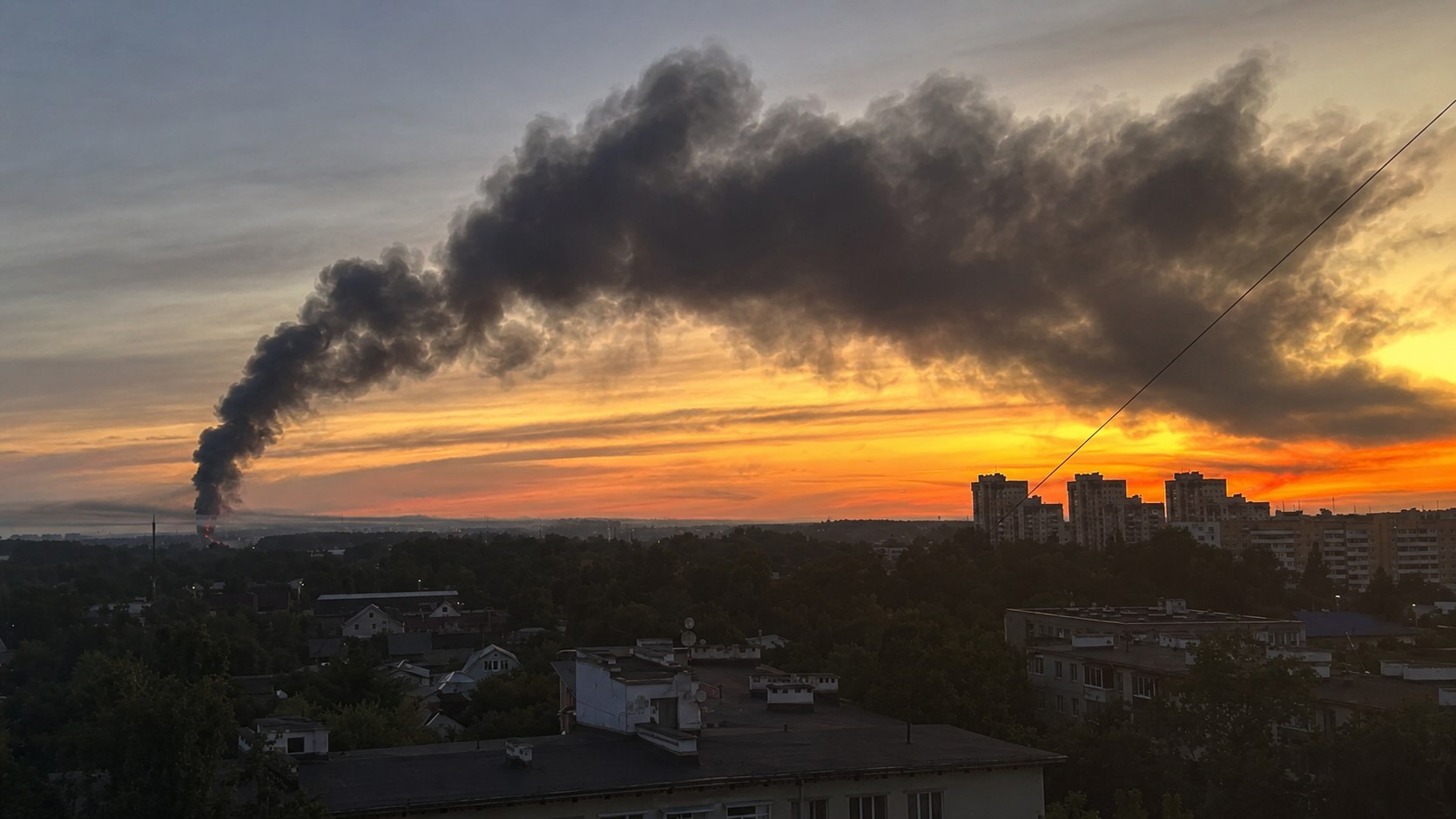
Ukraine launched more than 400 drones towards Moscow and other Russian regions, according to Associated Press, in one of the largest reported drone attacks of the war. Russian officials said many drones were intercepted, while fires and damage were reported around logistics and energy-related locations. Ukrainian President Volodymyr Zelenskyy said Ukrainian forces had struck logistical facilities and oil sites.
The exact damage claims remain difficult to verify independently. That caveat matters. Russian authorities have incentives to emphasise interceptions and civilian harm. Ukraine has incentives to highlight successful strikes on war-supporting infrastructure. The reliable analytical point is the scale and pattern: a mass drone operation aimed at forcing Russia to defend multiple categories of target around the capital region and beyond.
The attack follows recent strikes on warehouses and logistics facilities that Kyiv said supported Russian drone production and navigation systems. Earlier coverage of dual-use logistics strikes examined the difficulty of assessing facilities that may perform ordinary commercial functions while also serving the military supply chain. The 20 July attack appears to extend that logic through saturation.
Saturation is not only about overwhelming a radar screen. It is about forcing defensive choices. If drones are approaching Moscow, Podolsk, Domodedovo, oil depots and industrial sites, Russian commanders must allocate air-defence fire, electronic warfare and emergency response across a wide area. Some systems protect political prestige. Others protect fuel. Others protect logistics. The attacker wins if the defender cannot protect all of them efficiently.
This is why reported numbers matter. A handful of drones can be treated as a security incident. Hundreds become an air-defence management problem. Each track must be detected, identified, assigned and engaged or jammed. Even if most are destroyed, the defensive system has still consumed crew time, interceptor life, fuel, radar hours and emergency-service capacity.
Ukraine also appears to be using mass to create uncertainty about target value. Some drones may be aimed at high-value infrastructure. Others may force Russia to reveal air-defence locations, activate electronic-warfare systems or disperse resources. A drone does not need to reach its intended target to impose cost if it makes Russia spend scarce defensive effort.
The oil-and-logistics combination is operationally coherent. Oil depots and fuel infrastructure support the civilian economy and military mobility. Warehouses and industrial parks can support drone production, component distribution and sanctioned supply chains. Hitting both categories pressures Russia’s war economy from different directions.
Recent analysis of the Tu-95 loss at Engels-2 showed how Ukraine’s deep-strike campaign can threaten high-value military aircraft. The Moscow-region drone wave is different. It is less about a single strategic asset and more about the cumulative burden of defending an enormous rear area.
Russia’s response options are constrained. It can add short-range systems around more facilities, but that creates more demand for crews and ammunition. It can harden sites, but construction takes time. It can disperse warehouses and fuel stocks, but that reduces logistics efficiency. It can strike Ukraine in retaliation, but that does not remove the need to defend Russian territory.
The secondary-risk problem also grows with mass interception. Drones, interceptor fragments and cannon rounds can fall on roofs, roads and industrial facilities. Even successful defence can produce debris damage when engagements occur over populated regions. That creates political pressure inside Russia even when the military claims high interception rates.
Ukraine’s challenge is sustainability. A 400-drone operation requires production, planning, navigation, target intelligence and launch coordination. If Kyiv can repeat such attacks, Russia faces an enduring allocation crisis. If the attack is exceptional, Moscow may absorb it and adapt. The strategic significance will depend on frequency.
The 20 July strike therefore should not be measured only by confirmed destruction. Its broader effect is defensive disruption. Ukraine is testing whether Russia can protect Moscow, oil infrastructure, logistics nodes and military bases all at once against relatively low-cost unmanned systems. That is a harder problem than any single interception figure suggests.
The next indicator will be Russian adaptation. If more air-defence systems appear around warehouses, fuel depots and industrial parks, Ukraine will have forced Moscow to widen its defended-asset list. If Russia disperses stockpiles and moves logistics farther from the capital region, efficiency will suffer. If it does neither, Kyiv may see an opening for repeated raids. The strike’s real success will be measured by those follow-on choices.