Claims that Russia has supplied Iran with satellite imagery of US military installations in the Gulf remain unproven in their strongest form. Yet they are sufficiently credible to raise an uncomfortable strategic possibility: that Moscow may be helping Tehran monitor, assess and potentially target American military assets while remaining at a calculated distance from any direct confrontation with Washington.
The distinction matters. Satellite imagery is not necessarily the same as real-time targeting intelligence. Much of the physical infrastructure at major US bases is visible through commercial satellite services and open-source material. Images alone do not establish that Russia has provided missile coordinates, operational schedules or guidance data. Nor is there public evidence that Russian personnel have participated directly in the planning or execution of Iranian attacks.
But the allegation is more serious than an isolated claim circulating online. Ukraine’s President Volodymyr Zelenskyy has said that Ukrainian intelligence detected Russian satellites observing US military facilities and Gulf locations, with information subsequently reaching Iran. Reports have also suggested that Russian intelligence support may have included imagery useful both before attacks and afterwards, when military planners seek to determine whether targets were successfully struck.
If corroborated, such activity would point towards something more consequential than routine intelligence sharing. It could indicate the emergence of an intelligence-support cycle in which Russian satellites help identify changes in American force posture, Iranian planners use that information to refine their assessments, and further imagery assists with evaluating the effects of an attack.
For Moscow, the attraction would be obvious. Russia could impose costs on the US without firing on American forces itself. It could help a strategic partner challenge Washington’s military position in the Gulf while preserving a degree of deniability. The arrangement would also allow Russia to observe American air-defence systems, military responses and patterns of deployment from a position one step removed from the conflict.
The relationship between Moscow and Tehran has already moved well beyond diplomatic convenience. Iran’s supply of drones and military technology to Russia following the invasion of Ukraine helped cement a partnership built on shared hostility towards the western-led security order. Russia, in turn, has provided Iran with military expertise, diplomatic cover and growing technological support.
Satellite intelligence would be a logical extension of that relationship. It would also reflect a wider shift in modern conflict, in which the boundary between direct military action and indirect assistance has become increasingly difficult to define.
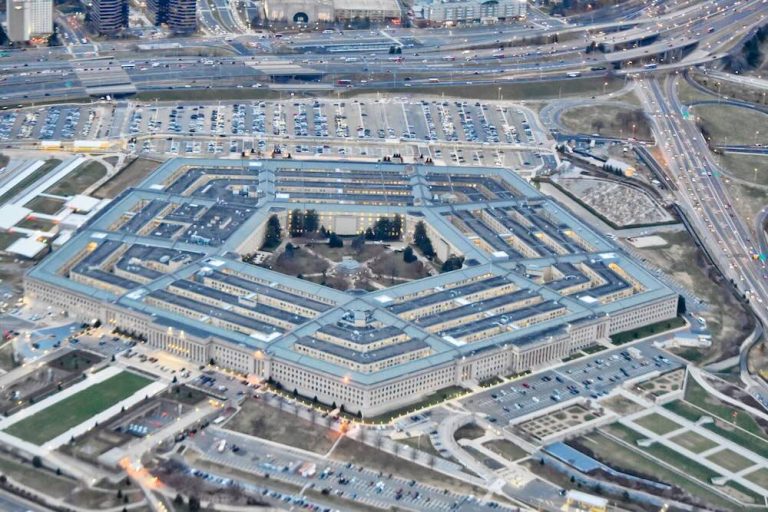
For the Pentagon, the immediate concern would not necessarily be that Russian imagery had revealed the location of a large airbase. Such installations are hardly secret. The greater danger would be the possibility that Moscow could provide more timely information about aircraft movements, changes in force concentration, the positioning of air-defence systems or vulnerabilities created by temporary operational adjustments.
Even imperfect intelligence can be valuable when combined with Iranian surveillance, regional networks and open-source data. The question would therefore not be whether Russian satellites alone enabled an attack, but whether they improved Iran’s ability to select targets, assess risks or exploit moments of weakness.
Such a finding would present Donald Trump with a particularly awkward political test.
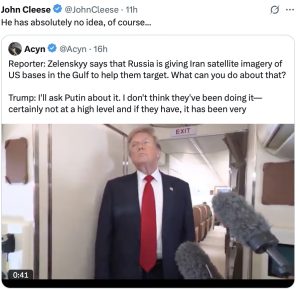
Trump has repeatedly portrayed himself as a president capable of restoring deterrence through unpredictability and strength. He has also argued that America’s adversaries respect force and that previous administrations allowed US power to be eroded. If credible evidence emerged that Russia had materially assisted Iranian efforts to threaten American military personnel or installations, pressure would grow for a visible response.
Yet Trump’s approach to Vladimir Putin has long been marked by an unusual reluctance to impose sustained personal or political costs on the Russian president. Even when criticising Moscow, Trump has often appeared more willing to seek accommodation than confrontation. He has repeatedly suggested that a direct relationship with Putin could produce diplomatic results that conventional western pressure had failed to achieve.
That instinct could become difficult to sustain if Russia were shown to be assisting a state or proxy network targeting US assets.
The president would face competing pressures. A forceful response could include new sanctions, restrictions on Russian space and intelligence-related entities, cyber measures or a strengthened American military presence in the Gulf. Washington could also seek to expose Russian intelligence activity publicly, increasing the diplomatic and reputational cost to Moscow.
But each option would carry risks. A direct military response against Russian assets could produce a dangerous escalation between nuclear powers. Broad sanctions might have limited effect after years of economic restrictions. Publicly disclosing intelligence could compromise sensitive collection methods. And a response that appeared too limited could invite accusations that Moscow had discovered a way to threaten American interests through Iran without facing meaningful consequences.
Trump’s personal relationship with Putin would make the political calculation more complicated. If the allegations proved true, the president could find it difficult to preserve his established preference for engagement without appearing to excuse behaviour directed against US military interests. His critics would argue that reluctance to confront Putin had created an opening for Russia to test American resolve indirectly.
The White House might instead attempt to separate the issues: confronting Iran while maintaining dialogue with Moscow. Such an approach could be presented as pragmatic, particularly if the administration believed Russian intelligence assistance had been limited or ambiguous. But it would risk treating the symptom while leaving the alleged source of support untouched.
The broader implication is that Russia and Iran may be developing a model of strategic cooperation designed to exploit the gaps between peace and war. Moscow can provide technology, intelligence and political support; Tehran can apply pressure in regions where Russia prefers not to act openly. Both benefit from complicating American decision-making while avoiding the immediate consequences of a direct clash.
That model is not without danger for Russia. If evidence of operational intelligence-sharing became incontrovertible, Moscow could lose the ability to portray itself as a detached observer of regional conflict. It could also encourage Washington and its allies to treat Russian support for Iran as part of a single, integrated security challenge.
For now, the evidence available publicly does not establish that Russia directly enabled specific Iranian attacks. The claims require further corroboration, and the difference between imagery, intelligence support and operational participation should not be blurred.
But the strategic question is already clear. If Russia is helping Iran monitor American military assets, Washington is confronting more than a regional threat. It is facing a potentially coordinated challenge in which one adversary supplies information while another applies pressure.
For Trump, that could become a test not only of deterrence but of political consistency. A president who has promised to project strength may soon have to decide whether that strength extends to confronting Putin when Russian actions threaten American forces indirectly.
His response — or reluctance to respond — could shape how both Moscow and Tehran judge the limits of US power.