

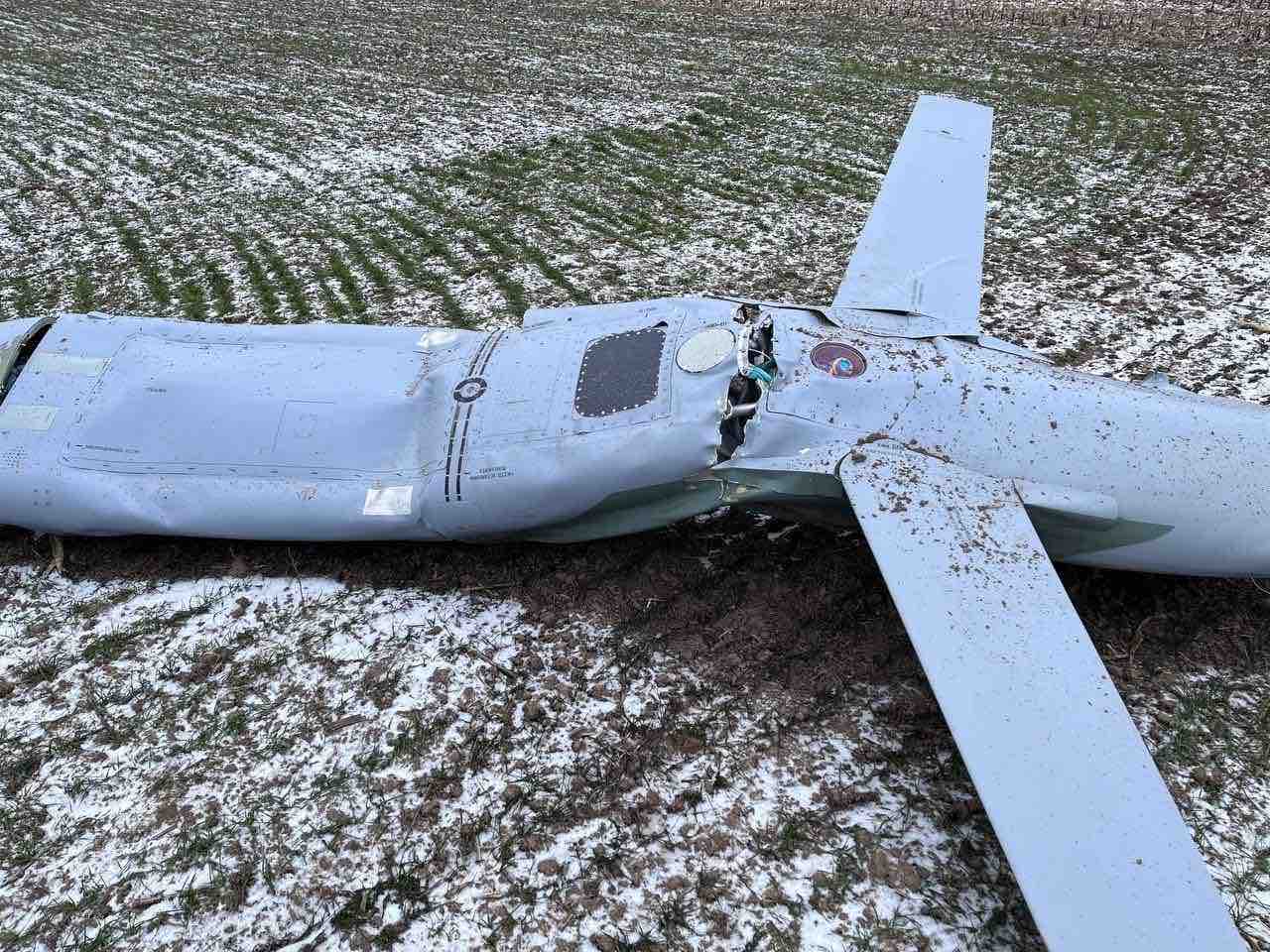
A suspected Kh-101 crossed a monitored allied frontier and reached the ground, raising harder operational questions than the familiar debate over Article 5.
A cruise missile believed by Warsaw to be a Russian Kh-101 crossed into Poland during an attack on Ukraine and struck the ground, leaving a crater about 10 metres wide.
Polish authorities said the object was detected at 03:40 local time on 30 July. Fighters were deployed, NATO was informed and police secured the impact site. Prime Minister Donald Tusk said there was no evidence that Poland had been deliberately targeted.
That distinction is essential. An airspace violation and physical impact on allied territory are serious without being evidence of a planned Russian attack on Poland. Attribution, intent and effect must be established before political conclusions are drawn.
The operational question is more immediate. A long-range cruise missile entered a NATO member’s airspace, was tracked and nevertheless reached the ground. The incident therefore tests detection, command authority and the practical ability to engage a low-flying target close to a border, as Reuters reported from Poland.
The Kh-101 is an air-launched cruise missile designed for long-range precision strikes. Unlike a ballistic missile, which follows a high and comparatively fast trajectory, a cruise missile can fly at lower altitude and manoeuvre along a programmed route.
Low flight reduces the distance at which ground radar can see a target because terrain and the curvature of the earth obstruct the line of sight. A missile approaching through valleys or cluttered border terrain can appear late in an engagement cycle.
Poland’s statement that the object was detected is therefore only the beginning of the analysis. Investigators and commanders will need to establish when its track became reliable, whether it was continuously followed, which aircraft or surface-based systems were within range, and how much time remained for a decision.
An air-defence operator must distinguish a missile from aircraft, drones, debris and friendly weapons. Engagement also requires a safe firing solution. A fighter may be unable to attack without sending wreckage towards a populated area; a surface-to-air missile may create the same problem.
The absence of an interception does not by itself prove that crews or equipment failed. It does show that the existing system did not prevent an impact.
Russia’s attacks on western Ukraine often bring missiles and drones close to NATO territory. A weapon may briefly cross a border because of a navigation error, defensive interference, damage or a route intended to avoid Ukrainian air defences.
That creates a difficult command problem. If an object is expected to return to Ukrainian airspace within seconds, firing may increase risk on Polish territory without protecting a Polish target. Waiting to understand the trajectory can leave too little time when the object instead continues inland.
Rules of engagement must consequently define more than whether a target is “hostile”. They need clear thresholds based on direction, speed, identification and predicted impact. Authority must sit at a level able to decide quickly.
NATO’s integrated air and missile defence structure connects national sensors and forces, but the protection of national airspace still depends on assets that are available in the right place. Fighters offer mobility and visual identification; ground systems provide persistent coverage. Neither can be everywhere.
Poland has invested heavily in Patriot batteries, shorter-range air defence, aircraft and sensors. The impact demonstrates why layered coverage and command integration matter as much as the acquisition of individual platforms.
Public discussion rapidly turns to NATO’s collective-defence clause whenever a Russian weapon enters allied territory. Article 5 is a political commitment to respond to an armed attack, not a mechanical switch activated by every breach or fragment.
Allies would consider the facts, including intent, scale, damage and whether the incident formed part of a continuing attack. Poland can also request consultations under Article 4 if it believes its security is threatened.
Warsaw’s initial statement that there was no evidence of deliberate targeting reduces the immediate case for treating the event as an armed attack on Poland. It does not make the incursion acceptable or remove the need for a response.
NATO can respond below the Article 5 threshold through surveillance, air-defence reinforcement, changes to alert status, diplomatic protest and assistance with investigation. The objective should be to reduce the chance of another impact without converting uncertain intent into uncontrolled escalation.
Defence Matters has reported on Romania’s repeated engagement of unauthorised drones. The Polish incident involves a different threat class.
One-way attack drones are generally slower and may be cheaper to intercept with aircraft or short-range systems, although their small signature is difficult to detect. A cruise missile travels faster, may manoeuvre and carries a more destructive warhead.
The cost of failure is consequently higher, while the time available to identify and engage is shorter. A missile’s approach may also be embedded within a larger Russian strike intended to saturate Ukrainian defences, creating many tracks and competing priorities.
NATO’s eastern members need procedures that account for both types of target rather than treating all spillover as the same air-policing problem.
Recovery of debris should allow Polish specialists to examine markings, electronics, warhead condition and flight-system components. The crater and distribution of wreckage may help determine whether the missile detonated normally, broke apart or was damaged before impact.
Radar data should establish the route and the point at which the object crossed the border. Poland will also want to compare its track with Ukrainian and allied sensor records.
Several questions require public answers where security permits:
A factual explanation will strengthen deterrence more than speculation. If there was a coverage gap, it should be addressed. If commanders deliberately withheld fire because interception presented greater danger, the logic should be explained without disclosing sensitive procedures.
Russia’s large-scale attacks will continue to place pressure on the border unless the campaign ends or Ukraine’s own interception capacity improves substantially. Poland and other allies must therefore plan for repeated incursions, not a unique accident.
That means persistent low-altitude surveillance, rapid information exchange with Ukraine, pre-authorised engagement criteria and sufficient short-range systems to complement expensive interceptors and fighters.
The missile’s impact did not automatically create a collective-defence crisis. It did something operationally more useful: it exposed the distance between detecting a threat and defeating it.
Polish authorities avoided premature claims about Russian intent. NATO should apply the same discipline while examining why a weapon associated with an attack on Ukraine was able to cross an allied frontier and reach the ground. The answer will determine whether the next warning produces an interception rather than another crater.
Main Image: – https://www.facebook.com/photo/?



Britain’s Consistent Message on Ukraine Carries Growing Weight at the OSCE