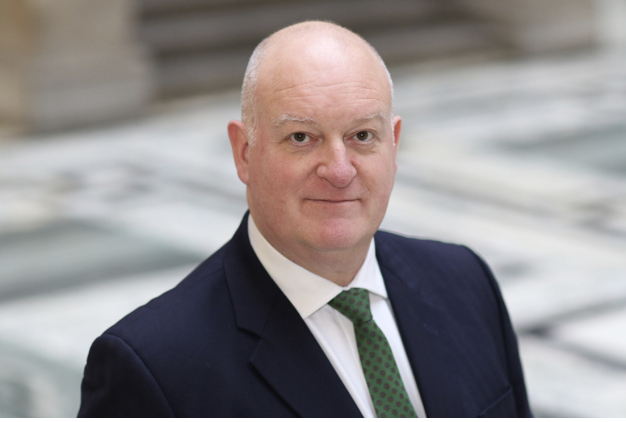
Speaking on behalf of the United Kingdom, Ambassador Neil Holland returned to a theme that has become a defining feature of British diplomacy since Russia’s full-scale invasion of Ukraine in 2022: wars of conquest cannot be normalised, and the principles underpinning Europe’s post-Cold War order remain worth defending.
The speech was notable not for rhetorical flourish but for its consistency. Rather than becoming entangled in competing historical narratives promoted by Moscow, Holland focused on a simple proposition—that sovereign states have the right to determine their own future, free from military coercion. That principle, he argued, lies at the heart of both the OSCE and the wider international system.
It is a message the ambassador has delivered repeatedly over recent months. Whether addressing ceasefire proposals, civilian casualties or Russia’s diplomatic narratives, Holland has maintained a remarkably consistent position: Britain supports Ukraine because it supports international law, not because it seeks confrontation with Russia. Equally consistent has been his criticism of Vladimir Putin’s government, which he has repeatedly accused of violating commitments that Russia itself accepted through the OSCE framework.
Such consistency matters. Diplomacy is often judged by dramatic breakthroughs, yet much of its real value lies in predictability. Allies draw confidence from knowing where partners stand, while adversaries understand that certain principles are unlikely to become bargaining chips. Britain’s messaging under Holland has reflected precisely that approach.
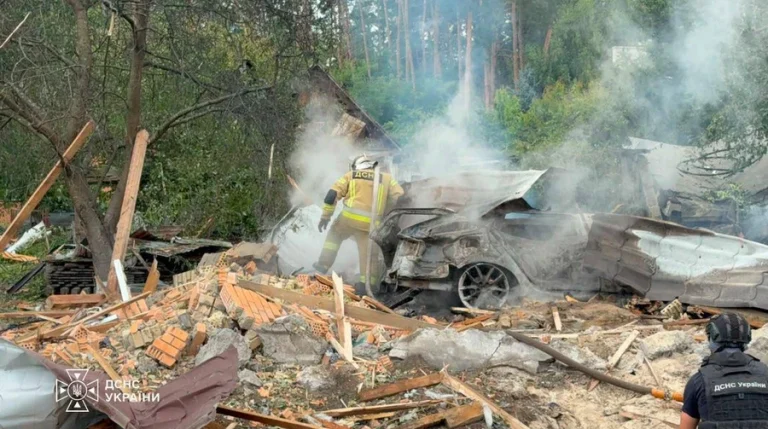
The latest statement rejected familiar Russian claims that Western military assistance somehow caused or escalated the conflict. Instead, it returned responsibility squarely to Moscow’s decision first to annex Crimea in 2014 and later to launch its full-scale invasion in February 2022. Support for Ukraine, Holland argued, represents a defensive response to aggression rather than its cause.
The historical context is equally important. Russia’s neighbours have repeatedly found themselves confronting pressure from Moscow whenever they have sought closer integration with European institutions or pursued independent foreign policies. Georgia in 2008, Ukraine since 2014 and, more broadly, repeated political pressure across Eastern Europe have reinforced concerns that the Kremlin continues to view neighbouring states through the outdated prism of spheres of influence rather than sovereign equality.
That is precisely the framework the OSCE was created to replace.
Following the Helsinki Final Act of 1975 and later the Charter of Paris, participating states committed themselves to respecting territorial integrity, refraining from the use of force and recognising every nation’s sovereign right to determine its own security arrangements. Britain’s argument is therefore not that new rules should be invented for Russia, but that existing ones should simply be observed.
Holland’s interventions have consistently reflected that institutional logic. Rather than relying on inflammatory language, he has framed Britain’s position as one rooted in obligations already accepted by every participating state, including Russia itself. That measured approach arguably enhances the credibility of London’s diplomacy.
At a time when political debate frequently rewards the loudest voice, Holland has instead demonstrated the value of disciplined consistency. His statements have repeatedly distinguished between criticism of the Kremlin and hostility towards the Russian people—a distinction that helps preserve the UK’s broader commitment to international engagement while maintaining pressure on Putin’s government.
For Ukraine, such diplomatic backing remains significant.
Military assistance inevitably attracts greater headlines, yet sustained political support across international institutions helps preserve the legitimacy of Kyiv’s position. Every reaffirmation that Ukraine’s borders remain internationally recognised, every rejection of territorial conquest and every reminder that international law continues to apply contributes to the wider coalition supporting Ukraine’s defence.
The OSCE itself has often appeared overshadowed by NATO, the European Union and the United Nations during the war. Nevertheless, it remains one of the few forums where Russia and Western governments continue to confront one another directly across the diplomatic table. Statements delivered there therefore serve not only to persuade but also to establish an enduring public record of competing interpretations of the conflict.
Britain has made clear which interpretation it supports.
Holland’s speeches over the past year have formed a coherent body of diplomatic argument: Russia initiated the war; Ukraine retains the right to defend itself under the UN Charter; international support for Kyiv is both lawful and necessary; and any lasting peace must rest upon respect for sovereignty rather than the acceptance of territorial conquest.
Whether such arguments influence Kremlin decision-making is another matter. Few observers believe speeches alone alter strategic calculations in Moscow.
Their value lies elsewhere. They reassure allies, strengthen international consensus and demonstrate that support for Ukraine remains grounded in enduring principles rather than transient political moods.
As the war enters another difficult phase, that steady diplomacy may prove every bit as important as the more visible military and economic assistance provided by Ukraine’s partners.
Ambassador Neil Holland’s latest intervention offers little that is new in substance—but perhaps that is precisely its strength. In an era characterised by shifting political winds, Britain’s message has remained strikingly consistent: sovereignty matters, aggression cannot be rewarded, and Vladimir Putin’s government—not Ukraine, NATO or the West—bears responsibility for Europe’s gravest security crisis in generations.
The West Cannot Afford to Flinch: Ukraine’s Fight Is Our Fight