Rome has disclosed a 400-strong air-force deployment across Saudi Arabia, Kuwait and Bahrain, including four Eurofighters, airborne surveillance, radar and counter-drone systems.
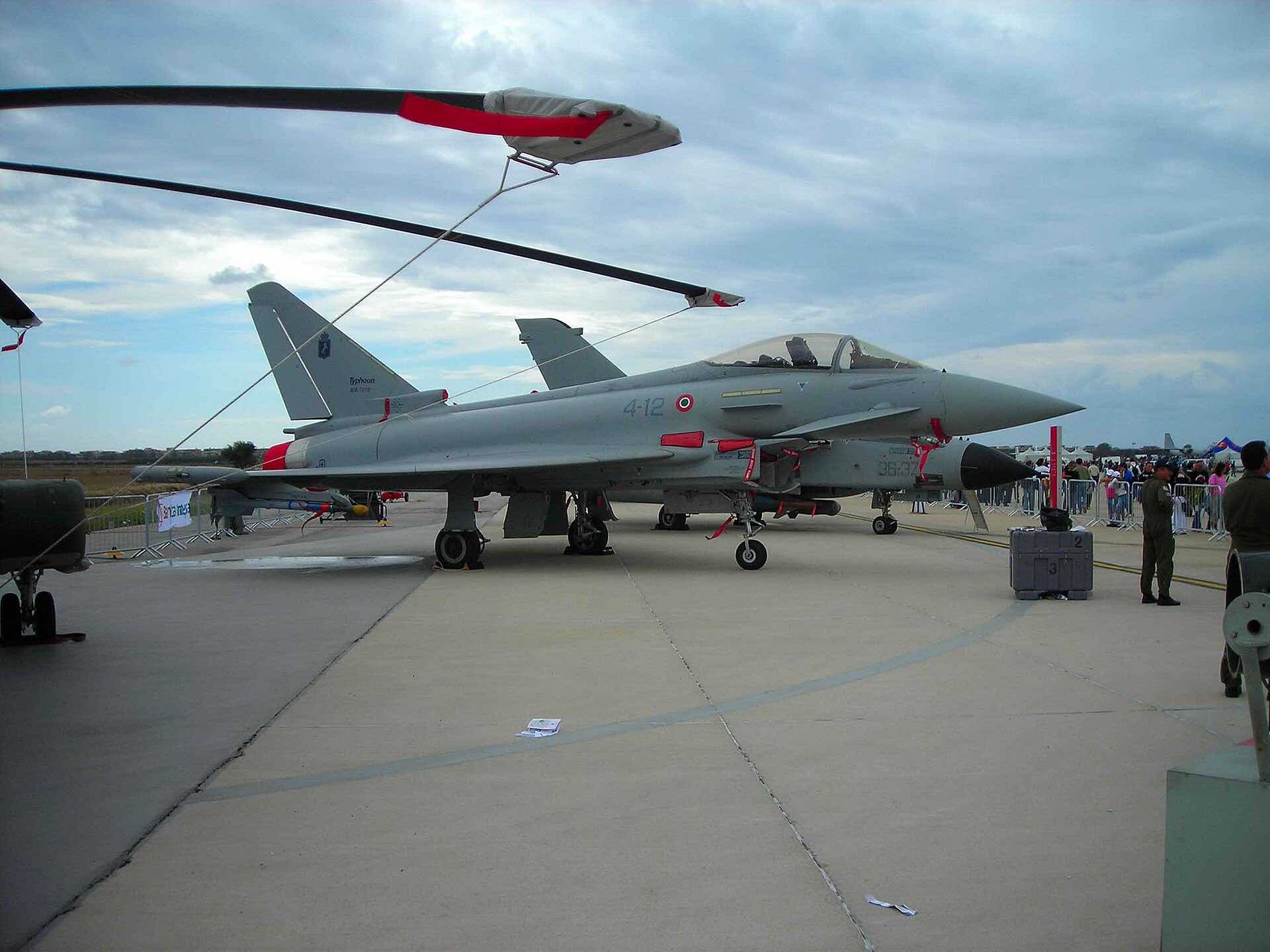
The Italian defence ministry’s operational description shows that Task Force Air–Arabia is considerably more than a liaison or training contingent. It includes four Eurofighter F-2000A aircraft assigned to air-defence duties, an E-550A airborne early-warning aircraft, C-130J and KC-130J transport and refuelling aircraft, an AN/TPS-77 air-defence radar and an ACUS-E counter-drone system.
Together, those assets provide surveillance, command and control, tactical transport and the ability to respond to crewed aircraft and small unmanned systems. The force is distributed across three countries rather than concentrated at a single base.
The deployment grew out of the regional military emergency earlier in 2026. Defence Minister Guido Crosetto told parliament in March that 239 personnel were being moved from Kuwait to Saudi Arabia, leaving 82 in Kuwait. The government presented the move as protection for Italian contingents and support for friendly Gulf states rather than participation in offensive action.
That distinction is politically and legally important. Italy’s overseas missions are subject to parliamentary authorisation, including stated locations, objectives, force levels and financial provision. A rapid redistribution during a crisis may be operationally necessary, but parliament must still be able to determine whether it remains within an approved mission or amounts to a materially new deployment.
The official task-force page confirms the current multinational footprint and major equipment categories. It does not by itself identify the precise parliamentary provision authorising every activity in Saudi Arabia or explain how the force’s rules of engagement differ among the three host countries.
Nor does the disclosed list confirm the deployment of a SAMP/T surface-to-air missile battery. Claims that such a system is present should therefore not be stated as fact without a ministry document or parliamentary record.
The operational case for the deployment is clear. Gulf bases, ports and energy infrastructure have faced missile and drone threats, while European governments have sought to protect their citizens and forces without entering a wider war. Italy’s E-550A and Eurofighters can contribute to a shared air picture and defensive patrols; the counter-drone system addresses the lower-cost threat posed by small unmanned aircraft.
The capability cost is less visible. Aircraft and specialist personnel committed to the Gulf are unavailable for other national or NATO tasks. Sustaining them also requires maintenance, transport, secure communications and access agreements that may extend beyond the headline force total.
Parliamentary scrutiny need not prevent operational flexibility. Its purpose is to establish the limits of that flexibility: where Italian forces may operate, what missions they may perform and when a change in circumstances requires a new vote.
Rome should therefore publish a direct cross-reference between the disclosed Task Force Air–Arabia structure and the 2026 mission authorisation. That would allow the public to distinguish a redistribution within an approved mandate from an expansion that requires further parliamentary consent.