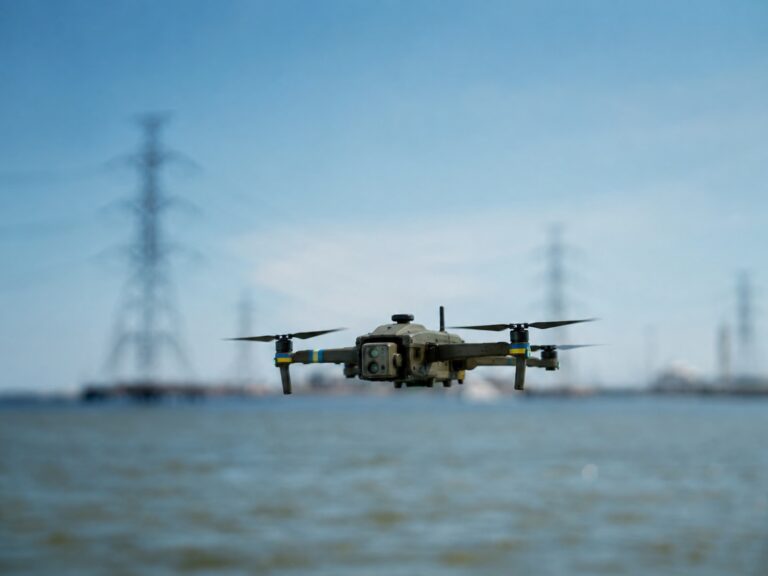
That equation has changed—not because rival nations have matched Washington’s technological superiority, but because inexpensive drones have rewritten the economics of warfare.
The latest evidence comes from the U.S. Army’s search for what it calls the Next Generation Counter-small Unmanned Aircraft System Missile (NGCM), a new interceptor specifically designed to defeat drones while costing less than $150,000 per round. The requirement is simple in principle but hugely significant in practice: stop spending millions of dollars destroying aircraft that may themselves cost only tens of thousands.
The programme illustrates a lesson that has been reinforced repeatedly in Ukraine, the Red Sea and during recent American operations in the Middle East. Modern conflict is increasingly becoming a contest not merely of technology, but of financial sustainability.
No military, however wealthy, can indefinitely fire multimillion-dollar interceptors at disposable drones produced in factories by the thousand.
That reality explains why the Army’s latest request to industry focuses almost as much on affordability as performance.
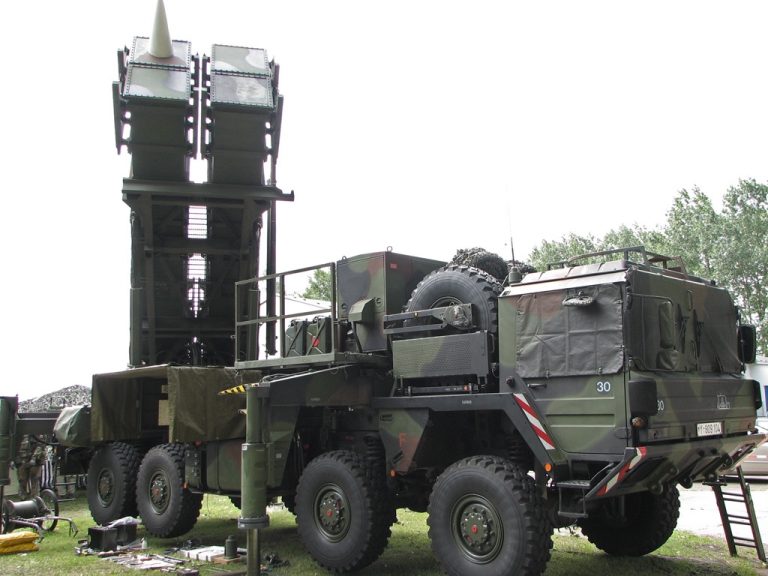
The proposed missile must be capable of engaging Group 2 and Group 3 unmanned aircraft at extended ranges while launching from the Army’s existing Raytheon-built Coyote launcher with little or no modification. It must also react rapidly, leaving the launcher within five seconds of operator command, while integrating into existing American air-defence networks.
Rather than reinvent the entire system, the Army wants evolution instead of revolution.
That makes strategic sense.
Replacing launch infrastructure across the force would consume years and billions of dollars. Developing a missile compatible with equipment already fielded dramatically accelerates deployment while reducing procurement costs.
Yet compatibility is only part of the story.
The real challenge is cost.
The Army hopes eventually to purchase at least 5,000 missiles, each priced below $150,000. Even that figure exceeds the value of many commercially adapted drones seen on today’s battlefields, but it represents a dramatic improvement over relying on interceptors originally designed to destroy fast jets, cruise missiles or ballistic missiles.
The changing character of warfare has exposed an uncomfortable truth for Western militaries.
For decades, air defence planning assumed relatively small numbers of high-value targets. Today’s threats arrive in swarms.
An adversary capable of launching hundreds of inexpensive drones simultaneously forces defenders into impossible calculations. Every interception consumes valuable missile stocks while imposing financial costs vastly greater than those borne by the attacker.
Russia’s extensive use of Iranian-designed Shahed drones against Ukraine demonstrated this imbalance. Similar challenges have confronted American naval forces operating against Houthi attacks in the Red Sea and U.S. bases throughout the Middle East.
Quantity has become a weapon in itself.
The Pentagon therefore finds itself pursuing multiple solutions simultaneously.
Cheaper missiles represent one answer.
Electronic warfare offers another.
High-energy lasers, microwave weapons and artificial intelligence-assisted detection systems are also receiving increasing investment, reflecting recognition that future air defence cannot depend exclusively upon kinetic interceptors.
Nevertheless, missiles remain indispensable.
Weather affects lasers. Electronic warfare cannot always guarantee success against autonomous drones operating without continuous communications. Ultimately, many targets still require physical destruction.
The NGCM seeks to provide exactly that capability without exhausting defence budgets.
For defence manufacturers, the Army’s request presents a considerable commercial opportunity.
The procurement notice is formally a request for information rather than a contract, allowing officials to gauge industrial capability before launching a competitive acquisition programme. But given the urgency surrounding counter-drone technology, few doubt that serious procurement will follow.
American defence firms already understand where Pentagon priorities are heading.
The emphasis is shifting away from exquisite, low-volume weapons towards systems capable of being manufactured quickly, in large quantities and at manageable cost.
This represents a philosophical change as much as an engineering one.
During the Cold War, quality was expected to overcome quantity.
Today’s conflicts suggest both are necessary.
The Army’s search for an affordable anti-drone missile therefore reflects something much larger than another acquisition programme.
It symbolises the emergence of an entirely new military economy.
Future wars are unlikely to be won solely by whichever nation possesses the most advanced technology. They may instead favour those able to sustain production, replace losses rapidly and maintain favourable cost ratios over prolonged campaigns.
The age of the drone has not diminished the importance of missile defence.
It has simply forced militaries to rethink what victory costs—and whether they can continue to afford it.