A seven-year award to Raytheon converts an earlier production framework into a firm procurement vehicle, but the stated increase from about 60 missiles a year to more than 1,000 remains a future industrial objective rather than an immediate delivery rate.
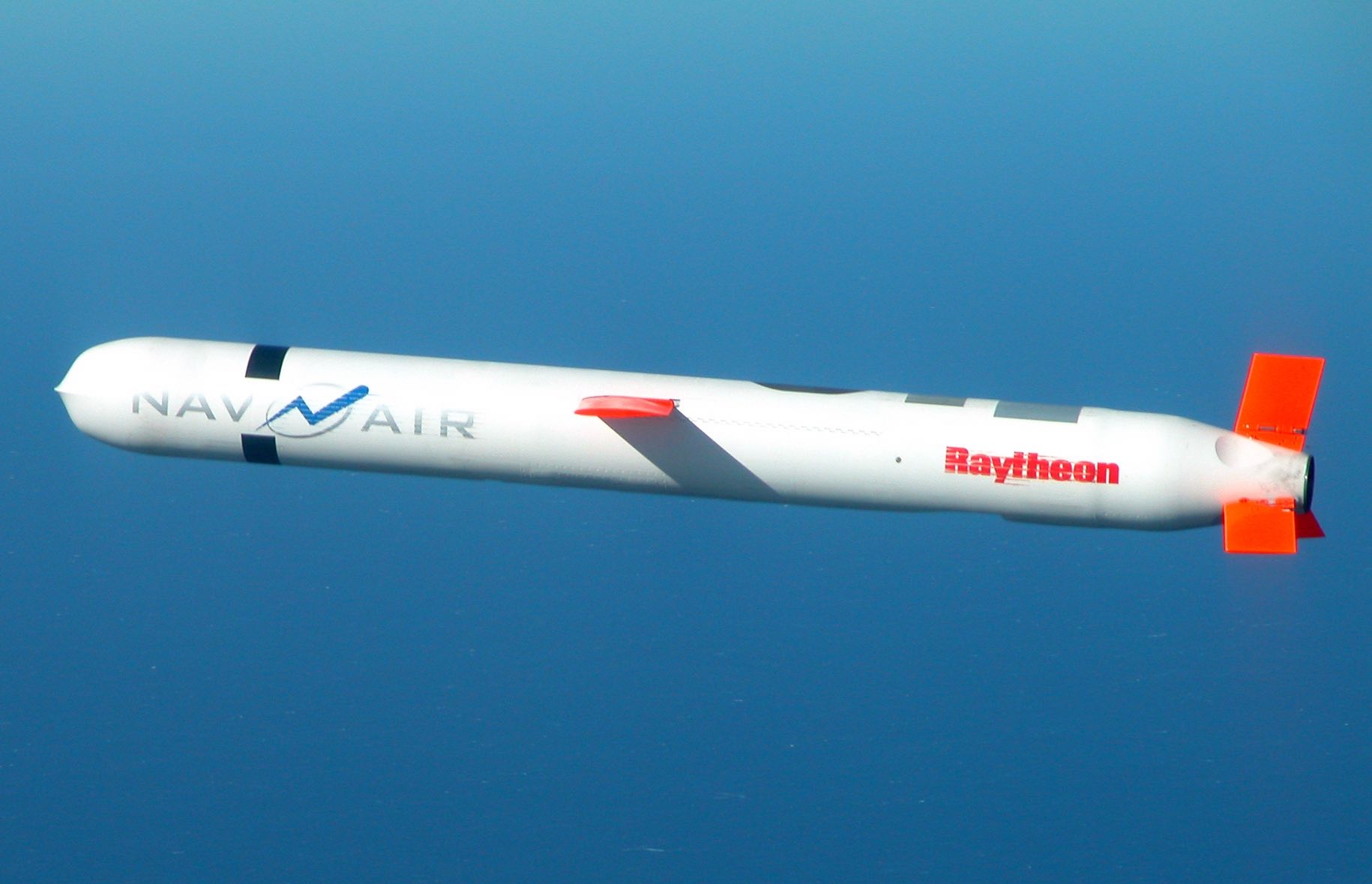
The US Navy has awarded Raytheon a seven-year Tomahawk contract valued at up to $22.9 billion as the Pentagon seeks to expand annual production of the long-range cruise missile from about 60 to more than 1,000.
The Navy announced the award on 17 August, converting a framework agreed with Raytheon in February into a formal procurement commitment.
Raytheon, a business of RTX, says the arrangement will support capacity above 1,000 missiles a year. That figure describes the scale the production system is intended to reach; it is not the number of Tomahawks currently leaving the line or a guarantee that inventories will be restored immediately.
The size of the intended increase—more than an order of magnitude from the present rate—makes the award a test of whether the US defence-industrial base can move a complex precision weapon from low-volume production towards wartime-scale replenishment.
Money and purchasing authority are necessary, but they do not produce missiles on their own. Raytheon and the Navy will need to expand tooling, recruit and train workers, qualify additional suppliers and secure long-lead components without lowering safety or quality standards.
Tomahawk production depends on propulsion, guidance, electronics, warheads, airframes and specialised materials supplied through a network of companies. The slowest constrained component can determine the output of the entire line.
Moving from roughly five missiles a month to more than 80 would also require a different approach to testing and acceptance. Processes designed for small batches must be scaled while maintaining configuration control and reliability across weapons expected to remain stored for long periods before use.
The seven-year duration matters because suppliers are less likely to invest in facilities and staff for a short order that may disappear. A longer demand signal can support capital spending and multi-year purchasing of materials.
It does not eliminate execution risk. New production capacity can take years to commission, and the Navy must compete with other missile programmes for skilled labour, motors, electronics and energetics.
Defence Matters reported on 5 August that US missile use in the Iran war was raising questions about long-range inventories and replacement capacity.
The new award is a concrete response to that problem. Tomahawk gives US surface ships and submarines a long-range land-attack option without requiring aircraft to enter defended airspace. Availability affects both American strike planning and the ability to supply allies approved to acquire the missile.
Demand is also broadening. Germany’s planned Tomahawk purchase adds an allied requirement to a production base already expected to replace US expenditure and support future force plans.
The contract value should not be read as money spent in a single year. Large defence awards commonly establish a ceiling and ordering structure under which funding and deliveries are placed over time. The pace will depend on annual orders, appropriations and successful expansion of the line.
The most useful indicators will therefore be production milestones: facility investment, supplier awards, qualified second sources and the first sustained increase in accepted missiles.
If Raytheon reaches output above 1,000 a year, the result would alter the replenishment equation for one of the West’s most important long-range weapons. Until then, the award is best understood as a funded industrial mobilisation programme—not evidence that the stockpile problem has already been solved.