The newly disclosed missile is intended for fourth-, fifth- and sixth-generation aircraft and has more than twice the published range of the AIM-120D. Its operational value, however, will depend as much on targeting networks and endgame performance as on its headline reach.
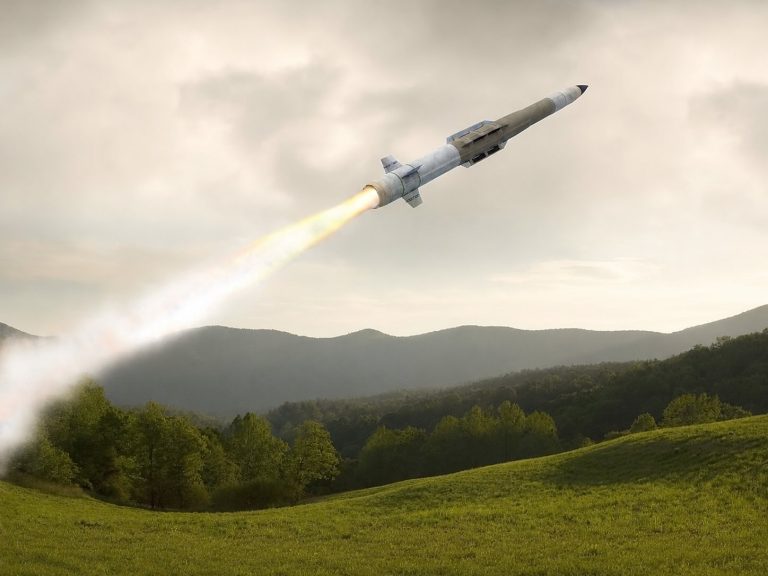
The Navy’s newly published fact file describes the Raytheon-built missile as a next-generation system for fourth-, fifth- and sixth-generation aircraft. It gives a launch weight of 1,500lb, or about 680kg, a length of 4.11 metres and a blast-fragmentation warhead.
Those dimensions place Malice in a different physical class from the AIM-120 AMRAAM carried in large numbers by US and allied fighters. The Navy’s published range is also more than twice the publicly stated reach commonly associated with the AIM-120D, although range comparisons are inherently conditional: launch altitude and speed, target behaviour and the amount of energy required for the terminal phase can all change the useful engagement envelope.
The most important new fact is not simply that a very-long-range US air-to-air programme exists. It is that the Navy has now attached an official designation, manufacturer, dimensions and a minimum range claim to it, while confirming that the weapon is being designed across several aircraft generations.
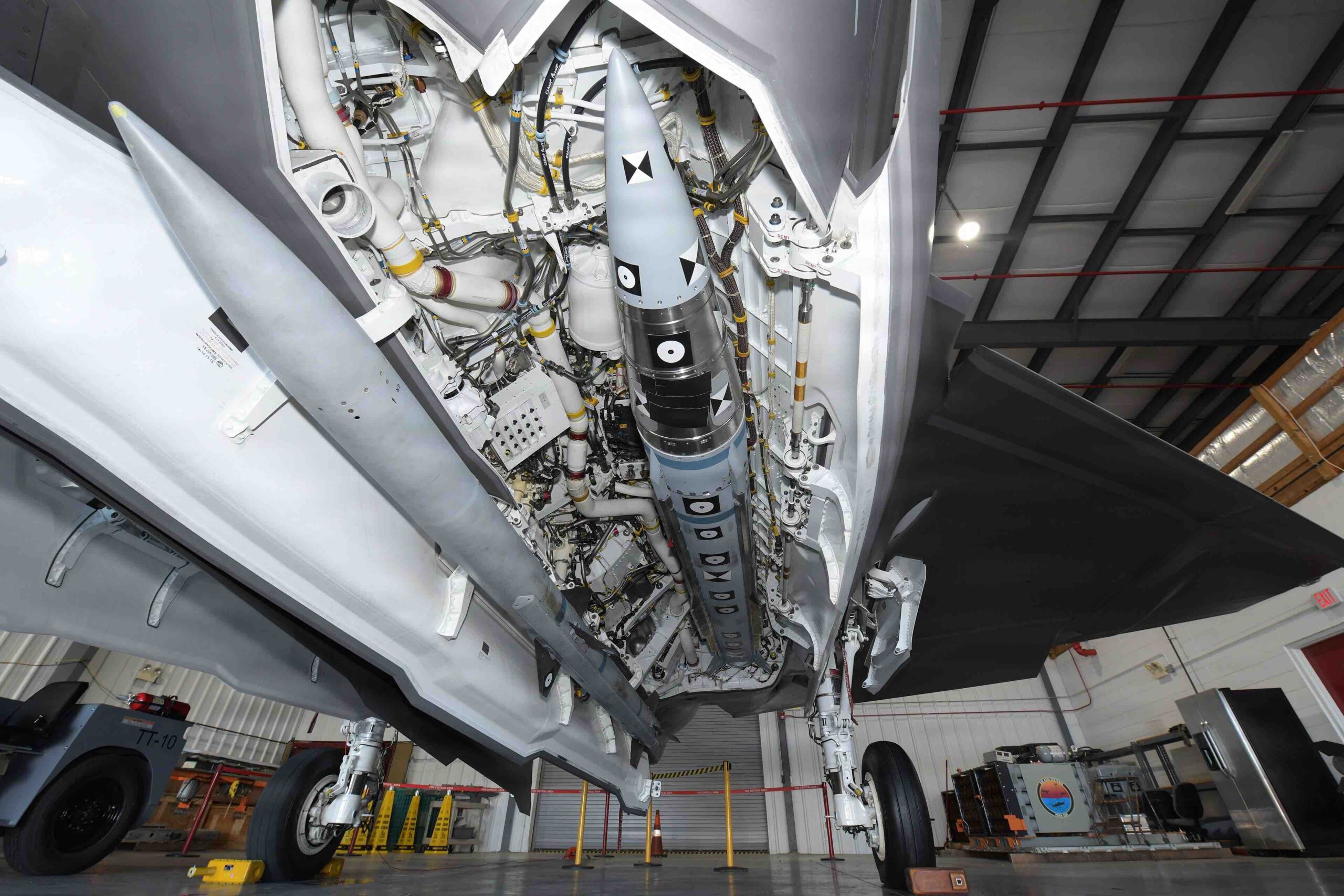
Images and programme information assembled by The War Zone show Malice in testing with an F/A-18E/F Super Hornet and sized for internal carriage by the carrier-based F-35C. The same report identifies the future F/A-XX as another intended platform and, citing earlier specialist reporting, describes a two-stage propulsion arrangement. The Navy’s own fact file does not specify the propulsion architecture, seeker, maximum speed or testing schedule.
For a carrier strike group, a missile in this range class could help move the defensive battle away from the ships it is protecting. One demanding mission would be to threaten bombers before they release long-range anti-ship missiles. Other potential targets include high-value surveillance, command-and-control and refuelling aircraft operating behind a fighter screen.
That logic is particularly relevant in the Indo-Pacific, where the United States must contend with a large and expanding Chinese inventory of long-range air-launched and surface-launched weapons. Defence Matters has examined how sustained Chinese military activity around Taiwan is already testing US deterrence and response capacity. A longer-reach interceptor could widen the area in which naval aircraft contest the sensors and launch platforms supporting such operations.
Missile range alone does not create that capability. At several hundred nautical miles, the launching aircraft may be unable to provide a continuous, high-quality track with its own radar, particularly against a target operating at lower altitude. The engagement therefore depends on a network able to detect, classify and update the target—potentially involving other fighters, airborne early-warning aircraft, ships, satellites and data links.
The missile must then retain enough energy and manoeuvrability to defeat the target in the final seconds. A slow or alerted aircraft can turn away, descend, use electronic countermeasures or force the weapon to spend energy. The maximum distance at which a missile can fly is consequently not the same as the distance at which it has a high probability of destroying every type of target.
Carriage also involves trade-offs. A weapon weighing 1,500lb consumes more payload capacity than a conventional medium-range missile. External carriage increases radar signature and drag; internal carriage preserves stealth but uses limited weapons-bay space. A force may therefore carry a small number of very-long-range rounds for priority targets alongside more numerous missiles for conventional fighter engagements.
Malice also sits within a broader US effort to rebuild missile inventories and production capacity. The Navy’s planned expansion of Tomahawk output illustrates the industrial pressure created by simultaneous demand for deterrence stocks, combat expenditure and allied support. AIM-424 will face its own questions about unit cost, annual output and how quickly an operational stock can be established.
The disclosure does not answer when Malice will enter service, how many will be bought or whether allies will be offered the missile. Nor does it establish whether the weapon will replace another system or complement the AIM-120, AIM-260 and air-launched AIM-174B in a layered inventory.
What it does establish is the Navy’s direction of travel. The service wants carrier aircraft able to attack critical airborne nodes and missile carriers from substantially greater distance. Whether Malice delivers a decisive advantage will depend on the less visible elements surrounding it: sensors, secure targeting data, resistance to electronic attack, terminal performance and a production line able to supply the fleet in meaningful numbers.