Bulgarian authorities have tightened security around Bezmer air base after reports that Iran has examined options for attacking military facilities in Europe if President Donald Trump orders a renewed escalation against Tehran.
The development extends the security consequences of the US-Iran conflict beyond the Gulf. Bulgaria is both an EU and NATO member, while Cyprus — also identified in the reporting — is an EU state hosting two British Sovereign Base Areas.
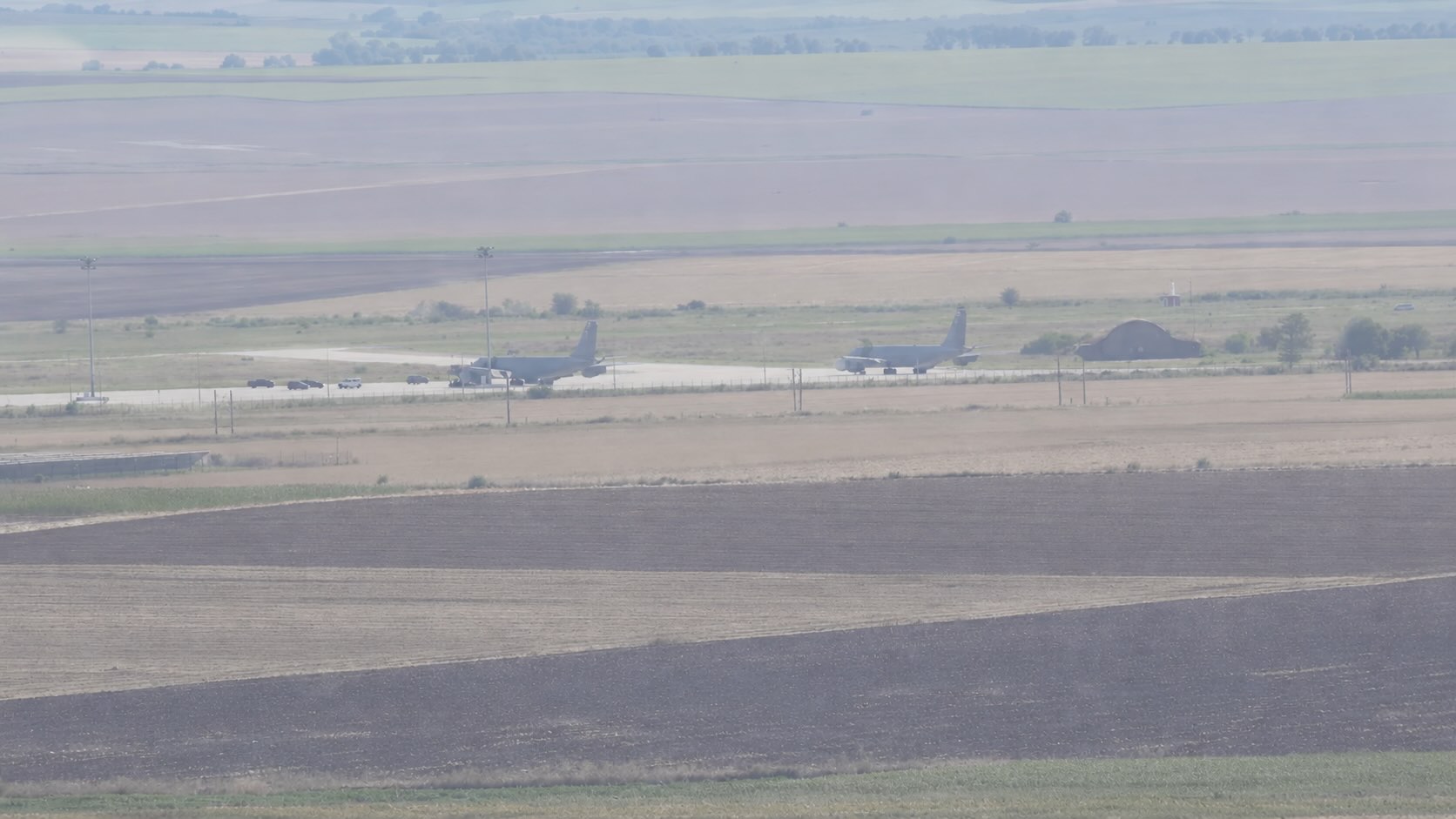
The underlying report published on 19 August cited two people close to the Iranian government as saying Iranian forces had assessed possible military targets in south-eastern Europe. Bulgaria was specifically identified because the United States is temporarily operating aerial-refuelling aircraft from Bezmer.
Cyprus was also considered in Iranian contingency planning, according to one of the sources.
The reporting describes military options being examined, not a decision by Tehran to attack Europe. No evidence has emerged that missiles have been assigned to particular European targets or that an operation is imminent.
That distinction is central to assessing the risk.
Bulgaria’s parliament approved the temporary deployment of up to eight US KC-135 aerial-refuelling aircraft, as well as up to 250 American military personnel and associated equipment, at Bezmer in July.
The deployment runs from 24 July until 1 October and was approved under existing arrangements governing US access to Bulgarian military facilities. Sofia said no offensive weapons would be stationed at the base.
Iran had already objected before the aircraft arrived. Tehran warned Bulgaria against allowing its territory to support US military operations connected with the conflict.
The Bulgarian government nevertheless authorised the deployment, while arguing that it was fulfilling existing defence commitments rather than entering the war.
Following this week’s reports about Iranian contingency planning, security measures around Bezmer have been reinforced and Bulgarian authorities have said the interior and defence ministries are coordinating their response.
The presence of tankers gives the base military importance without making it a strike base in the conventional sense. Aerial refuelling extends the range and endurance of combat aircraft operating from other locations, making tanker support a central part of sustained long-distance air operations.
The Cyprus element cannot be treated as entirely hypothetical.
On 2 March, a Shahed-type unmanned aircraft struck the British Sovereign Base Area at Akrotiri, causing minor material damage, according to the Cypriot presidency’s official account.
Cypriot authorities later said two additional unmanned aircraft had been detected heading towards the British bases and had been dealt with before reaching them. Nicosia stressed that the Republic of Cyprus itself was not the target.
Akrotiri is particularly important because it is a British military facility rather than a Cypriot base. The Republic of Cyprus is not a NATO member, while Britain is. The Sovereign Base Areas remained under British sovereignty when Cyprus became independent in 1960.
Their proximity to the Middle East has long made them useful for British operations in the region.
NATO has publicly responded to the new Iranian reporting.
An alliance official said NATO was prepared to address any threat and would take the measures required to defend allied countries. The official referred to the alliance’s existing deterrence and defence posture but did not announce new deployments to Bulgaria or elsewhere in south-eastern Europe.
For Bulgaria, Article 5 collective-defence guarantees apply. Cyprus presents a different legal and strategic case because it is outside NATO, although British sovereign territory and forces are present on the island.
Iran’s reported planning therefore exposes the increasingly complicated geography of the Middle East conflict. An American support aircraft operating from an EU and NATO country can connect a Bulgarian airfield directly to operations thousands of kilometres away. British sovereign territory on an EU island can similarly become involved without the Republic of Cyprus itself participating in the conflict.
Iranian planners were also reported to have examined possible attacks on subsea fibre-optic infrastructure in the Strait of Hormuz, suggesting that Tehran’s contingency work is not limited to conventional military bases.
For the moment, however, contingency planning should not be confused with an attack warning.
The immediate development is that military decisions taken to sustain US operations in the Middle East are changing the security calculations of European states hosting the supporting infrastructure. Bulgaria’s decision to strengthen protection at Bezmer is the first visible European consequence of that assessment.