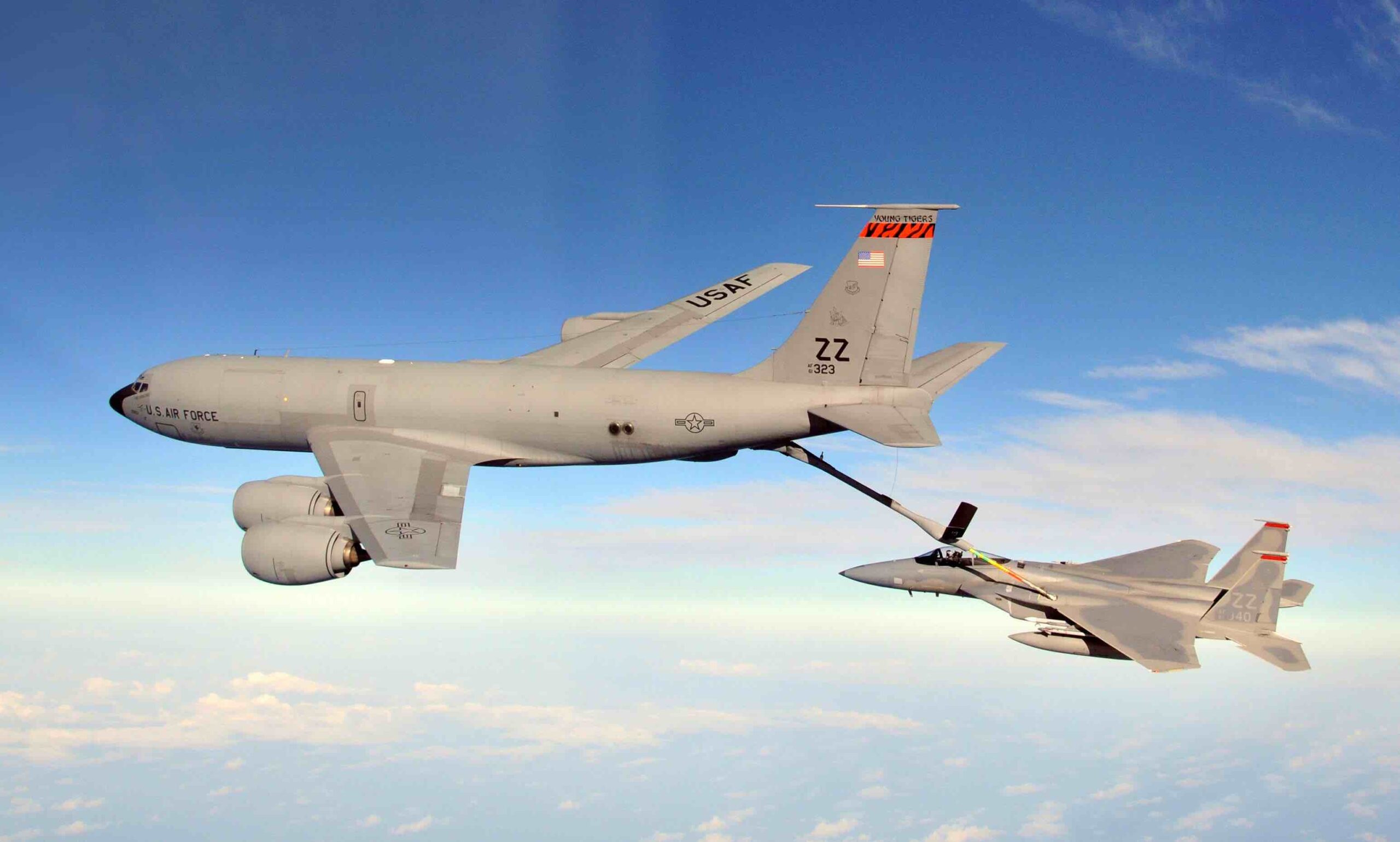
The aircraft departed Bezmer less than a month after arriving for what Sofia described as training over allied territory. Their exit removes a visible diplomatic irritant, but it does not establish that Iranian pressure ended the mission or signal a wider change in US refuelling posture.
Bulgarian Defence Minister Dimitar Stoyanov confirmed on Saturday that the aircraft had departed the previous day. He said the deployment had taken place under the bilateral agreement governing joint use of Bulgarian military facilities.
The KC-135s arrived at the end of July. Bulgaria’s parliament had authorised the temporary stationing of up to eight tankers and 250 US personnel until 1 October, although only the two aircraft were publicly confirmed at Bezmer.
Their departure before the end of the authorised window does not, by itself, identify why the mission ended when it did. Neither Sofia nor Washington has said that Iran’s objections caused the aircraft to leave, and the United States did not immediately provide a public explanation. The parliamentary authorisation set a maximum scope and duration; it did not require the aircraft to remain until October.
That caveat is important because the deployment became entangled with the regional war. Tehran accused Bulgaria of complicity in US operations, while the Bulgarian government rejected the allegation. Sofia said the tankers’ flights were for training over allied countries and that aircraft based at Bezmer would not conduct Middle East combat missions.
Defence Matters examined the security and political implications of the deployment when Iranian warnings put Bezmer under closer attention. The tankers’ exit reduces the immediate visibility of that dispute, but it does not remove Bulgaria’s role in allied logistics or the strategic value of facilities covered by the US–Bulgarian defence co-operation agreement.
The operational contribution of two KC-135s should be kept in proportion. Aerial refuelling extends fighter, bomber, transport and surveillance sorties, and even a small detachment can support training and movement across an alliance network. It is not equivalent to the larger tanker force required for sustained, high-tempo combat operations.
The location nevertheless mattered. Bezmer lies in south-eastern Bulgaria, giving aircraft access to NATO airspace around the Black Sea and south-eastern Europe. A deployment there can improve familiarity with local procedures, test ground support and demonstrate the ability to disperse enabling aircraft away from their usual bases.
Tankers are high-value but vulnerable assets. They normally operate well behind defended airspace and rely on fighters, ground-based air defence, secure communications and alternative operating locations. Dispersal complicates adversary targeting, while host-nation arrangements give commanders more choices if a main base is unavailable or congested.
The political burden falls on the host government. Parliament’s approval provided a legal basis for the deployment, but public protests and Iranian statements forced Sofia to explain where the aircraft would fly and what missions they would support. In a regional crisis, a training deployment can be interpreted as operational preparation even when the host state draws a formal boundary around its use.
Stoyanov said Bulgaria had no information about direct threats to the country arising from the deployment. That assessment addresses the government’s available intelligence, not the broader risk that military infrastructure can become the subject of coercive messaging, cyber activity or disinformation.
The departure closes one short deployment, not the question of how US tanker forces use south-eastern European bases. The relevant follow-up will be whether other aircraft arrive under the existing authorisation, whether the training objectives are described, and whether future rotations retain the same restrictions publicly stated by Sofia.
For now, the evidence supports a limited conclusion: two KC-135s arrived, trained under a temporary bilateral arrangement and have now left. It does not support claims that Iran forced a withdrawal or that the United States has reduced its wider capacity to refuel aircraft in the region.