A Eurofighter destroyed an unmanned aircraft of unknown origin inside Latvian airspace after jets scrambled from Lithuania and Estonia. The engagement shows that interception can be immediate even when responsibility remains uncertain.
Latvia’s Defence Ministry confirmed that allied aircraft destroyed a foreign unmanned vehicle over Balvi municipality early on 14 August. The announced threat to five eastern municipalities ended at 04:50 local time.
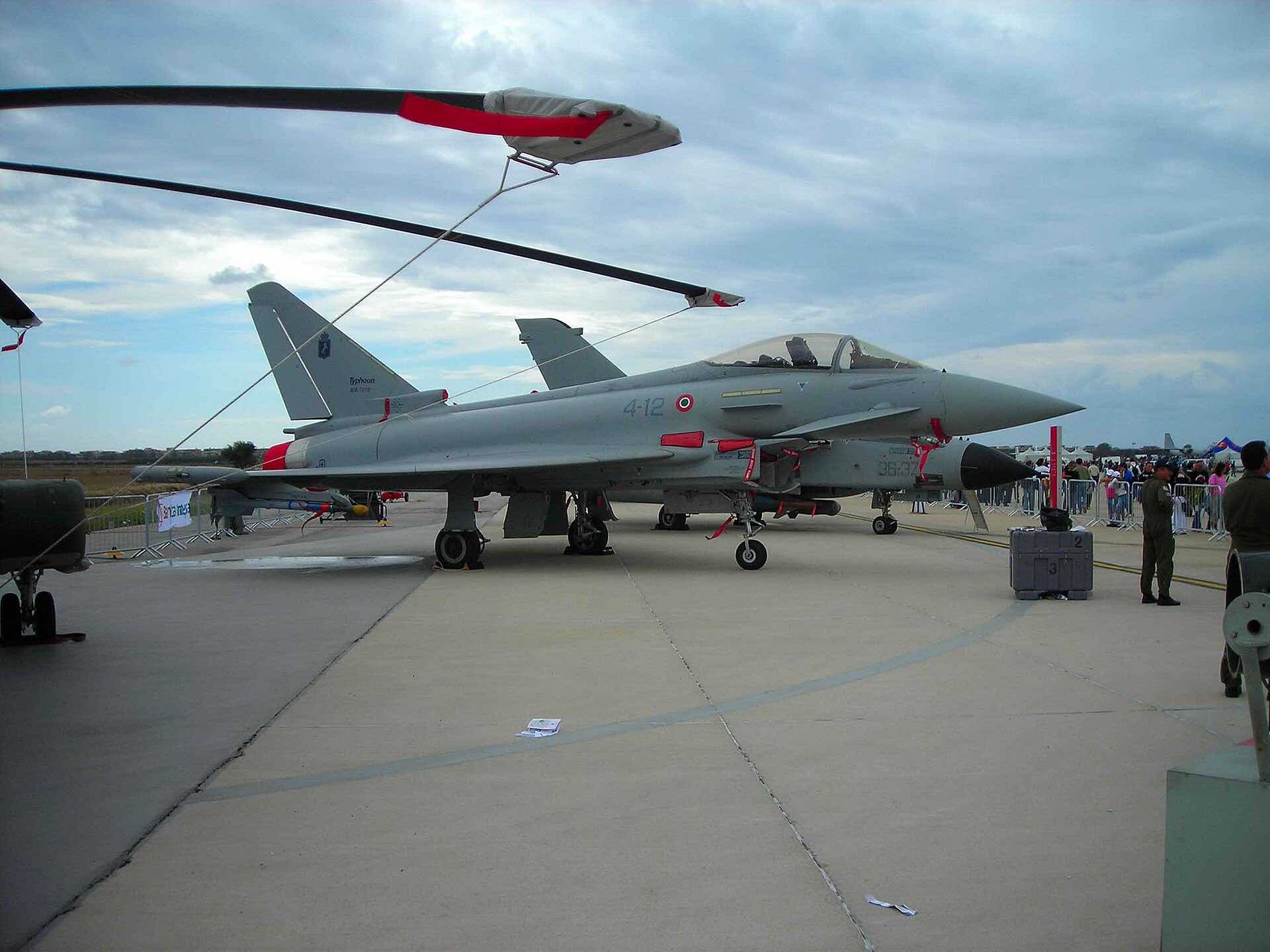
NATO told Reuters in its original report that two Italian Eurofighters took off from Lithuania and two Turkish F-16s scrambled from Estonia. One Eurofighter identified and engaged the drone.
Latvian personnel began searching woodland near Rugāji, about 35 kilometres from the Russian border, for wreckage. Until debris, flight data or other technical evidence are recovered, the aircraft should not be described as Russian or Ukrainian.
Air defenders do not always have the luxury of waiting for attribution. Their immediate task is to decide whether an object threatens people, infrastructure or military facilities and whether it can safely be allowed to continue.
Political responsibility is a separate question. Investigators must establish the vehicle’s type, likely launch area, guidance method, intended target and whether its route changed because of navigation failure or electronic interference.
The Latvian military attributed the incursion to Russian electronic-warfare activity. That assessment concerns the mechanism that may have displaced the drone; it does not by itself identify who owned, launched or controlled the aircraft.
This distinction matters because Ukrainian long-range drones were attacking Russian ports near St Petersburg that night, while Russia was also conducting defensive electronic warfare. A Ukrainian aircraft diverted by Russian interference, a Russian platform or another unmanned system would create different legal and political consequences.
Defence Matters warned earlier this month that a captured, copied or diverted drone could exploit NATO’s attribution gap. The Latvian engagement demonstrates the operational version of that problem.
NATO successfully detected the aircraft, launched fighters from two countries and destroyed it. That is evidence of readiness. Yet the alliance could not immediately say where the drone came from.
Modern unmanned aircraft complicate traditional identification because they may fly without a continuous control link, use civilian components and carry limited markings. Wreckage can reveal engines, electronics and production methods, but commercially available parts do not necessarily establish state responsibility.
Electronic warfare adds another layer. Satellite-navigation signals may be jammed or spoofed, causing a vehicle to drift, follow corrupted coordinates or enter a contingency mode. Proving that interference changed a specific flight requires technical reconstruction rather than inference from the wider electronic environment.
Using a crewed fighter against a relatively small drone can appear economically disproportionate. The interceptor, support aircraft and air-to-air weapon may cost far more than the target.
The comparison is incomplete. Air-defence decisions account for the potential damage a drone could cause, the uncertainty surrounding its payload and the absence of a cheaper system in the right place at the right time.
Latvia and its allies have strengthened air defence along the eastern border, but fixed sensors, short-range weapons and counter-drone equipment cannot yet cover every approach. NATO’s Baltic Air Policing mission is increasingly being asked to perform an air-defence role for which rapid weapons use, not merely identification, may be required.
The incident follows other engagements against drones that spilled into Baltic airspace. Each interception builds experience but also consumes readiness and exposes the limits of relying on high-end aircraft for persistent low-cost threats.
The search site is heavily forested and includes bogs and sparse settlements, complicating recovery. Even a successful shoot-down can scatter small components across a wide area or destroy evidence in the impact.
Investigators will look for serial numbers, memory devices, navigation components, explosive residue and signs of previous damage. Radar tracks may indicate the point of entry and earlier route, while electronic-intelligence records could show jamming or control signals.
No single clue is likely to be decisive. A component manufactured in one country may have been purchased elsewhere; software can be modified; markings can be removed or falsified.
NATO must therefore maintain a chain from technical evidence to public language. An early but weak accusation could escalate tension or undermine credibility if later analysis contradicts it. Excessive caution, however, may make hostile probing appear consequence-free.
The military response was unambiguous: an unidentified aircraft entered allied airspace and was destroyed. The political response must remain conditional until its origin and circumstances are established.
That separation is a strength rather than a hesitation. Collective defence requires forces able to act under uncertainty and institutions disciplined enough not to convert an operational judgment into unsupported attribution.
The Baltic states will continue to face incursions as long as the war near their borders produces long-range drone operations and intense electronic warfare. More ground-based counter-drone systems may reduce the need to launch fighters, but no equipment will eliminate the forensic problem after an interception.
Friday’s engagement proves NATO can react. The harder test begins after the missile is fired: identifying what was destroyed, explaining how it arrived and deciding whether the evidence supports a state-level response.