The Czech Republic is likely to miss NATO’s defence-spending target this year, exposing a wider problem for European allies as they prepare for another summit dominated by military budgets, burden-sharing and the credibility of collective defence.
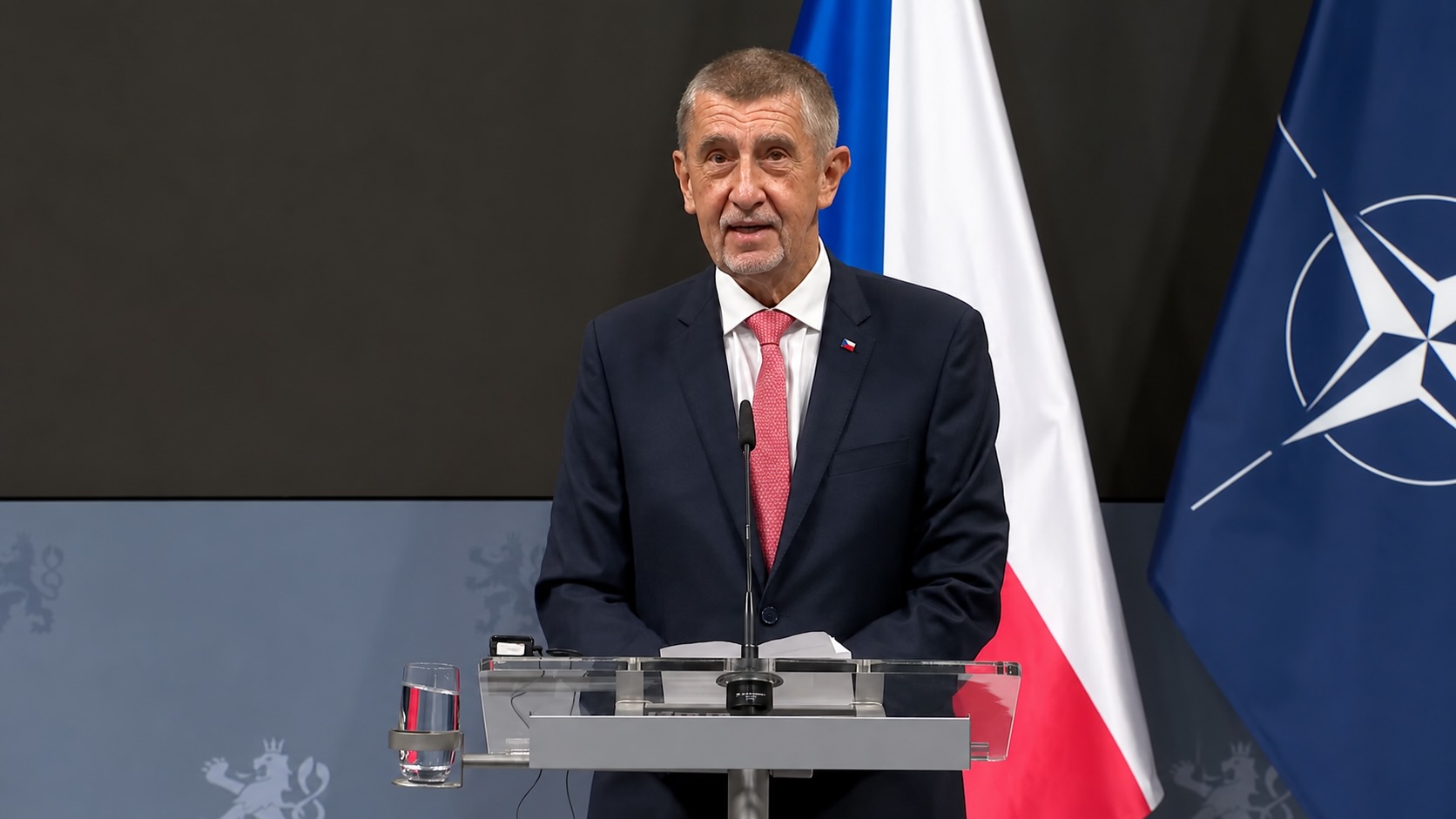
Prime Minister Andrej Babiš told the Financial Times that Prague would “probably” fail to reach the alliance’s existing benchmark of spending 2 per cent of gross domestic product on defence in 2026. According to Reuters, Babiš said his government would “do our best” to meet the commitment, but blamed a budget shortfall on what he described as overspending by the previous administration.
The admission comes at an awkward moment for NATO. At last year’s summit in The Hague, allies agreed to move beyond the older 2 per cent benchmark and work towards a much higher 5 per cent commitment by 2035. That figure includes at least 3.5 per cent of GDP for core defence expenditure and a further 1.5 per cent for wider security-related investment, including infrastructure, resilience, innovation and civil preparedness.
The Czech case shows why that commitment may be easier to sign than to deliver. Prague’s 2026 budget has already become a point of domestic dispute. In March, President Petr Pavel signed the budget into law but warned that planned military spending did not correspond to NATO obligations or the security situation facing Europe. The government said defence-related spending would exceed 2 per cent when expenditure by other ministries was included. Critics, however, questioned whether items such as transport projects would qualify under NATO’s definition of defence expenditure.
That distinction matters. NATO spending targets are not simply accounting exercises. They are intended to measure whether allies are funding the capabilities required for deterrence, reinforcement and warfighting. Spending on roads, infrastructure and dual-use assets may be relevant to national resilience, but it does not automatically substitute for ammunition stocks, air defence, command systems, armoured forces, drones or trained personnel.
Babiš has argued that the substance of capability improvements is more important than rigid adherence to headline figures. There is a valid point in that. A country can spend badly and still meet the numerical target. But the reverse is also true: a country that repeatedly misses the benchmark weakens the political credibility of allied pledges, particularly when NATO is asking members to prepare annual plans showing a credible path towards much higher spending by 2035.
For Central Europe, the question is not abstract. The Czech Republic is part of NATO’s eastern-facing security architecture and has played a visible role in support for Ukraine, including through the Czech-led ammunition initiative. At the same time, the return of Babiš to power has sharpened debate over whether Prague’s defence policy will remain aligned with the more forward-leaning posture associated with Pavel, a former senior NATO military official.
The dispute also lands in the middle of a broader European argument. Governments across the continent have accepted that Russia’s war against Ukraine has changed the military requirements of European security. Yet many face the same basic contradiction: they support higher defence spending in principle, while trying to protect welfare budgets, infrastructure plans, tax promises and deficit targets at home.
That contradiction is becoming more difficult to hide. The United States has pressed European allies to assume more responsibility for their own defence. NATO Secretary General Mark Rutte has repeatedly said that Europe must move faster from pledges to capability. The next alliance summit in Ankara is therefore likely to test not only whether governments accept higher numbers, but whether they can explain how those numbers will be financed and translated into usable forces.
The Czech dispute is significant because it concerns a member state that sits close enough to the war in Ukraine for the security risk to be immediate, but still faces the same fiscal and political constraints as allies farther west. If Prague struggles to maintain 2 per cent, questions will follow over how realistic the 3.5 per cent core-defence target is for governments with narrower fiscal room and contested domestic mandates.
There is also a reputational dimension. Czechia has often presented itself as a serious security actor, particularly in relation to Ukraine. A visible retreat from the spending benchmark could weaken that position, especially if allies conclude that Prague is relying on creative accounting rather than defence procurement. Pavel’s criticism suggests that this is not merely an opposition argument, but a disagreement inside the Czech state over what credibility in NATO now requires.
The broader lesson for Europe is clear. NATO’s new spending ambitions will not be judged only by summit declarations. They will be judged in national budgets, procurement contracts, ammunition orders, recruitment figures and industrial capacity. The Czech Republic’s expected shortfall is therefore not an isolated budget problem. It is an early warning of the gap between Europe’s strategic language and the hard choices needed to fund it.
For NATO, the risk is not that one ally misses a single benchmark. The risk is that too many governments treat higher defence spending as a political commitment for later rather than a budgetary obligation now. If that pattern continues, the alliance will enter the next phase of European insecurity with ambitious targets on paper and insufficient capability in the field.