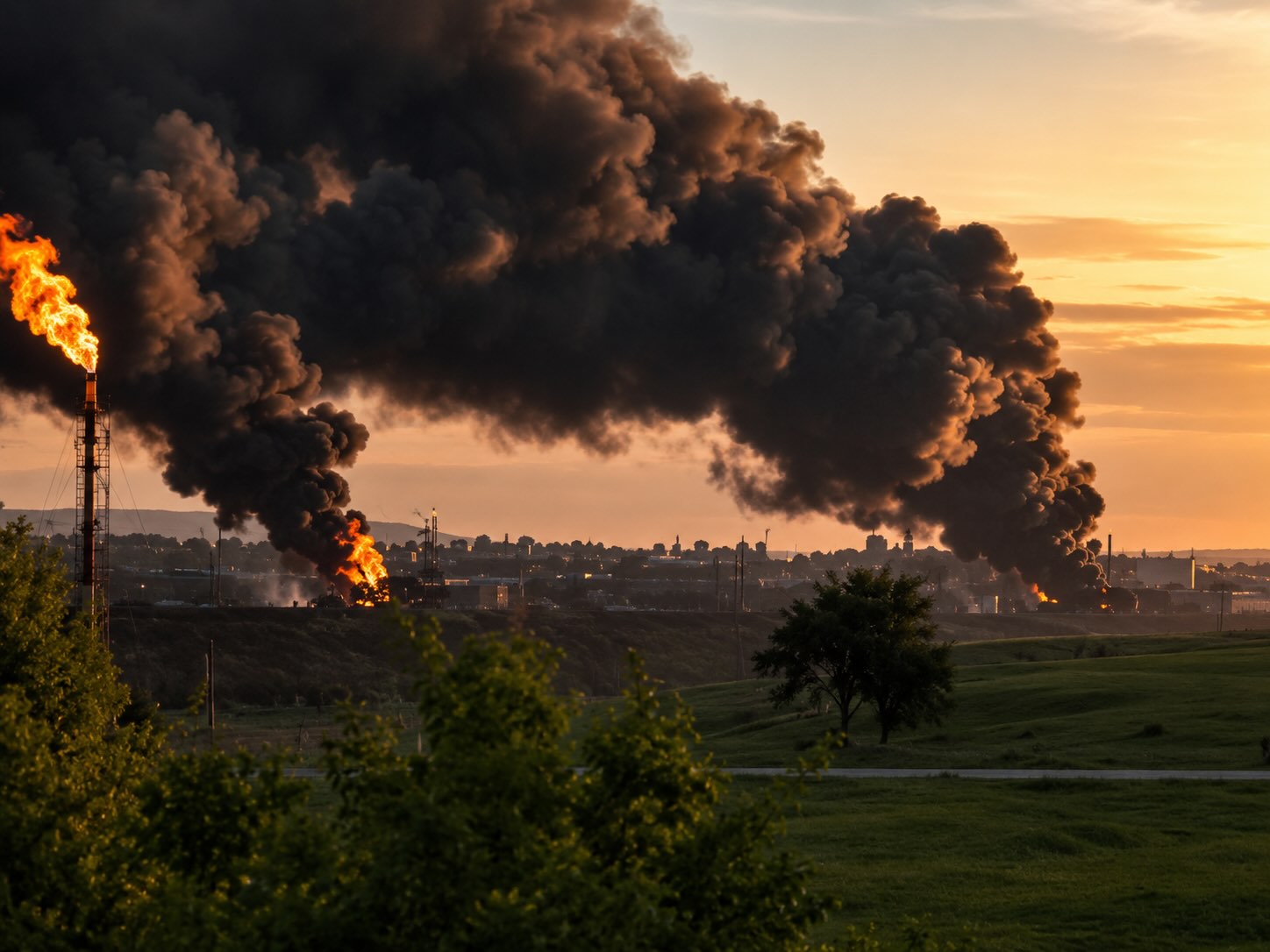
Ukraine’s drone campaign against Russia is moving deeper into a war of infrastructure, with strikes reported across several Russian regions and renewed attacks on oil-related targets in the south.
According to Reuters, Russian regional authorities said on Sunday that Ukrainian drones had hit energy and industrial targets overnight in several parts of the country. The reported strikes included Saratov, a Volga River region with oil refineries, and Kirov, north-east of Moscow and around 1,300km from Ukrainian-held territory.
Governors in Rostov, Voronezh and Belgorod, all regions bordering Ukraine, also reported attacks. Three civilians were reported injured in Belgorod. Moscow-backed authorities in Russian-controlled Crimea separately announced restrictions on petrol sales, without giving a reason. The timing is significant, as Ukraine has repeatedly targeted fuel infrastructure in Russia’s south and in occupied Crimea.
The latest reported attacks followed a separate wave of strikes on Saturday, when Ukrainian drones hit Russia’s oil infrastructure in Taganrog and Armavir. Russian regional officials said fires broke out at a tanker and in the port area of Taganrog, while an oil depot in Armavir was also struck. Ukraine’s drone forces said they had hit Taganrog and an oil depot in Feodosiya, in Russian-controlled Crimea, while President Volodymyr Zelenskyy confirmed the strike on Armavir, about 500km from Ukraine’s border.
The operational pattern is becoming clearer. Ukraine is no longer using long-range drones only as a response to immediate battlefield pressure. It is using them to impose costs on Russia’s fuel system, transport network and industrial base. These targets are not symbolic. Oil depots, refineries, ports and storage facilities support military logistics, generate revenue and sustain civilian supply chains. Even limited damage can force repairs, rerouting, temporary restrictions and additional air-defence deployments.
For Russia, the problem is geographical. The country’s energy infrastructure is large, dispersed and difficult to protect in full. Air-defence systems can be concentrated around major cities, military facilities and strategic plants, but drones that reach ports, depots and regional industrial sites expose the limits of any defensive network. The reported strike in Kirov is particularly notable because of the distance involved. Even if the damage was limited, the reach itself has military and political value.
Ukraine’s drone campaign also alters the economics of the war. Russia continues to use missiles and drones against Ukrainian cities, power infrastructure and military targets. Ukraine, which has more limited access to long-range Western strike weapons and faces political restrictions on how some systems may be used, has invested heavily in domestic drone and missile development. The result is a lower-cost way to threaten targets far inside Russian territory.
This does not mean the campaign is decisive by itself. Drone strikes rarely destroy a national energy system overnight. Many facilities can be repaired, and Russia has adapted to previous attacks on refineries, depots and ports. The significance lies in cumulative pressure. Repeated attacks can disrupt fuel availability, increase insurance and security costs, complicate logistics and force Russia to spread air defences across a much wider area.
There is also a psychological and political dimension. Moscow has sought to keep the war distant from much of Russian daily life, while presenting attacks inside Russia as terrorism or escalation. Kyiv’s argument is different: Russia’s invasion has brought sustained destruction to Ukrainian cities and infrastructure, and Russian territory can no longer be insulated from the consequences of the war. That message is politically useful for Ukraine, but the military value depends on whether the strikes continue to hit targets that matter.
The campaign carries risks. Attacks near civilian areas, fuel storage sites or industrial facilities can cause collateral damage, fires and disruption beyond the immediate military objective. Claims from both sides also require caution. Russian regional officials often describe damage in limited terms, while Ukrainian statements may emphasise operational success. Independent verification is difficult, particularly when sites are far from the frontline.
Even so, the direction of travel is evident. Long-range unmanned systems have become one of Ukraine’s main tools for reaching Russian depth. The campaign has shifted from occasional strikes to a sustained effort against infrastructure with economic and military relevance. Russia can respond by strengthening air defences, dispersing stocks and hardening facilities, but each response consumes resources that might otherwise be used closer to the front.
For European defence planners, the lesson extends beyond Ukraine. The war is demonstrating that relatively inexpensive drones can threaten fuel systems, ports, refineries, depots and industrial sites far from the battlefield. Critical infrastructure is now part of the military equation in a way that demands wider protection, better redundancy and faster repair capacity.
Ukraine’s latest strikes do not change the war in a single night. They do show that the battlefield is no longer confined to the front line. In a war shaped by drones, energy infrastructure and logistics have become strategic targets, and Russia’s rear areas are increasingly part of the fight.