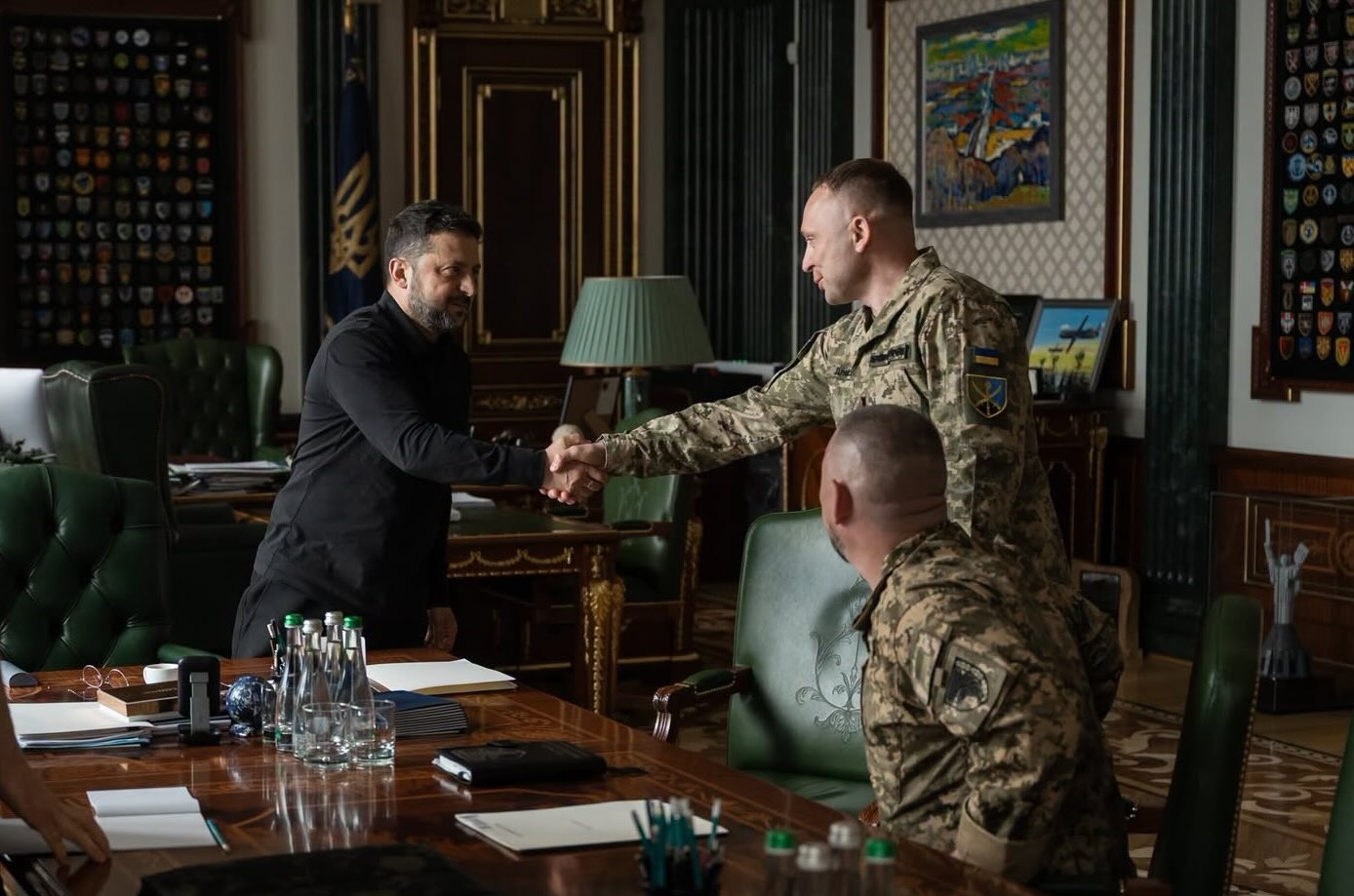
Ukraine’s new commander-in-chief, Major-General Mykhailo Drapatyi, has said Ukrainian forces will intensify offensive operations and plan new missions behind enemy lines. Reuters reported that Drapatyi described clear presidential objectives: expand offensive action across domains, develop military technology and strengthen Ukraine’s armed forces.
The statement came one day after President Volodymyr Zelenskyy appointed Drapatyi to replace Oleksandr Syrskyi. In a 22 July presidential address, Zelenskyy said Drapatyi had begun work and that Ihor Skybiuk would become chief of the General Staff. The message links the personnel change to an institutional restructuring rather than a symbolic reshuffle.
The operational language matters because Ukraine is not in a position to announce a classic mass counteroffensive of the kind attempted earlier in the war. Manpower is tight, Russian forces continue to press in parts of the east, and air-defence scarcity remains a constraint. Drapatyi’s emphasis on behind-the-lines operations points instead to a campaign model built around raids, long-range drones, sabotage, strikes on logistics, pressure on Russian energy systems and technology-enabled disruption.
That model has already become central to Ukraine’s strategy. Previous analysis of Drapatyi’s appointment after the Syrskyi dispute identified drones, mobilisation and General Staff reform as the immediate tests. Separate coverage of Ukrainian drones entering Pentagon procurement showed how Ukraine’s battlefield improvisation is increasingly shaping allied thinking. Drapatyi’s first statement brings those strands together: strike deeper, modernise faster, and make the command system more responsive.
The political background is unavoidable. Syrskyi’s departure followed visible public tensions after the removal of former defence minister Mykhailo Fedorov, who was associated with drone procurement and digital reform. Drapatyi is widely seen as closer to the reformist camp. That gives him political capital among soldiers and civilians frustrated by bureaucracy, but it also raises expectations that may be difficult to meet under wartime pressure.
Behind-the-lines operations can achieve several effects. They can disrupt Russian logistics, force Moscow to defend more territory, strain air-defence allocation, damage fuel supplies and create political discomfort far from the front. They also allow Ukraine to impose costs when it cannot easily retake ground through large manoeuvre. But they are not a substitute for holding territory. A deep-strike campaign must be connected to front-line defence, mobilisation and artillery supply, or it risks becoming a strategic irritant rather than a war-changing instrument.
Drapatyi’s challenge is therefore integration. Drone units, special operations forces, cyber teams, artillery, intelligence and conventional brigades must operate as parts of one campaign. Too often, modernisation debates treat technology as if it automatically produces military effect. It does not. A drone strike matters when it is linked to intelligence, targeting, logistics understanding, battle damage assessment and follow-up exploitation. Command reform matters when it shortens those loops.
The appointment of Skybiuk as chief of the General Staff is also relevant. General Staff reform is the unglamorous core of the problem. It determines how information moves from brigades to headquarters, how operations are planned, how equipment is allocated and how quickly lessons become doctrine. A younger or more popular commander cannot succeed if the staff system remains slow, defensive or disconnected from front-line experience.
Russia will try to read the statement in several ways. It may dismiss the command change publicly, but it will still adjust force protection if it believes Ukraine is preparing more operations inside Russia. That could pull air-defence systems, electronic-warfare assets and security troops away from the front. Even when deep strikes do not destroy decisive quantities of equipment, they can change Russian deployment choices.
Ukraine’s partners will also be watching. Western governments increasingly want evidence that assistance is used within a coherent strategy. Drapatyi’s emphasis on technology and offensive pressure may help explain continued support, especially if Ukraine can show measurable effects on Russian logistics and energy revenue. But partners will also worry about escalation management, target selection and the legal framing of operations beyond the front line.
The first 60 days will matter more than the announcement. The signs to watch are whether drone and strike campaigns become more coordinated, whether mobilisation guidance becomes clearer, whether brigades report faster support from headquarters and whether Russia is forced to shift defensive resources. Drapatyi has set an ambitious tone. The test is whether the command system he now leads can turn that tone into operational rhythm.