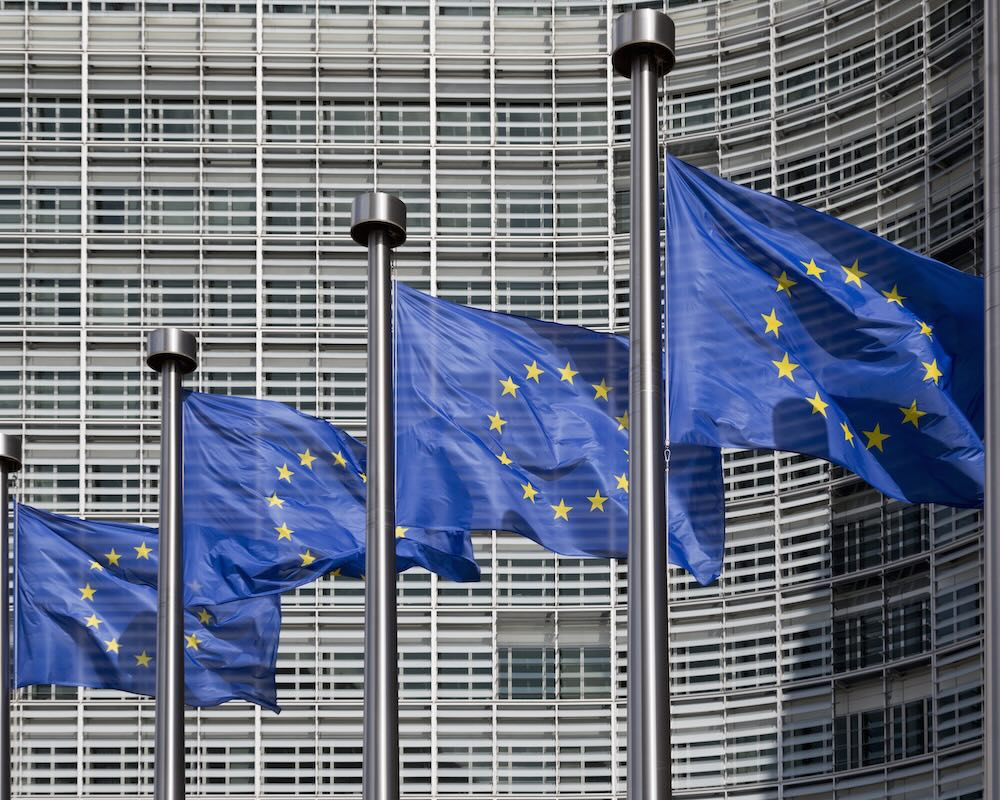
It reflects a broader strategic recalibration as Europe expands its engagement in the Indo-Pacific, recognising that regional stability and European prosperity have become increasingly intertwined in an era of geopolitical competition.
For Manila, the initiative represents another significant step in its effort to diversify security partnerships beyond traditional allies. For Brussels, it demonstrates a growing willingness to translate its Indo-Pacific strategy into practical cooperation rather than simply rhetorical commitment.
The announcement follows high-level discussions between EU High Representative for Foreign Affairs and Security Policy Kaja Kallas and Philippine Foreign Secretary Enrique Manalo, culminating in the establishment of a formal EU–Philippines Security and Defence Dialogue. The new mechanism is designed to facilitate regular exchanges on maritime security, cybersecurity, hybrid threats, foreign information manipulation, and wider regional security challenges.
The timing is notable.
The Indo-Pacific has become the principal theatre of global strategic competition. Maritime disputes, cyberattacks, disinformation campaigns and pressure on international shipping lanes increasingly affect economies far beyond Asia. Around 40 per cent of the European Union’s external trade passes through Indo-Pacific sea routes, making freedom of navigation not merely a regional concern but an economic imperative for Europe itself.
The Philippines occupies a uniquely important position in this evolving landscape. Situated astride some of the world’s busiest maritime corridors, the country has emerged as one of Southeast Asia’s most active advocates for maintaining a rules-based international order. As maritime tensions continue in the South China Sea, Manila has steadily broadened defence relationships with partners that share an interest in regional stability.
The European Union is increasingly becoming one of those partners.
Unlike traditional military alliances, the EU brings a distinctive combination of diplomatic influence, technological capability, regulatory expertise and civilian security instruments. Its security engagement encompasses maritime surveillance, cyber resilience, satellite monitoring, critical infrastructure protection and crisis management—all areas that are becoming central components of modern national security.
Existing programmes already provide a foundation. Initiatives such as CRIMARIO II, which enhances maritime domain awareness, Copernicus satellite services and the EU’s Enhancing Security Cooperation In and With Asia (ESIWA Plus) programme have demonstrated how European expertise can support regional partners without altering existing alliance structures. The new dialogue aims to expand these practical collaborations while exploring emerging technologies, including environmental monitoring, submarine cable resilience and uncrewed maritime systems.
This evolution reflects a broader transformation in European foreign policy.
A decade ago, few would have expected Brussels to become an increasingly visible security actor in Southeast Asia. Russia’s invasion of Ukraine, mounting cyber threats and growing concern over supply-chain resilience have fundamentally reshaped European strategic thinking. Security is now viewed as indivisible across regions, with instability in one part of the world carrying direct economic and political consequences elsewhere.
For the Philippines, European engagement offers complementary strengths alongside longstanding security relationships with the United States, Japan and Australia. Rather than replacing existing partnerships, the EU provides additional expertise in areas where civilian and military capabilities increasingly overlap.
Cybersecurity illustrates the point well.
Modern defence extends well beyond conventional armed forces. Governments today must protect digital infrastructure, telecommunications networks, ports, undersea communications cables and critical energy systems against increasingly sophisticated attacks. Europe’s extensive regulatory experience and technological capabilities make it a valuable partner in building resilience against these evolving threats.
Equally significant is the emphasis on countering foreign information manipulation and interference. Democracies worldwide are grappling with increasingly sophisticated disinformation campaigns designed to undermine public trust and distort political debate. By incorporating these challenges into the new dialogue, both sides acknowledge that national security now encompasses information integrity alongside traditional defence.
Economic considerations also reinforce the strategic logic.
The European Union remains one of the Philippines’ largest trading partners and investors, while negotiations towards a comprehensive free trade agreement continue to advance. A more secure regional environment supports investment, strengthens supply chains and encourages greater commercial engagement between European and Philippine businesses. Security cooperation and economic integration are therefore becoming mutually reinforcing rather than separate policy tracks.
The partnership also reflects a broader maturation of EU-Philippines relations.
Since the Partnership and Cooperation Agreement entered into force, bilateral cooperation has expanded across governance, trade, development, climate policy and education. Security cooperation represents the logical next stage of a relationship that has steadily broadened in both scope and ambition.
Importantly, the dialogue remains grounded in practical cooperation rather than confrontation.
Its focus on resilience, maritime safety, cyber preparedness and crisis response underlines a preventive approach designed to strengthen institutional capacity and reduce risks before they escalate into conflict. This emphasis aligns with the European Union’s longstanding preference for multilateral engagement and rules-based cooperation.
The inaugural Security and Defence Dialogue, expected to convene later this year, will provide an opportunity to translate political commitments into operational initiatives. Success will ultimately be measured not by communiqués but by practical outcomes: improved maritime awareness, stronger cyber resilience, enhanced information sharing and deeper institutional links between European and Philippine security communities.
In an increasingly fragmented international environment, partnerships built on shared interests, practical cooperation and respect for international law are becoming ever more valuable. The deepening relationship between the European Union and the Philippines illustrates how middle and major powers alike are adapting to a world where security challenges cross borders, domains and technologies.
For Europe, engagement in the Indo-Pacific is no longer optional. For the Philippines, diversified partnerships strengthen national resilience. For both, the new security dialogue represents a timely investment in stability at a moment when the international order faces unprecedented pressures.
China and Taiwan’s Maritime Stand-off Signals a Dangerous New Phase