On whether anyone should believe his latest “promises” is another matter entirely.
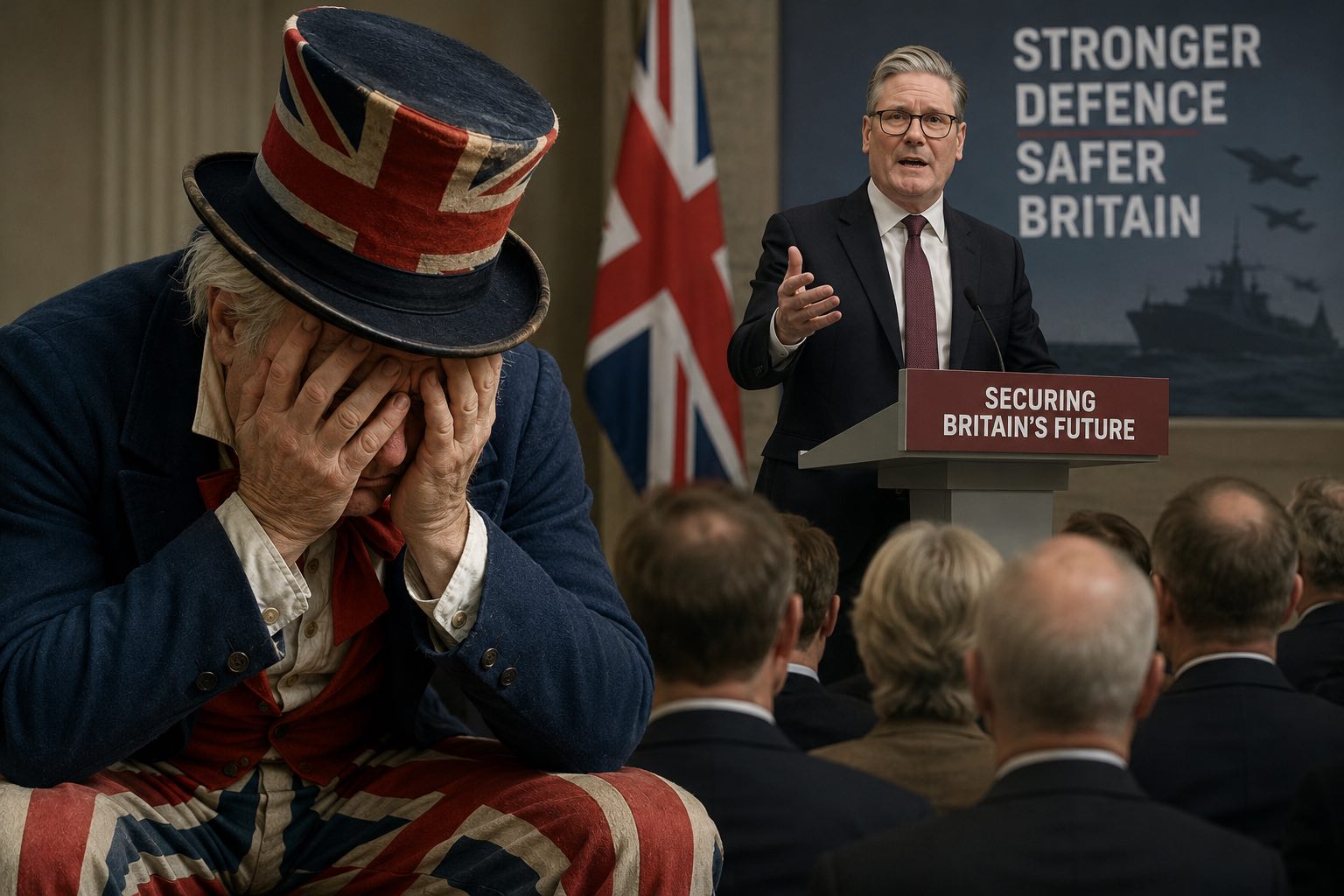
The soon to be former Prime Minister’s announcement of an additional £15bn for defence, lifting annual military spending to £80bn by 2029, arrives wrapped in all the familiar language of national renewal. There will be six new warships. Billions for drones and autonomous weapons. Artificial intelligence will revolutionise the Royal Navy, transforming it into a “hybrid fleet”. British manufacturing will benefit. Defence will once again become an engine of economic growth.
It is an impressive collection of headlines.
Unfortunately, Britain’s armed forces cannot fight wars with headlines.
This is the same political system that has spent decades salami-slicing military capability while insisting Britain remained a global military power. Every defence review promised transformation. Every Treasury settlement quietly reduced mass. Ministers of every stripe became masters of announcing tomorrow’s technological revolution as an excuse for cutting today’s conventional capability.
The consequences are no longer theoretical.
The British Army is the smallest it has been since the Napoleonic era. Ammunition stockpiles have been allowed to dwindle. Procurement has become synonymous with delay and cost overruns. Recruitment targets are repeatedly missed. Retention remains poor. Shipbuilding programmes slip almost as predictably as the tides themselves.
None of this happened overnight.
Nor did it happen under one government.
The Conservative Party now expresses outrage that Britain’s armed forces require significantly more investment. Kemi Badenoch argues that Starmer’s package amounts to barely half of what military planners require.
She may be entirely correct.
Yet there is something breathtaking about Conservatives discovering the consequences of Conservative government.
The last Conservative administration spent years insisting Britain’s military remained world class while steadily reducing troop numbers, delaying procurement, shrinking inventories and assuming that expensive technology could permanently compensate for declining force structure. The bill for those decisions has now arrived. Complaining about it from the opposition is politically understandable but historically unconvincing.
Labour, meanwhile, would like voters to believe that history conveniently began last week.
It did not.
Many of today’s structural problems have roots stretching back through governments of every political colour. Westminster collectively embraced the illusion that major conventional war had become a historical curiosity. Defence became the obvious department from which Chancellors could extract savings with relatively little electoral pain. Britain enjoyed the peace dividend long after peace itself had become increasingly scarce.
Now reality has intervened.
Donald Trump has been repeatedly criticised in European capitals for demanding that NATO allies spend far more on their own defence. Yet stripped of the rhetoric, his central complaint was entirely justified. Europe had become comfortable outsourcing much of its security to American taxpayers.
That era is ending.
If Starmer deserves credit, it is for recognising a geopolitical reality that many European leaders preferred to ignore.
But recognition is not delivery.
The Government speaks enthusiastically about drones, artificial intelligence and autonomous warfare. Those technologies are undeniably important. Ukraine has demonstrated that beyond argument.
Yet governments increasingly invoke technology almost as a substitute for political honesty.
Drones do not occupy territory. Artificial intelligence does not replace logistics. Algorithms cannot manufacture artillery shells. Autonomous vessels cannot compensate for insufficient crews, inadequate maintenance budgets or procurement systems that require years to purchase equipment needed today.
Technology multiplies capability, however it does not create capability where none exists.
The funding itself deserves equal scepticism.
An £80bn defence budget sounds dramatic until one remembers that inflation has become one of the most formidable adversaries facing Western militaries. Warships cost exponentially more than their predecessors. Personnel costs continue to rise. Nuclear deterrence absorbs ever larger sums. Delayed procurement becomes progressively more expensive.
The headline grows larger while purchasing power quietly shrinks.
Then there is the politics.
Long-term spending pledges are among Westminster’s safest promises precisely because the politicians making them frequently know someone else may eventually be responsible for keeping them.
Starmer can announce an £80bn defence budget today knowing perfectly well that Britain’s next government may not be Labour. Even if Labour wins another term, leaderships change, economic crises intervene and priorities evolve. the next Labour leader would face no constitutional obligation to honour spending commitments announced earlier by a lame-duck PM.
British political history is littered with ambitious infrastructure plans, spending reviews and industrial strategies quietly abandoned by the governments that inherited them.
Defence announcements enjoy particularly short half-lives, which is why Britain’s armed forces have learnt to greet ministerial enthusiasm with professional scepticism.
Capability is built over decades, press conferences last an hour or so.
Starmer is right that Britain must spend significantly more on defence. He is also right that deterrence remains cheaper than war.
What he has not yet demonstrated is that his Government possesses something even rarer than money: the political discipline to sustain difficult defence decisions long after today’s headlines have disappeared.
Britain has become exceptionally good at announcing military revivals.
Its record of actually delivering them is considerably less impressive.
Until Westminster proves that this time is genuinely different, the latest defence package should be treated for what it is: not a restored military capability, but a promise that one might eventually exist.
Britain’s enemies, unfortunately, will judge the country not by ministerial rhetoric, but by the armed forces that eventually emerge from it.
Keir Starmer Promises Rearmament While His Government Unravels