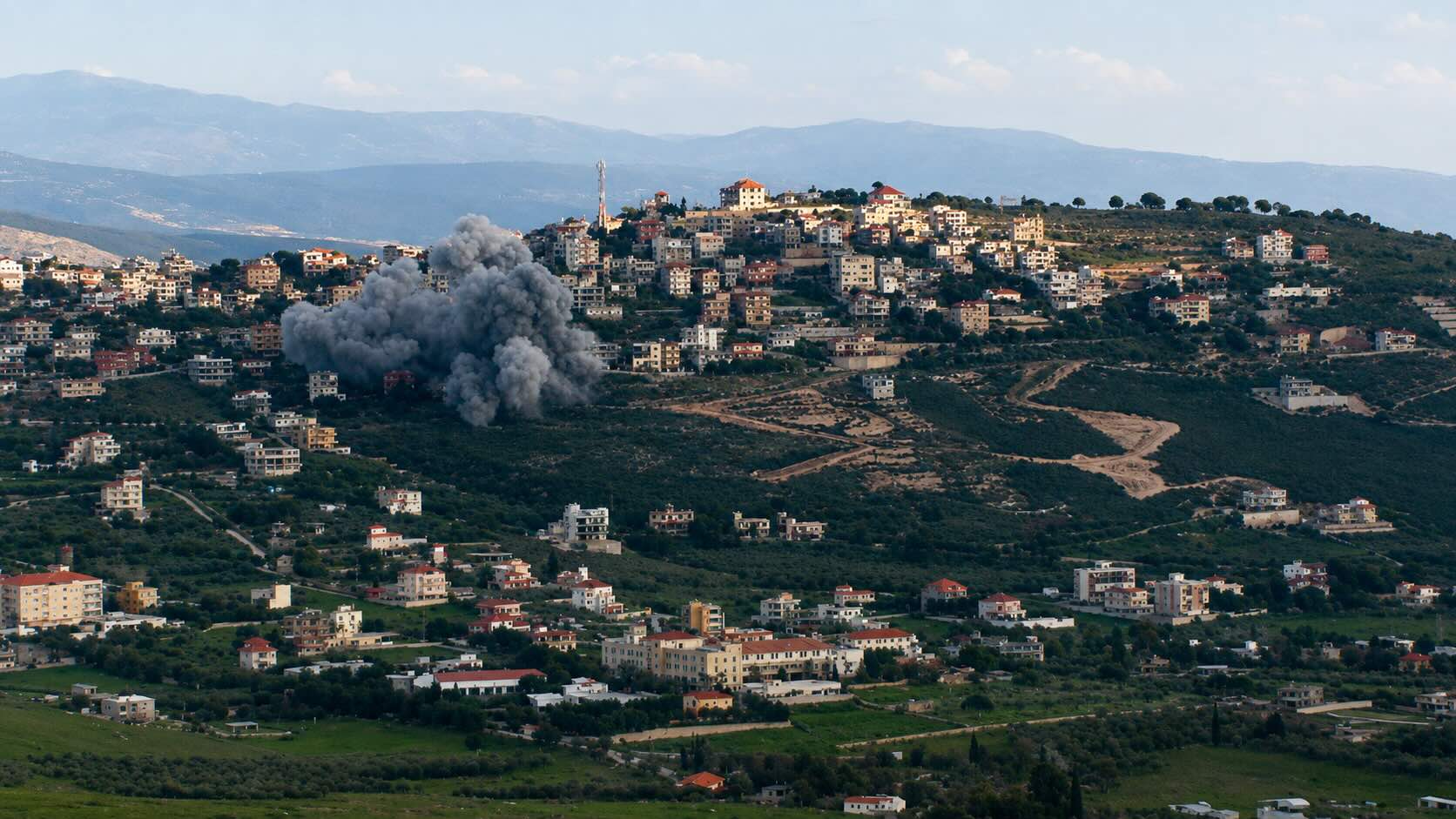
The Israeli military said the projectiles crossed into Israeli territory from Lebanon on Sunday after sirens sounded in the areas of Yiftah and Ramot Naftali, close to the border. No immediate casualties were reported. Hezbollah did not claim responsibility for the launches.
The incident is limited in scale, but its political significance is larger. The Israel-Lebanon front is now being tested not only by military action, but also by competing diplomatic tracks involving the United States, Iran, Hezbollah, Israel, Lebanon and the European Union. A ceasefire that remains vulnerable to isolated launches, Israeli strikes and contested disarmament terms may prove difficult to sustain without stronger Lebanese state authority in the south.
The EU’s decision last week to provide €100 million through the European Peace Facility to support the Lebanese Armed Forces was framed explicitly around that point. The Council said the assistance would help the Lebanese state assert its monopoly over arms and strengthen its institutions. Kaja Kallas, the EU’s foreign policy chief, said the renewed ceasefire between Israel and Lebanon offered a tenuous chance to pull the country back from the brink, adding that strengthening the Lebanese state was the way to remove Hezbollah’s threat.
EU’s €100m Lebanon Army Package Places Brussels Inside Hezbollah Disarmament Dispute
That formulation points to the central weakness of the current ceasefire architecture. The Lebanese army is the state institution Brussels wants to reinforce, but Hezbollah remains the dominant non-state armed force in southern Lebanon. The Lebanese army’s ability to deploy, control territory and prevent attacks from the border area is therefore essential to any durable truce. Yet it is also politically and operationally constrained.
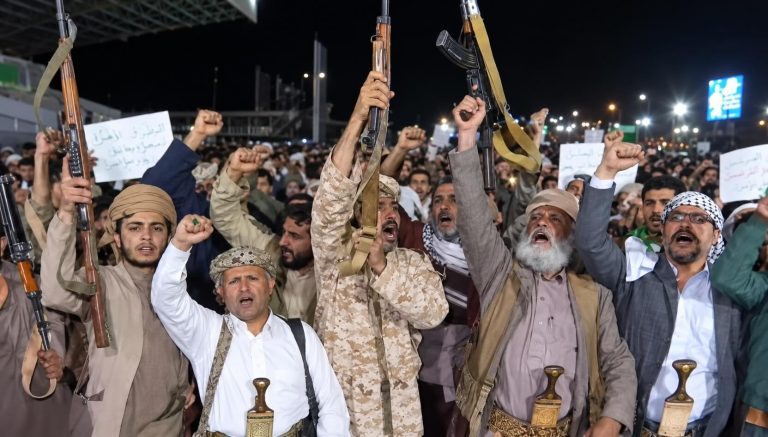
Hezbollah has rejected proposals linking a ceasefire to its disarmament, saying Israel must first stop its attacks and withdraw its forces from southern Lebanon. Israel, for its part, has continued to argue that it will act against threats from Hezbollah and other armed groups. The result is a ceasefire that exists alongside continuing mutual suspicion and periodic fire.
For Brussels, the interception of projectiles from Lebanon is an early reminder that financial support for the Lebanese army will not by itself settle the problem. Equipment, training and funding can improve capacity, but they cannot resolve the political question of whether the Lebanese state can impose authority over armed groups whose power is tied to regional conflict and Iranian influence.
The timing is also important. The Lebanon front is increasingly connected to wider Middle East tensions. Iran has declared support for Hezbollah while broader regional diplomacy remains under pressure. US-Iran contacts have been strained by military exchanges in the Gulf and disputes over frozen assets. In that environment, the Israel-Lebanon ceasefire is not insulated from the wider confrontation between Iran, Israel and the United States.
This matters for Europe because Lebanon is not a distant security file. Instability there affects migration pressure, humanitarian needs, EU crisis diplomacy, maritime security in the eastern Mediterranean, and the credibility of Europe’s security assistance instruments. The EU has chosen to support the Lebanese Armed Forces as the institution most capable of restoring state authority. That approach is coherent, but it depends on the army being able to operate in a political environment where Hezbollah’s weapons remain the core unresolved issue.
The latest projectile interceptions do not necessarily mean that the ceasefire is collapsing. Border incidents can occur even during periods of reduced fighting. But they show that the practical enforcement of the truce remains weak. If armed groups can launch projectiles and Israel responds with further strikes, the space for diplomatic stabilisation will narrow quickly.
The risk for Lebanon is that the ceasefire becomes a temporary pause rather than a framework for restoring state control. The risk for Israel is that sporadic attacks continue without a clear mechanism to prevent escalation. The risk for Europe is that its new military support package becomes exposed to the same structural problem that has undermined previous efforts: the Lebanese state is being asked to restore authority in areas where it does not yet hold full authority.
The EU package therefore has to be judged against operational reality. Strengthening the Lebanese army may be necessary, but it is not sufficient. The immediate test is whether the Lebanese state can prevent further launches, whether Israel refrains from actions that weaken the army’s position, and whether external actors allow the ceasefire to develop into something more durable than another short-lived pause.
Sunday’s interceptions show that the border remains active, uncertain and vulnerable to escalation. They also show why Brussels has linked military assistance to the broader question of state authority. Without a credible Lebanese monopoly over arms, the ceasefire will remain dependent on restraint by actors that do not share the same objectives.