According to CBS News, unnamed US officials with knowledge of the matter said Iran moved several aircraft to Pakistan while Islamabad was publicly positioning itself as a diplomatic conduit between the two sides. The aircraft were reportedly sent to Pakistan shortly after President Donald Trump announced a ceasefire with Iran in early April.
The reported move appears to have been aimed at preserving some of Iran’s remaining military and aviation assets from possible American airstrikes. CBS said the aircraft were moved to Pakistan Air Force Base Nur Khan, a strategically important military installation near Rawalpindi, close to the Pakistani capital, Islamabad.
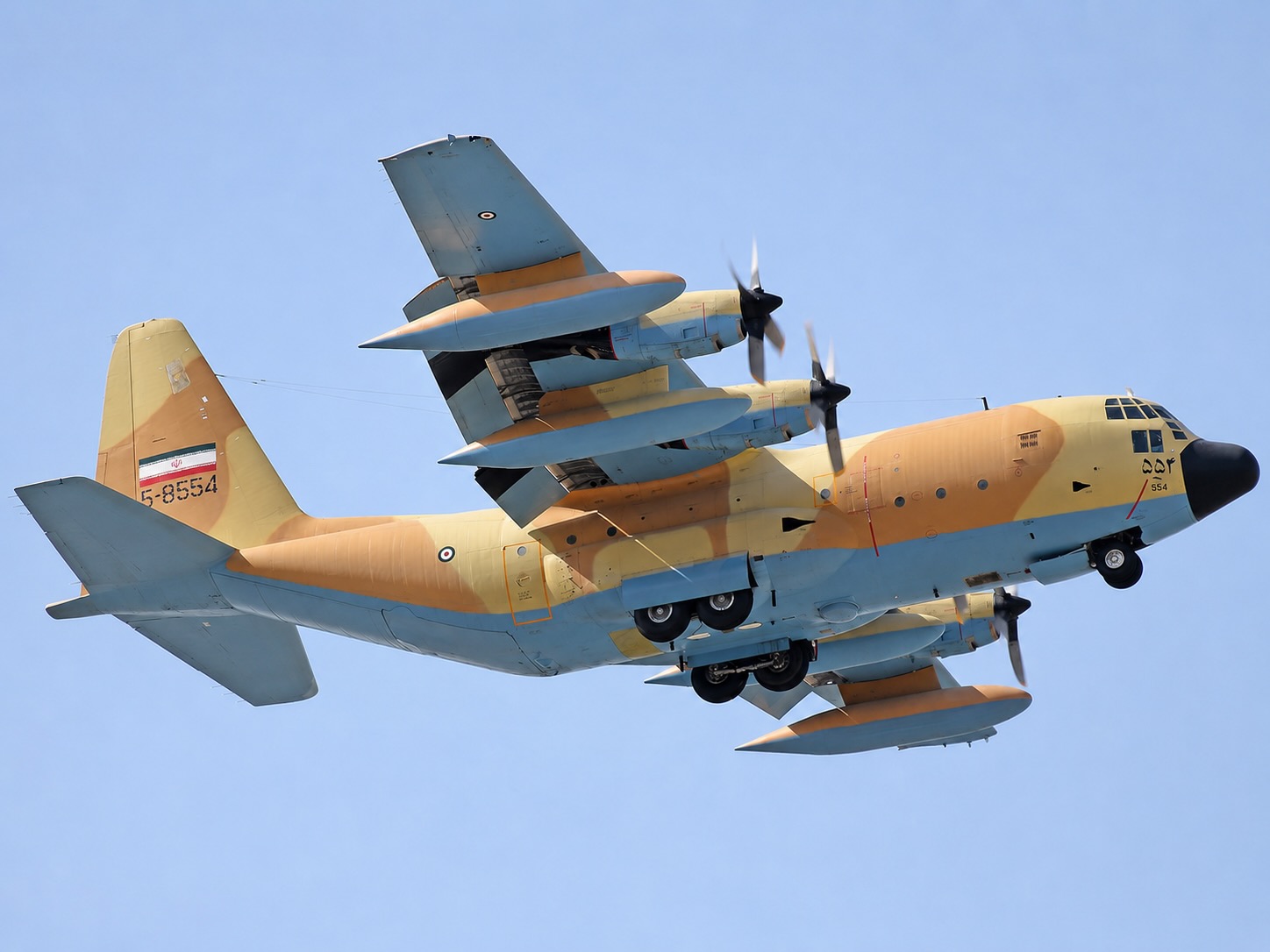
Among the aircraft reportedly sent to Pakistan was an Iranian Air Force RC-130, a reconnaissance and intelligence-gathering version of the Lockheed C-130 Hercules tactical transport aircraft. The presence of such an aircraft, if confirmed, would be significant because it would suggest that Pakistan may have provided temporary shelter not only for diplomatic or civilian aviation, but for Iranian military assets during an active regional crisis.
US Central Command did not comment directly on the allegation, instead referring CBS News to Afghan and Pakistani authorities. Pakistan has denied the report, with its Foreign Ministry describing the claim as “misleading and sensationalised”. A senior Pakistani official also told CBS that Nur Khan Air Base is located in a densely populated urban area and that a large number of parked aircraft would be difficult to conceal from public view.
However, the allegation remains diplomatically sensitive because Pakistan has been seeking to present itself as a stabilising intermediary in the US-Iran conflict. Islamabad has maintained relations with Tehran while also trying to preserve working ties with Washington. In that context, any decision to provide refuge for Iranian aircraft would complicate Pakistan’s stated role as a neutral channel for de-escalation.
The reported movement of aircraft also extended beyond Pakistan. CBS said Iran sent civilian aircraft to Afghanistan, although US officials told the broadcaster it was unclear whether military aircraft were among those flights. An Afghan civil aviation officer said a Mahan Air aircraft had landed in Kabul shortly before the war began and was later moved to Herat, near the Iranian border, after security concerns increased. Taliban spokesman Zabihullah Mujahid denied the presence of Iranian aircraft in Afghanistan.
The timing of the alleged aircraft movements is important. The US-Iran ceasefire has remained fragile, with Washington and Tehran continuing to accuse each other of failing to observe the spirit of the agreement. Reuters reported that President Trump said the ceasefire was on “life support” after rejecting Iran’s latest response to a US peace proposal.
Iran’s reported conditions included war reparations, sanctions relief, an end to restrictions on oil sales, and recognition of Iranian sovereignty over the Strait of Hormuz. The issue of Hormuz remains central to the conflict because the waterway is one of the world’s most important energy transit routes. US and Iranian forces have continued to exchange threats and limited military action around the Gulf despite diplomatic efforts.
The United Arab Emirates has also reported renewed Iranian drone activity. Reuters said the UAE’s air defences had dealt with two drones coming from Iran, following earlier strikes during the conflict. Iran has denied responsibility for recent attacks on Emirati territory.
For Islamabad, the allegations raise questions about how far Pakistan is prepared to go in balancing competing relationships. Pakistan has close geographical and political links with Iran, a long-standing security relationship with the United States, and increasingly deep military and economic dependence on China. The Stockholm International Peace Research Institute has reported that China supplied 80 per cent of Pakistan’s arms imports in 2021–25.
China is also a central actor in the wider crisis. Beijing maintains close relations with both Pakistan and Iran and has publicly welcomed diplomatic efforts aimed at preventing further escalation. President Trump is expected to raise the Iran conflict during his visit to China this week, alongside disputes over trade and Taiwan.
If the CBS account is confirmed, Pakistan’s conduct would be seen in Washington not merely as mediation, but as a form of practical assistance to Tehran at a moment when US forces were engaged in military operations against Iran. If the claim remains unproven, Islamabad will continue to argue that it is being drawn into a narrative that undermines its efforts to reduce tensions.
Either way, the report has exposed the difficulty of Pakistan’s position. By attempting to act as a channel between Washington and Tehran while maintaining strategic alignment with Beijing, Islamabad has entered a diplomatic space in which neutrality is increasingly difficult to sustain.