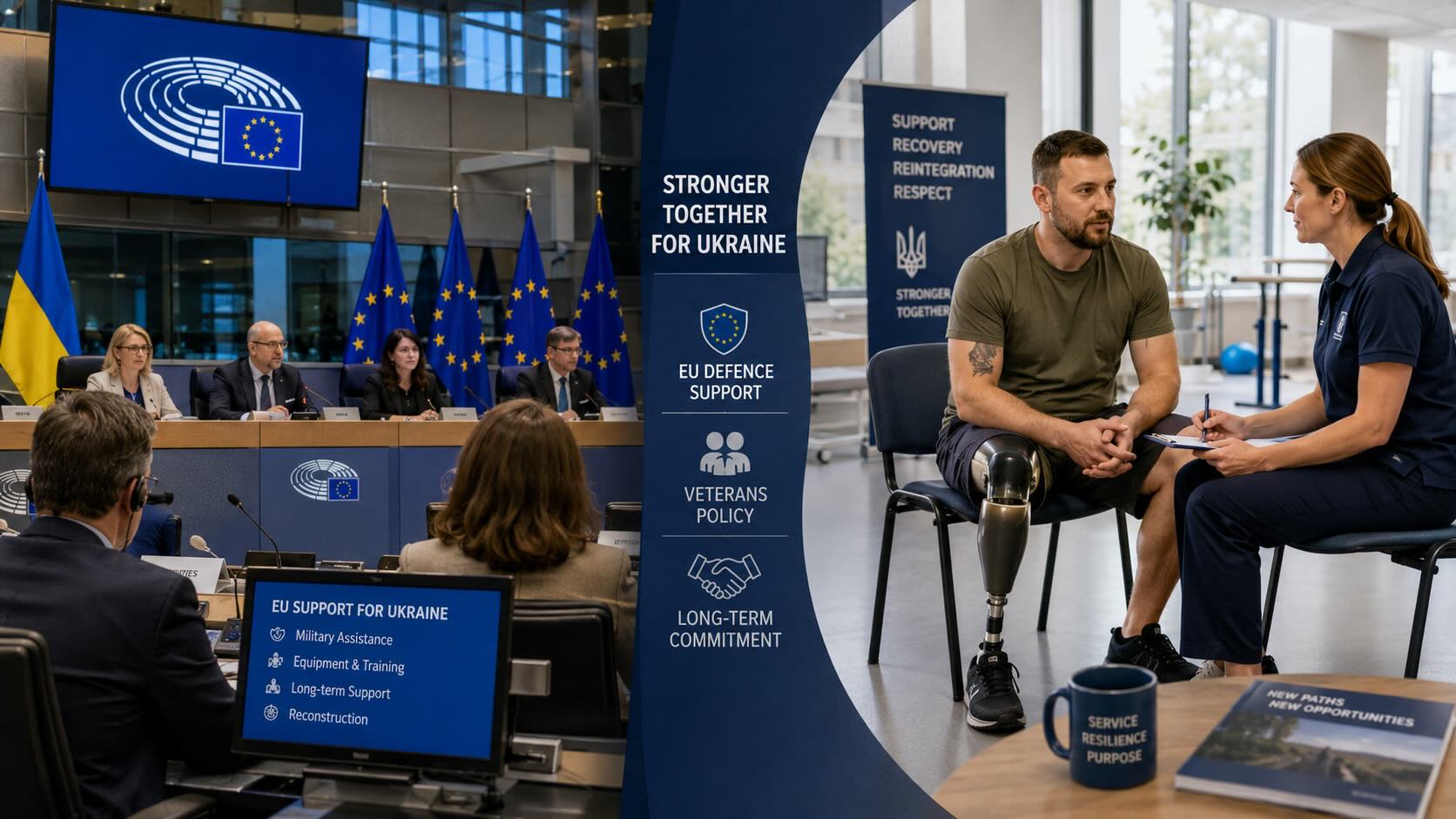
The European Parliament’s security and defence committee has turned its attention to Ukraine’s defence requirements and the longer-term question of support for Ukrainian veterans, in a two-day Brussels meeting held on 6 and 7 May.
The committee agenda included an exchange of views with Herald Ruijters, Deputy Director-General at the Commission’s defence industry department, on stepping up EU military support to Ukraine. The discussion focused on priorities for the €60 billion defence pillar of the Ukraine Support Loan, one of the central EU financing instruments intended to support Kyiv in 2026 and 2027.
The following day, members were scheduled to discuss enhanced EU support for veterans in Ukraine with representatives from the EU’s diplomatic service, the EU CSDP Advisory Mission and the Commission. Taken together, the two items point to a broader policy problem for Brussels: how to sustain Ukraine’s immediate military needs while also preparing for the social, institutional and security consequences of a large veteran population.
The Ukraine Support Loan was approved by the European Parliament in February as part of a €90 billion package intended to cover Ukraine’s financing needs for 2026 and 2027. Of that amount, €60 billion is allocated to defence capability and the procurement of military equipment, while €30 billion is directed to macro-financial assistance and budget support through the Ukraine Facility.
The defence pillar is designed to support the purchase of critical defence products, in principle from Ukrainian, EU and European Economic Area or EFTA defence industries. That structure is intended to combine support for Ukraine’s battlefield requirements with a wider European interest in expanding defence production capacity. The policy question now is how procurement priorities, industrial availability and delivery timelines are translated into equipment that reaches Ukraine when needed.
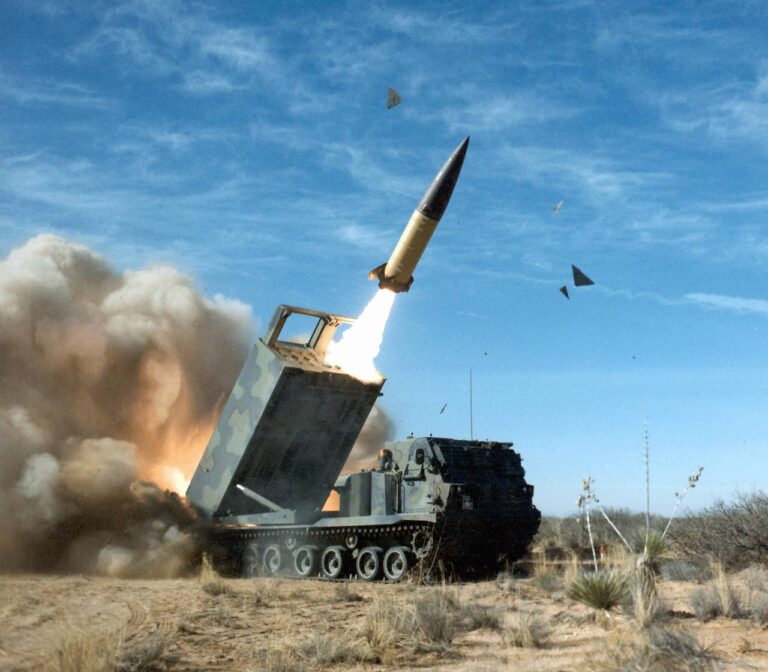
For Ukraine, the requirements remain immediate. Air defence, drones, ammunition, counter-drone systems, electronic warfare equipment, armoured vehicles, long-range strike capability, repair capacity and battlefield logistics all remain central to sustaining military operations. For the EU, the issue is not only the size of the financial envelope, but whether money can be converted into production, contracts and deliveries at sufficient speed.
The committee discussion therefore matters beyond the usual parliamentary scrutiny cycle. The EU’s defence assistance to Ukraine has increasingly become a test of whether European institutions can support a partner at war while also addressing weaknesses in Europe’s own industrial base. The same factories, supply chains and procurement rules that affect Ukraine’s access to weapons also shape the readiness of EU member states.
The separate discussion on veterans adds a further dimension. Ukraine’s armed forces, national guard, border service and other security structures have generated a very large veteran population since Russia’s full-scale invasion in 2022. That population includes personnel with physical injuries, psychological trauma, disabilities, disrupted employment histories and family support needs. It also includes people with significant military experience who will continue to shape Ukraine’s security and political life.
A recent European Parliament research briefing notes that Ukraine has adopted a veterans policy strategy for 2030, aimed at restoring human capital and wellbeing for veterans and their families. The strategy also seeks to define the role of veterans in Ukraine’s security and defence capabilities, while addressing employment, rehabilitation, disability rights and social reintegration.
For the EU, veterans policy is not separate from defence policy. A durable support system for former service personnel will affect Ukraine’s post-war stability, labour market, public administration, health services and capacity to rebuild. It will also be relevant to Ukraine’s accession path, since the European Commission has assessed aspects of veterans policy in areas including employment and the rights of persons with disabilities.
The EU CSDP Advisory Mission has a practical role in this field because of its work with Ukraine’s civilian security sector. Its involvement in the committee discussion reflects the fact that veterans support is not only a welfare matter. It also concerns policing, justice, public trust, local governance and the reintegration of people with military experience into civilian life.
The political challenge is that these two tracks operate on different timelines. Military support must respond to front-line needs measured in weeks and months. Veterans policy requires systems that will operate for years. Both demand money, institutional capacity and coordination between Brussels, Kyiv, member states and international partners.