Yet beneath the rhetoric lies an increasingly alarming reality. Britain’s armed forces are now so weakened, so underfunded and so structurally hollowed out that they represent not merely a national embarrassment, but arguably the greatest single threat to Europe’s collective security.
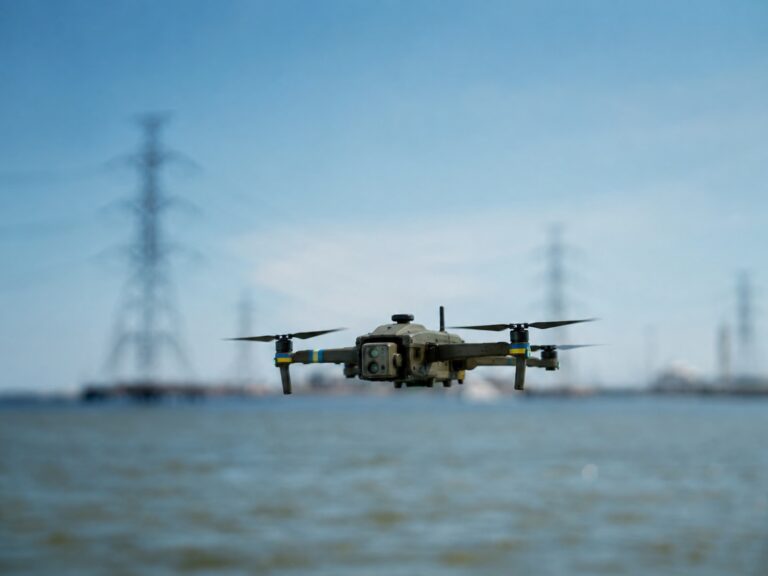
Nothing illustrated this more starkly than the recent missile strike on RAF Akrotiri in Cyprus. This was not some obscure listening post in a distant desert. Akrotiri is sovereign British territory — one of the most strategically important RAF installations on earth. And yet after the attack, Britain appeared incapable of dispatching a single major warship promptly to the Eastern Mediterranean.
That fact alone should have sent shockwaves through Westminster. The question of why the territory was left undefended in the first place has never been addressed.
Instead, the episode was quietly absorbed into the modern British habit of managed decline. Excuses emerged immediately: vessels in refit, crews unavailable, operational overstretch, maintenance schedules. But enemies do not care about maintenance schedules. Moscow will not postpone aggression because a Type 45 destroyer is awaiting repairs in Portsmouth.
The grim truth is that the Royal Navy now often struggles to perform the most basic function of any serious maritime power: deploying credible force at speed.
Donald Trump once reportedly mocked Britain’s aircraft carriers as “toys”. At the time, the British establishment reacted with predictable outrage. Yet viewed coldly, his assessment was uncomfortably close to reality. Britain spent billions constructing two enormous carriers that frequently sail without sufficient escort protection. The carriers themselves possess surprisingly limited defensive weaponry, relying heavily upon accompanying destroyers and frigates for survival. The difficulty, however, is that those escorts are so frequently docked for repairs, modernisation or manpower shortages that availability has become a national joke.
The image Britain projects abroad increasingly resembles that of a fading aristocrat still wearing military medals from a more glorious age while quietly pawning the family silver behind closed doors.
The Army presents an even darker picture. Successive governments have reduced troop numbers to levels that would once have been considered strategically absurd. Britain now fields its smallest Army since the Napoleonic era, at precisely the moment Europe faces its gravest land-security threat since the Cold War.
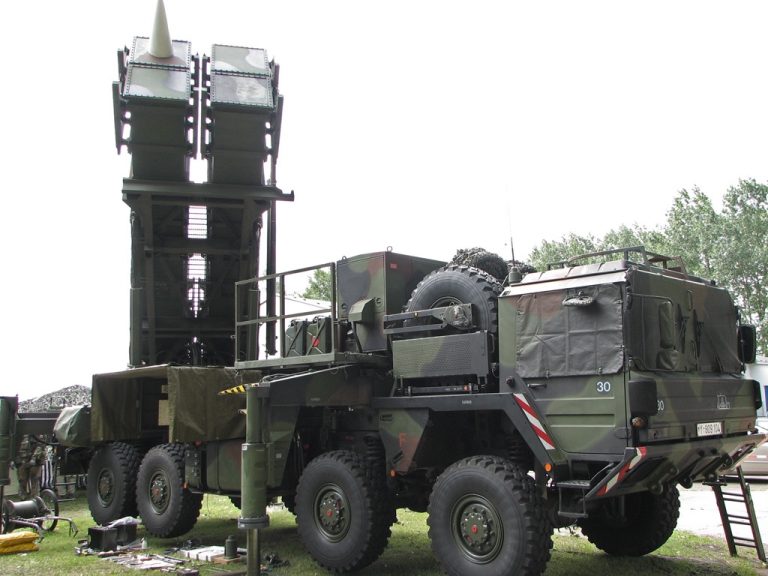
Particularly alarming is the weakness of Britain’s forward presence in Estonia. Publicly described as a robust NATO commitment, the deployment is in reality alarmingly fragile. Analysts have repeatedly warned that British forces in the Baltics lack sufficient air defence systems, lack sufficient artillery, and lack the logistical depth required for sustained high-intensity warfare.
Should Russia ever launch a major assault against NATO’s eastern flank, Britain’s contingent could find itself catastrophically exposed within hours.
This is not criticism of British soldiers, who remain among the finest professionals in the world. It is criticism of political leadership that asks too little-equipped a force to perform increasingly dangerous missions while pretending everything remains under control.
Then there is the RAF. Once the symbol of Britain’s technological and martial excellence, it too has been pared down to a force dangerously short of mass. Britain possesses highly capable aircraft, certainly, but too few of them. In modern warfare, quantity matters. Precision-guided brilliance means little if there are insufficient airframes to sustain prolonged operations.
More worrying still is the state of Britain’s ammunition and missile reserves. Vast quantities of matériel have rightly been sent to Ukraine. But almost nobody in government appears willing to discuss openly what remains behind. Defence experts have quietly warned for years that British stockpiles were inadequate even before the Ukraine war began. One shudders to imagine the true condition now.
Wars are not won through PowerPoint presentations at NATO summits. They are won through industrial capacity, munitions production, operational readiness and strategic seriousness. Britain currently appears deficient in all four.
Yet perhaps the most worrying weakness of all lies not in matériel, but in leadership.
Europe faces a geopolitical environment defined by Russian aggression, American unpredictability and mounting instability across the Middle East. This is a moment demanding clarity, decisiveness and national resolve. Instead Britain has drifted into an era of managerial politics utterly unsuited to strategic crisis.
Keir Starmer may be competent in the language of bureaucracy, but nothing in his leadership thus far suggests a figure capable of national mobilisation or military renewal. His instinct appears perpetually technocratic rather than strategic. At precisely the hour Europe requires Churchillian seriousness, Britain is stuck with Starmer.
This matters because Europe still relies heavily upon Britain psychologically as much as militarily. Britain remains one of NATO’s nuclear powers. It occupies a permanent seat on the UN Security Council. It retains enormous diplomatic influence and intelligence capability. The assumption persists that Britain would serve as one of Europe’s principal military anchors during major conflict.
But assumptions can become lethal.
If Britain no longer possesses the ability to deploy substantial, sustainable force rapidly, then the entire European security structure becomes more brittle. Deterrence depends not merely upon capability, but upon perceived capability. Once adversaries begin to suspect weakness, strategic risk rises dramatically.
And today, Britain increasingly looks weak.
Not weak in courage. Not weak in tradition. Not weak in professionalism. But weak in ships, weak in numbers, weak in stockpiles, weak in readiness and weak in leadership.
That is the true scandal.
Europe does not primarily fear Russian tanks because Russia is invincible. Europe fears them because too many Western governments spent thirty years dismantling the military strength that preserved peace. Britain merely carried the process further than most, while continuing to speak as though nothing had changed.
The result is a dangerous illusion — one that events at Akrotiri briefly exposed to the world.
And humiliations of that kind rarely remain isolated for long.
Drone used in attack on RAF Akrotiri contained Russian-made parts, report says