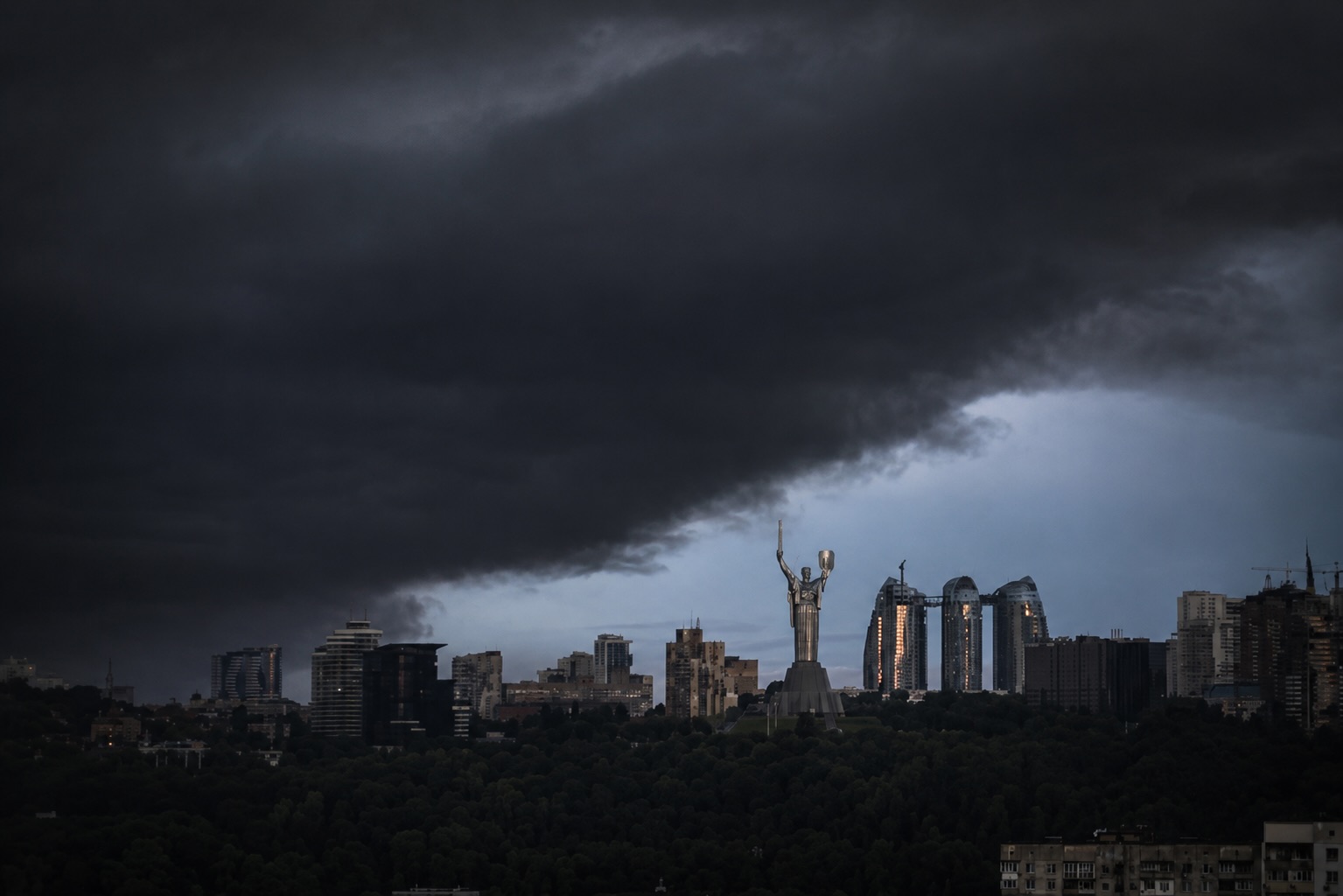
Ukraine’s Air Force said Russia launched 73 missiles and 656 drones overnight into Tuesday, including eight Zircon missiles, 33 Iskander-M ballistic missiles, 27 Kh-101 cruise missiles and five Kalibr cruise missiles. It said Ukrainian forces shot down or suppressed 40 missiles and 602 drones, while impacts were recorded at 38 locations. The main direction of the strike was Kyiv, but Dnipro, Kharkiv, Zaporizhzhia, Poltava region and other areas were also attacked, according to UNN, citing the Ukrainian Air Force.
The Associated Press reported that at least 11 people were killed and dozens injured across Ukraine. In Kyiv, four people were killed and 63 injured, including children, while residential buildings and other civilian infrastructure were damaged in eight districts. In Dnipropetrovsk region, at least six people were killed and 36 injured after strikes on Dnipro. A rescuer was killed in a second attack as emergency workers arrived at the scene, according to AP reporting from Kyiv.
For Ukraine, the immediate military issue remains the continuing pressure on its layered air-defence network. The reported interception rate against drones remains high, but ballistic missiles continue to present a different challenge. Ukraine has repeatedly asked its allies for additional Patriot systems and interceptor missiles, arguing that existing coverage is insufficient against large mixed barrages involving ballistic, cruise, hypersonic and decoy systems.
For NATO, the operational issue is different but increasingly connected. Poland’s Operational Command said military aviation operations began in Polish airspace during the Russian attack, while ground-based air-defence and radar systems were placed on standby. The measures were described as preventive and intended to ensure the safety of Polish airspace. The command later said the operation had ended and that no violation of Polish airspace had been recorded, according to Interfax-Ukraine.
That final point matters. Poland was not hit, and Warsaw did not report an incursion. However, the need to activate aircraft and air-defence systems during Russian attacks on Ukraine has become part of the security routine on NATO’s eastern flank. Each major Russian strike near western and central Ukraine now requires neighbouring NATO states to assess whether objects could approach, enter or threaten their airspace.
This creates a persistent burden for alliance air policing and national air-defence networks. Poland must distinguish between missiles, drones, debris, decoys and possible trajectory errors in real time, while avoiding escalation and protecting civilian areas. The more Russia relies on large mixed attacks, the more complex that calculation becomes for NATO states bordering Ukraine.
The latest strike also underlines the scale problem. Hundreds of drones and dozens of missiles can saturate radar pictures, force repeated launches of interceptors, and compel defensive aircraft to remain on alert. Even when no NATO territory is violated, the operational effect reaches beyond Ukraine’s borders. Air bases, radar units, air-defence crews and command centres in neighbouring countries become part of the response cycle.
This is not a theoretical concern. Since 2022, NATO members bordering Ukraine have faced repeated incidents involving missiles, drones or debris linked to Russia’s war. The alliance has reinforced air policing and air-defence deployments across the eastern flank, but the pattern of Russian strikes continues to test how quickly national and allied systems can react to events just outside NATO territory.
For European defence planners, the lesson is not only that Ukraine needs more interceptors. It is also that NATO’s eastern border is exposed to spillover risk from a war in which Russia routinely uses long-range weapons, mass drone salvos and complex strike packages. The boundary between Ukraine’s air-defence challenge and NATO’s airspace-management challenge is increasingly narrow in operational terms, even if it remains legally and politically distinct.
The reported use of Zircon missiles adds another dimension. Russia has promoted Zircon as a hypersonic system, though independent assessment of its performance remains limited. Even so, any combination of ballistic and high-speed missile threats reduces reaction time and places additional demands on radar, command-and-control and interceptor availability.
The political question for NATO governments is whether current arrangements are sufficient. Poland and other eastern-flank states are already operating under heightened alert during major Russian strikes. Ukraine continues to argue that better protection of its airspace would also reduce risks to neighbouring NATO territory. Western governments, however, remain cautious about any arrangement that could be interpreted as direct NATO involvement in the war.
For now, the practical response remains incremental: more air-defence systems for Ukraine, continued NATO air policing, expanded radar surveillance and tighter coordination between Ukraine and neighbouring alliance members. The latest attack shows why that approach is likely to remain under pressure. Russia’s strike campaign is not only a Ukrainian battlefield issue. It is also a recurring test of NATO’s ability to manage risk on its eastern border without allowing the war to cross into alliance territory.