China has imposed export controls on seven European entities over alleged involvement in arms sales to, or cooperation with, Taiwan, extending a tool more commonly associated with Beijing’s measures against US defence companies into the European defence industrial sector.
The Chinese Ministry of Commerce announcement, published on 24 April, added the entities to China’s export control list with immediate effect. It prohibits Chinese export operators from supplying them with dual-use items and also bars overseas organisations and individuals from transferring or providing Chinese-origin dual-use items to them.
The seven listed entities are FN Herstal and Fabrique Nationale de Herstal, both in Belgium; FN Browning; Germany’s Hensoldt AG; and four Czech-based entities: OMNIPOL a.s., EXCALIBUR ARMY spol. s r.o., SPACEKNOW INC., odstepny zavod s.r.o., and VZLU AEROSPACE a.s. The list was published as part of the ministry’s 2026 Announcement No. 20.
The measure is legally framed under China’s export-control regime. The ministry said the decision was taken to safeguard national security and interests and to fulfil non-proliferation obligations. The notice states that ongoing activities covered by the restriction must stop immediately. It also provides that exports may still be possible in special circumstances, but only where an exporter applies to the Ministry of Commerce for approval.
In a separate statement by the ministry’s spokesperson, Beijing said the action targeted “a small number” of EU military-related entities which it said had participated in arms sales to Taiwan or had links with Taiwan authorities. The ministry said the measure applied only to dual-use items and would not affect normal China-EU trade.
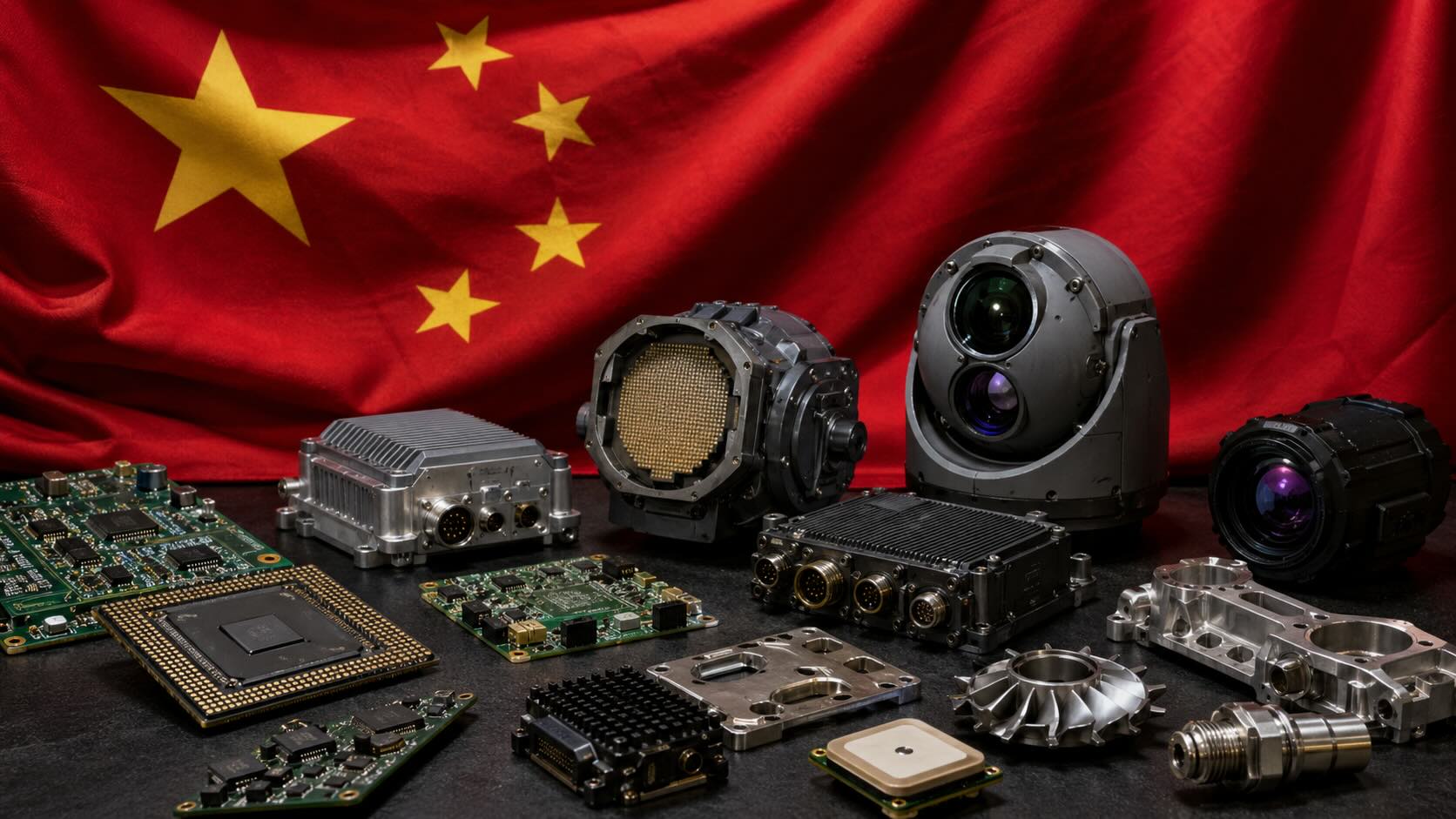
Dual-use controls matter because they cover goods, technologies and services that can have both civilian and military applications. In defence supply chains, that category can include electronic components, specialist materials, sensors, aerospace technologies, communications equipment, software and manufacturing inputs. The practical effect will depend on whether the listed companies source relevant Chinese-origin inputs directly or through third parties.
The immediate commercial impact may therefore vary sharply between the affected entities. Large defence companies often manage complex supplier networks across several jurisdictions and may already have compliance mechanisms for export-controlled components. Smaller suppliers, or companies working in aerospace, surveillance, radar, satellite or precision systems, may face more direct due-diligence burdens if Chinese-origin items form part of their production chain.
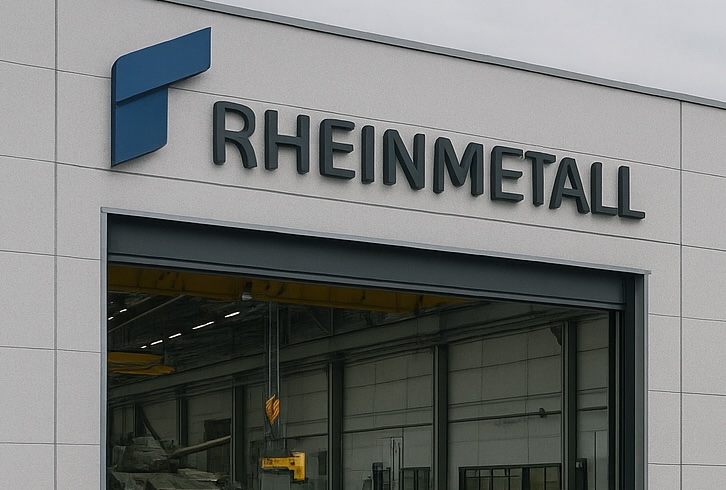
The inclusion of Hensoldt is particularly notable because of its role in defence electronics and sensors. The German company produces radar and optronics systems used across European and allied defence platforms. FN Herstal and FN Browning are associated with firearms and defence manufacturing. The Czech entities include companies active in defence production, aerospace, satellite data and military-industrial supply chains.
The controls also carry a political signal. Taiwan remains one of the most sensitive issues in China’s external relations. Beijing considers Taiwan part of its territory, while Taiwan has its own elected government and rejects Chinese sovereignty claims. European governments have generally avoided large-scale arms transfers to Taiwan, but some European companies have had defence or security-related commercial connections with Taipei.
For Europe, the timing is significant. Governments are attempting to expand defence production, reduce supply-chain vulnerabilities and increase resilience after Russia’s full-scale invasion of Ukraine. Export controls by a major supplier state expose another layer of dependency risk, particularly where European defence manufacturing still uses imported components, raw materials or technologies that could become subject to political restriction.
The case also overlaps with wider debates over economic security. The EU has been examining dependencies in critical raw materials, semiconductors, batteries, drones, artificial intelligence, space systems and defence production. China’s move shows how export controls can be used not only in direct bilateral disputes, but also against companies operating in third-country defence relationships.
The restrictions do not amount to a full trade embargo against the companies concerned. They concern Chinese-origin dual-use items and leave open a licensing route in special circumstances. However, the immediate compliance burden could be broader than the formal wording suggests. Suppliers, banks, logistics providers and intermediaries may seek confirmation that transactions do not involve restricted goods or prohibited transfers.
For European defence planners, the central issue is not whether all seven companies face immediate operational disruption. It is whether China’s action indicates a more assertive willingness to use export-control tools against European defence firms over Taiwan-related activity. If so, European governments and industry will have to factor geopolitical exposure more directly into procurement, sourcing and industrial policy.
The measure also gives defence companies a clear warning that Taiwan-related commercial activity can trigger Chinese countermeasures even where the companies are based in Europe rather than the United States. That creates a difficult operating environment for firms that serve both European security requirements and global defence markets.
The European response will be watched closely. If Brussels treats the measure primarily as a bilateral China-Taiwan issue, companies may be left to manage the commercial consequences individually. If it is treated as a defence-industrial and economic-security matter, it could strengthen arguments for deeper mapping of Chinese-origin inputs in European defence supply chains.
For now, the measure is narrow in legal form but wider in strategic implication. It links Taiwan, China-EU trade, export-control law and European defence resilience in a single decision. That makes it a defence-industry issue as much as a diplomatic one.