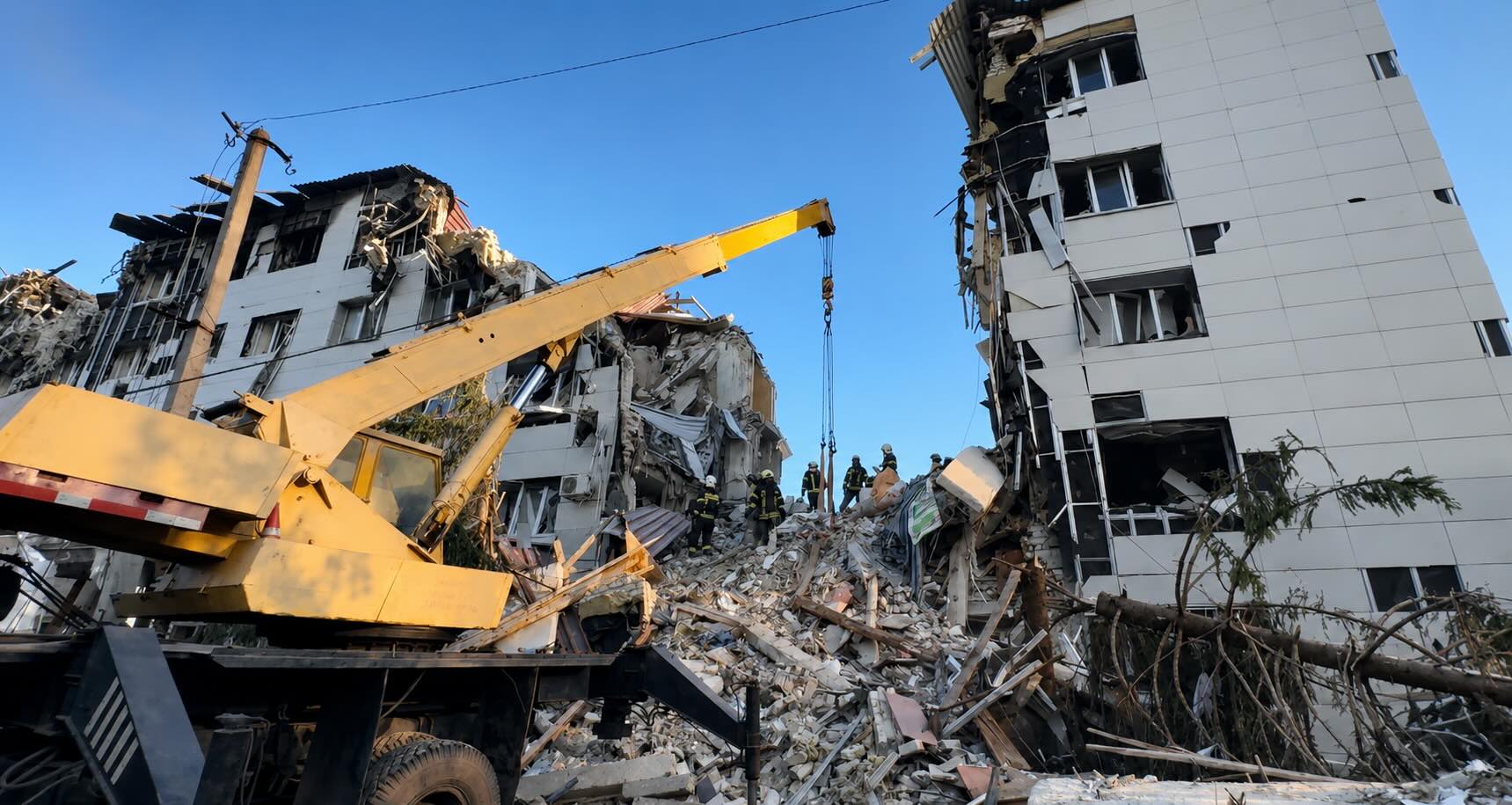
The drone strike on the Starobilsk vocational college in Russian-occupied Luhansk region has become a contested incident in which the central facts remain unresolved. Russian-installed authorities say 21 people were killed after the college dormitory was hit. Reuters reported from Starobilsk that forensic experts were examining the destroyed building, while noting that its access formed part of a Russian foreign ministry-organised media visit and that the agency could not independently verify either side’s account.
Moscow has presented the strike as an attack on a civilian educational facility. President Vladimir Putin accused Ukraine of deliberately targeting a student dormitory, and Russian officials said that 86 teenagers were inside the building at the time. In its early coverage, TASS reported the Kremlin’s claim that those present were aged between 14 and 18, a framing that was quickly repeated by Russian state media and officials.
Ukraine has denied targeting civilians. According to Reuters, the Ukrainian military said it had struck an “elite drone command unit” and acted in accordance with international humanitarian law. Putin, by contrast, said there were no military or intelligence facilities in the area. The dispute therefore turns not only on the number of victims, but on whether the site was purely civilian or had acquired a military role.
Casualty data later published by the occupation authorities appears to complicate the initial Russian narrative. The list reportedly contained 21 names — three young men and 18 young women — with the years of birth indicating that most of those killed were young adults rather than children. Separately, an alleged order attributed to the director of the Starobilsk professional college, dated January 2026, purportedly concerned the transfer or use of dormitory premises by a military unit. Russian-installed authorities have dismissed the document as fake, and its authenticity has not been independently established.
The distinction is legally significant. The death of young adults does not make a strike lawful. Nor would the presence of military personnel automatically remove all civilian protection from a college or dormitory. Under international humanitarian law, the relevant questions are whether the site was being used for military purposes, whether those present were directly participating in hostilities, and whether the expected military advantage was proportionate to the foreseeable civilian harm.
The public record remains incomplete. Reuters later reported that the death toll had risen to 18 before Russian-installed authorities subsequently put the figure at 21. That report also noted that Ukraine denied attacking a civilian facility and said it had targeted a drone unit. At a UN Security Council meeting requested by Russia, both sides accused each other of war crimes, while the UN condemned attacks on civilians but did not provide an independent finding on the Starobilsk strike.
The allegation that the college site was being used for drone-related military activity would, if verified, change the assessment of the target. Drone warfare has become central to the conflict, and both Russia and Ukraine have expanded training programmes for operators. However, the specific claim that those killed in Starobilsk were undergoing drone training remains unverified. The available evidence consists of competing official statements, a disputed document, casualty data published by Russian-installed authorities, and limited media access under Russian control.
For Russia, the incident has provided a basis for accusing Ukraine of deliberately killing civilians. For Ukraine, the case fits a broader pattern in which Russian forces are accused of using civilian infrastructure in occupied territory for military purposes. Neither account can yet be treated as complete.
What is established is that 21 people died in Starobilsk. What remains disputed is whether the college was functioning solely as an educational site, as Moscow claims, or whether it had also become connected to Russia’s drone warfare infrastructure in occupied Luhansk. Until the alleged documents, casualty lists, site conditions and military claims can be independently examined, the incident should be reported with caution.