Ukraine appears to be intensifying a strike campaign aimed not only at Russian frontline units, but also at the command, logistics and air-defence systems that support them in occupied territory and deeper inside Russia.
According to Ukrainian military accounts, strikes overnight on 26 May hit a Russian command post in Ocheretyne in Donetsk region and a regimental control point in Verkhniia Krynytsia in Zaporizhzhia region. The same account said drone-control points were struck near Nesterianka in Zaporizhzhia region and Novohrodivka in Donetsk region, alongside drone-storage and logistics facilities in occupied Donetsk region.
The claims have not been independently verified in full, but they correspond with a wider pattern of Ukrainian strikes against Russian command posts, logistics hubs and military support infrastructure. Earlier Ukrainian military reporting has described similar operations as part of systematic efforts to reduce Russia’s offensive capacity by targeting command posts, logistics warehouses and drone-control points in occupied territory.
The military purpose of such strikes is clear. Command posts are not symbolic targets. They are where orders are issued, battlefield information is processed, drone operations are coordinated and artillery or assault groups are directed. Hitting them can disrupt the tempo of operations even when it does not immediately alter the front line.
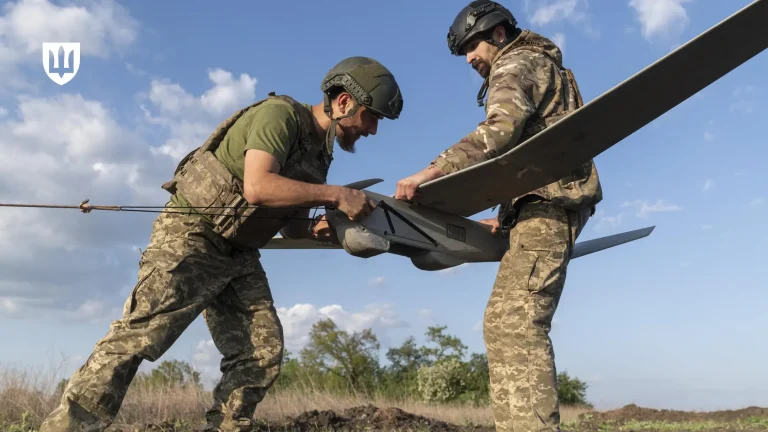
The emphasis on drone-control centres is also significant. Both sides now rely heavily on unmanned systems for reconnaissance, targeting, artillery correction and direct attack. Russian assault operations are increasingly dependent on drone coverage. A strike on a drone-control point or storage site can therefore affect not only one unit, but the wider ability to observe Ukrainian positions and support infantry movements.
Ukrainian military reporting also said a railway fuel tanker was hit near Debaltseve, alongside logistics facilities in occupied Donetsk. If confirmed, the attacks would fit a broader Ukrainian effort to place Russian supply routes under sustained pressure across occupied eastern and southern Ukraine. The same logic applies to strikes against fuel and refining infrastructure inside Russia, where damage to processing, storage and distribution systems can complicate Moscow’s ability to sustain military operations over time.
Ukraine’s campaign against Russian oil infrastructure has already had measurable consequences. Reuters reported that the Rosneft-owned Syzran refinery in Samara region suspended oil refining after damage to processing equipment. The Associated Press also described the Syzran attack, more than 800 kilometres from Ukraine’s border, as part of Kyiv’s expanding long-range strike capability.
Such attacks do not necessarily create an immediate fuel shortage at the front. Their effect is cumulative. They complicate repair cycles, disrupt distribution, force Russia to divert air-defence assets, and increase the cost of sustaining military operations over time.
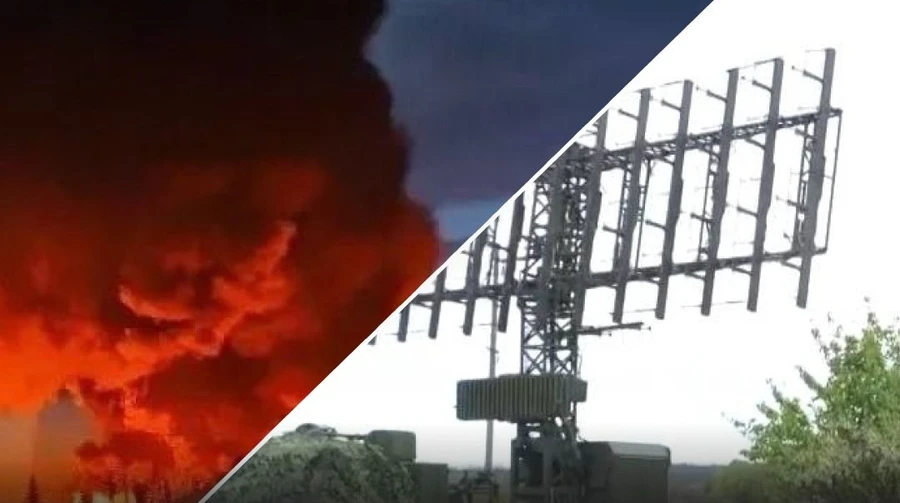
Another element is air defence. Ukraine has reported strikes on Russian Nebo-type radar systems in occupied territory, including systems used for long-range detection of aerial targets such as aircraft, cruise missiles and drones. These radars form part of Russia’s wider early-warning and air-defence network, and their loss can reduce the ability of Russian forces to detect and track incoming Ukrainian strikes. Defence Express described the Nebo-SVU as a costly component of Russia’s air-defence architecture.
Radar systems matter because they form part of the protective network around Russian forces, logistics hubs and industrial sites. If Ukraine can reduce Russian radar coverage, it may improve the chances of subsequent drone or missile strikes reaching command posts, fuel facilities and storage depots.
The emerging pattern suggests a layered Ukrainian approach. First, air-defence assets and radar systems are targeted to weaken Russia’s protective screen. Second, drone-control centres and command posts are struck to disrupt battlefield coordination. Third, fuel, rail and logistics facilities are attacked to reduce Russia’s ability to sustain operations over time.
This does not mean that Russian forces are close to collapse. Russia retains manpower, artillery, drones, fortifications and significant logistical capacity. Nor can every Ukrainian claim be treated as confirmed without independent evidence. But the operational trend is visible: Kyiv is trying to impose costs beyond the immediate line of contact and to turn Russia’s rear areas into a less secure operating environment.
For Ukraine, the objective is not only to destroy individual sites, but to create cumulative pressure. A command post can be moved, a damaged radar can sometimes be replaced, and a refinery can be repaired. The problem for Russia arises when such strikes become frequent enough to force constant relocation, repair, dispersion and reorganisation.
That is why the reported attacks on Ocheretyne, Verkhniia Krynytsia, Nesterianka, Novohrodivka, Donetsk, Debaltseve and Syzran should be viewed together rather than as isolated incidents. They point to an expanding strike campaign directed at the systems that allow Russian forces to command, supply, protect and coordinate their operations.