

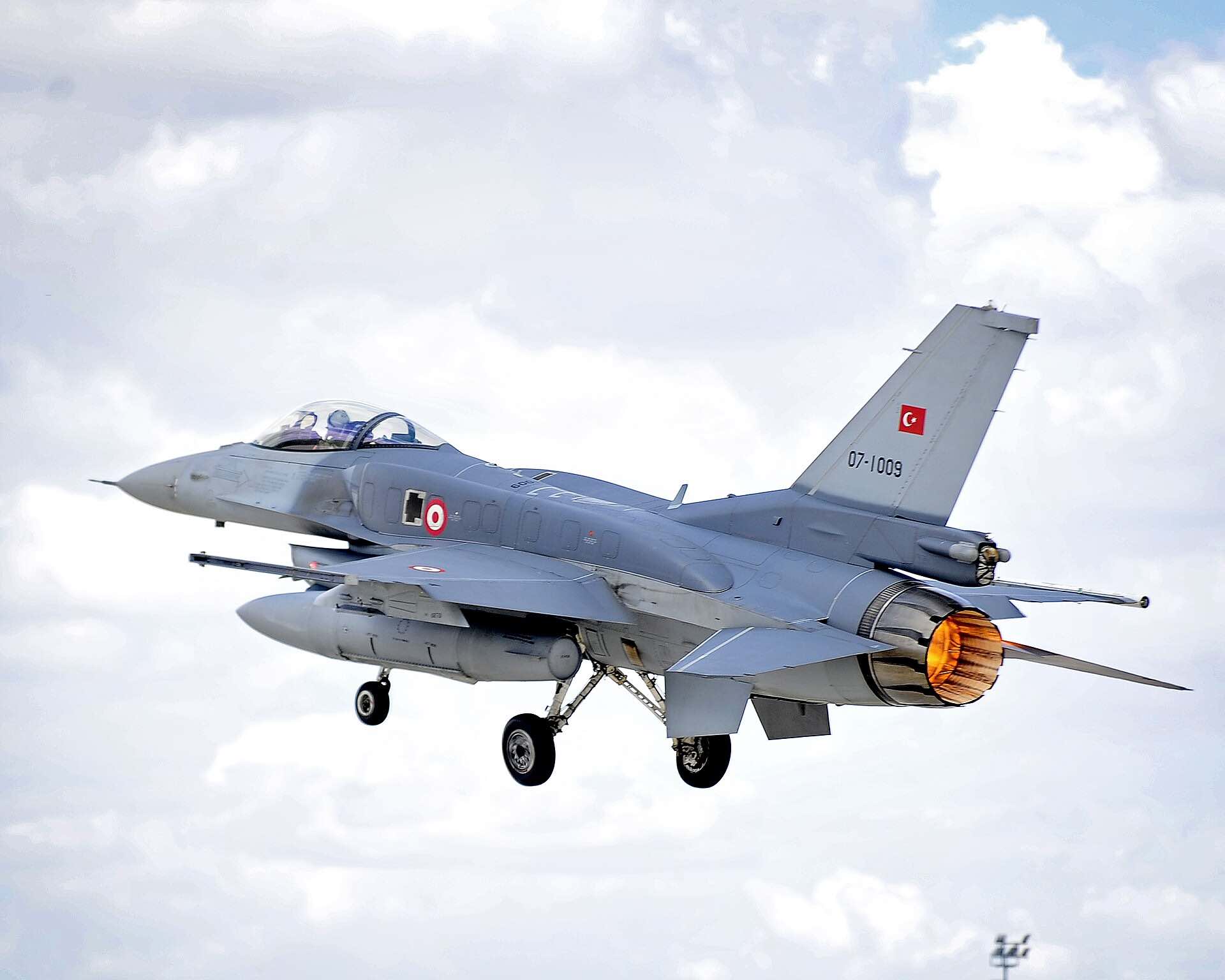
Yet the timing is awkwardly suggestive. Coming only days after a drone incident near the British sovereign base at RAF Akrotiri, and amid uncomfortable revelations about the absence of credible British air defences in the region, Ankara’s move reads less like routine logistics and more like a pointed geopolitical message.
It is, at the very least, a reminder of power — and of the vacuum that indecision can create.
For half a century the island of Cyprus has been divided between the internationally recognised republic in the south and the illegal Turkish-backed administration in the north, created after Ankara’s intervention in 1974. The situation has long been described as “frozen”. But frozen conflicts have a habit of thawing when strategic conditions change.
In the eastern Mediterranean today, several such conditions are shifting simultaneously: regional instability, renewed tensions between NATO allies, and — perhaps most significantly — a perception that the West’s traditional guarantors of order are distracted or unwilling to act. The F-16 deployment must be viewed in that light.
Military analysts note that the aircraft themselves are not, strictly speaking, a dramatic escalation. Turkey already maintains forces in the north of the island, and the airfields there have been periodically used by Turkish aircraft. What is new is the signal. Fighter jets, unlike ground troops, are instruments of rapid coercion. They extend reach, provide immediate deterrence, and — crucially — allow a state to establish air superiority in the opening hours of any potential conflict. In short, they are not merely defensive assets.
Placed only a short flight from the Cypriot government-controlled south, the aircraft could theoretically support a range of operations: reconnaissance, air policing, maritime patrols or, in the worst case, preparation for offensive manoeuvres. Few serious observers believe a Turkish invasion of southern Cyprus is imminent. Yet the presence of fast jets inevitably raises the question of contingency planning. Military deployments are rarely accidental.
The eastern Mediterranean has recently been reminded of the vulnerability of Western installations following reports that a drone approached or targeted the British base at RAF Akrotiri — a crucial hub for British air operations in the Middle East. Whether the drone was probing, signalling or testing defences, the episode exposed an awkward truth: Britain’s capacity to protect its own sovereign territory on the island appears limited.
The absence of layered air defence around such a strategic facility has startled many in defence circles. Akrotiri is not a remote listening post; it is a central node in British and allied operations across the Levant and the Gulf. Yet the episode suggested that the United Kingdom’s presence, once formidable, now rests on rather thinner foundations. If that impression exists in London, it certainly exists in Ankara.
In geopolitics, perceptions matter almost as much as capabilities. A state that appears hesitant, distracted or unwilling to act invites others to test its resolve. Turkey’s fighter deployment could therefore be interpreted — charitably — as a precautionary measure amid regional uncertainty. Less charitably, it may be a calculated probe: a demonstration that Ankara can escalate its posture on Cyprus while London hesitates.
The British response thus far has hardly dispelled that perception. Only on Tuesday, March 10th, has the United Kingdom eventually dispatched a single warship to the Mediterranean in response to the wider tensions surrounding Cyprus and regional security. A single vessel, however capable, is a modest signal in strategic terms. Naval deployments carry political meaning as well as military weight, and the symbolism here is unmistakably restrained.
France, meanwhile, had already dispatched an impressive naval force.
When Argentina invaded the Falkland Islands in 1982, the government led by Margaret Thatcher reacted with remarkable speed. Within days Britain had assembled a naval armada — the task force that sailed south to retake the islands during the Falklands War. In total, 67 warships and submarines were mobilised, supported by a formidable array of auxiliary vessels and logistics ships.
The mobilisation was not merely military; it was psychological. Britain demonstrated to allies and adversaries alike that aggression against its territory would meet a swift and overwhelming response.
Few would argue that the situation in Cyprus is identical to the Falklands crisis. Yet the contrast in tempo is striking. Where Thatcher’s government acted with urgency bordering on audacity, the present response from London has appeared cautious to the point of inertia.
That inevitably reflects on the leadership of the current prime minister, Keir Starmer.
Starmer entered office with a reputation for caution. Admirers called it prudence; critics called it timidity. Yet even those who expected a measured style of governance may be surprised by the degree of hesitation now evident in Britain’s strategic posture. The eastern Mediterranean is not a distant theatre but a region where Britain retains sovereign bases, treaty obligations and significant historical responsibilities.
In that context, the limited response risks projecting weakness. Opinion writers are not obliged to pretend neutrality where judgement is required. The uncomfortable truth is that many observers suspected the current government might struggle to project firmness abroad. What perhaps few anticipated was the scale of that reticence. We knew Starmer was cautious. We did not know he would appear quite this cautious.
In diplomacy, weakness is rarely advertised. It is inferred, and if such an inference is being drawn in Ankara, the consequences could extend beyond symbolic fighter deployments. Turkey is a complex and ambitious regional power, balancing NATO membership with an increasingly assertive national strategy. Its leaders have shown repeatedly that they are willing to test boundaries — in Syria, in Libya, and in the eastern Mediterranean itself. Cyprus, divided and strategically located, remains a natural arena for such manoeuvring.
None of this means that an invasion of southern Cyprus is imminent or even likely. Military operations of that scale would carry enormous diplomatic costs and would risk confrontation with the European Union. Yet history shows that strategic shifts often begin with small signals: deployments, exercises, probing incidents that gradually redefine what is considered normal.
Stationing fighter aircraft in Northern Cyprus may be precisely such a signal. It reminds everyone in the region — Athens, Nicosia, Brussels and London — that Turkey retains the ability to escalate rapidly should it choose to do so. It also underscores a broader reality: that deterrence depends not only on capability but on visible resolve.
For decades Britain’s presence on Cyprus contributed quietly to that deterrence. The bases at Akrotiri and Dhekelia symbolised continuity — a lingering vestige of imperial responsibility, perhaps, but also a practical security guarantee. If that guarantee now appears uncertain, others will inevitably adjust their calculations.
That is the deeper significance of the current moment.
A handful of fighter jets on a contested island may not alter the balance of power overnight. Yet they serve as a reminder that strategic vacuums rarely remain empty for long. Where one power hesitates, another often steps forward.
Whether London chooses to rediscover its voice in the eastern Mediterranean — or continues to whisper where it once spoke firmly — may determine how far that process goes.
Main Image: http://www.defenceimagery.mod.uk/fotoweb/fwbin/download.dll/45153802.jpg



Britain’s Consistent Message on Ukraine Carries Growing Weight at the OSCE