The coverage describes a proposed acquisition of about 30 per cent, implying a valuation of roughly $2.5bn and a transaction of around $760m. The filings had been submitted to Ukraine’s Antimonopoly Committee, indicating that the discussions have entered a formal review process, although neither company has confirmed an agreement.
If the figures are broadly accurate, it would be one of the largest foreign investments into a Ukrainian defence manufacturer during the war, and a rare case of a non-Western strategic player seeking equity exposure to Ukrainian deep-strike capability.
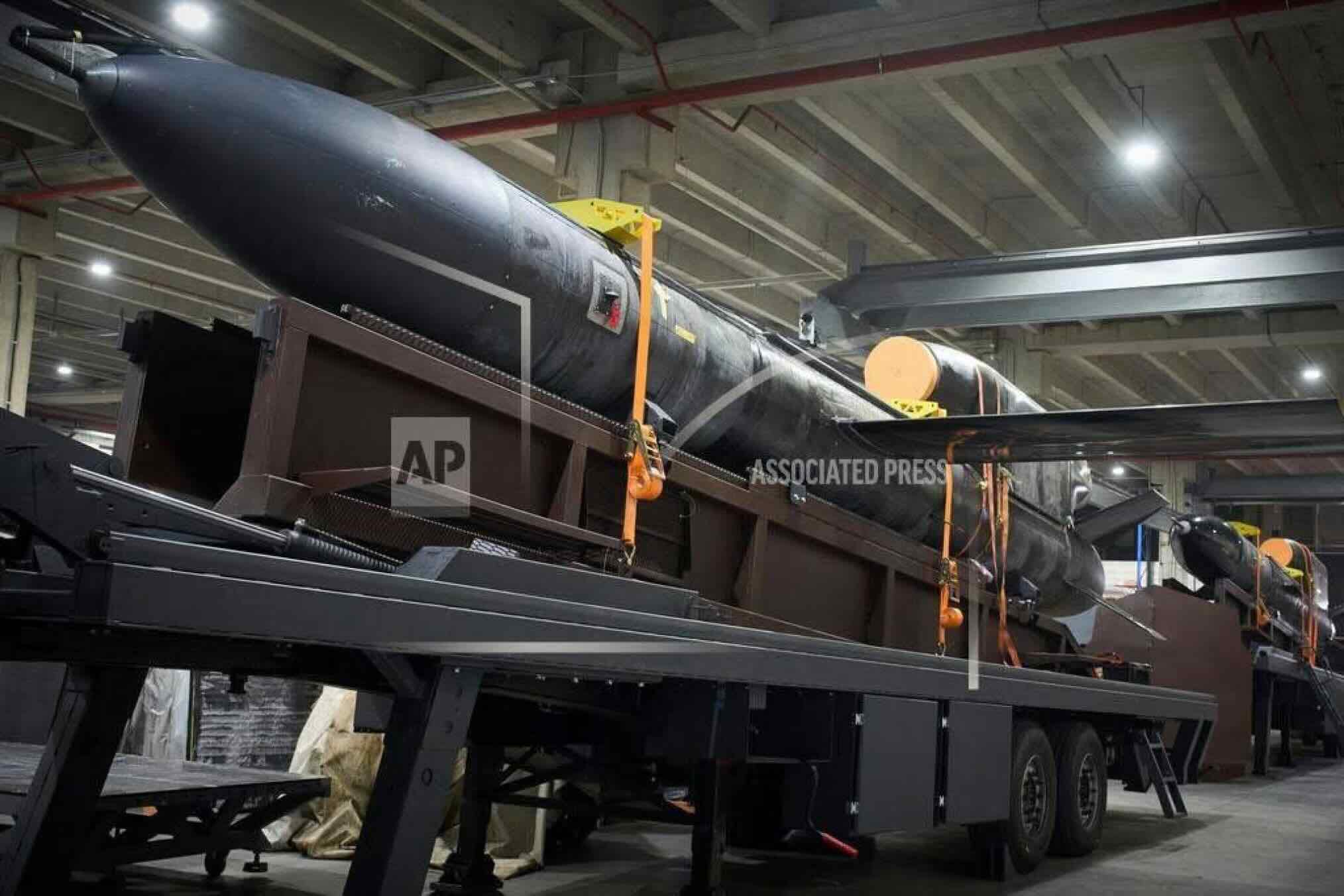
Fire Point has presented itself as a fast-scaling manufacturer whose designs are tested and iterated under wartime conditions. Recent reporting has described the firm as central to Ukraine’s deep-strike effort through its FP-series drones and as expanding into cruise missile production with the Flamingo programme.
For EDGE, an equity stake would offer proximity to combat-proven systems, engineering talent, and production processes shaped by high-intensity conflict. For Ukraine, the attraction is capital for scale, supply-chain resilience, and the credibility that comes with a large strategic investor.
A $2.5bn implied valuation is striking in a sector where revenues and margins can be distorted by emergency procurement, secrecy, and the concentration of demand in state orders. Fire Point has been reported as generating large revenues from Ukrainian government contracts while remaining exposed to procurement investigations and the political sensitivity that surrounds defence pricing in wartime.
For Kyiv, a valuation benchmark of this size may help other Ukrainian defence-technology firms argue for higher enterprise values when raising foreign capital. For investors, it raises the question of what the valuation is “pricing in”: future export markets, long-term domestic procurement, proprietary IP, or the strategic scarcity of deep-strike capacity.
The commercial upside of an equity stake depends heavily on export pathways. Ukraine’s leadership has publicly discussed a controlled approach to arms exports designed to finance production while prioritising frontline needs. On 19 September 2025, Reuters reported President Volodymyr Zelenskyy saying Ukraine would present a strategy for “managed” arms exports within two weeks, with platforms aimed at the US, European partners and other buyers.
Even if such a framework matures, export licensing will remain a sovereign decision, shaped by battlefield demand, partner politics, and end-use assurances. Any investor seeking to monetise a stake through overseas sales must price in the possibility that exports are delayed, restricted to certain allies, or paused in response to operational requirements.
Reuters reported in November 2025 that Fire Point appointed former US Secretary of State Mike Pompeo to a new advisory board as part of a drive to strengthen corporate governance amid an investigation by Ukrainian anti-corruption agencies into inflated pricing.
Western governments have repeatedly highlighted the risk of sanctioned goods and dual-use components reaching Russia via third countries, including the UAE. US and allied officials have pressed Abu Dhabi to tighten controls and improve trade transparency amid concerns that UAE-based intermediaries have facilitated flows of dual-use items.
Against that backdrop, Ukraine and its partners are likely to scrutinise any investor’s ability to prevent diversion and enforce end-use commitments, especially where strike systems may incorporate components subject to Western export controls or re-export rules.
A further factor is that UAE defence-linked entities have previously taken equity stakes in Russian defence businesses. In November 2019, Reuters reported that Tawazun, the UAE’s defence and security industry development arm, was taking a 50 per cent stake in VR Technologies, a unit of Russian Helicopters. The UAE state news agency WAM described the arrangement as a joint investment announced at the Dubai Airshow.
That earlier investment is not the same as the reported EDGE–Fire Point talks, but it will sharpen the questions Ukrainian regulators and Western partners ask about Russian exposure across group structures, joint ventures, board relationships, technical cooperation, and any continuing commercial ties.
The clearest near-term indicators are Antimonopoly Committee handling, any conditions attached to approval, and whether the parties describe the relationship as a passive minority holding or a strategic partnership involving technology exchange and production planning. The credibility of governance commitments will also be tested by the outcome of Ukrainian investigative scrutiny and by how transparently Fire Point clarifies ownership and control.
If the talks proceed, the case will underline the central tension in Ukraine’s defence-industrial strategy: attracting large foreign capital and industrial capability while maintaining tight control over technology transfer, export policy, and diversion risk.