A small bird’s nest woven from grass and fibre-optic cable has entered the collection of Ukraine’s War Museum, offering an unusual physical record of how drone warfare is changing the landscape far beyond destroyed vehicles and cratered ground.
Researchers examining nests recovered from the front say birds have begun incorporating discarded drone cable into their construction. The strands now lie across fields, trees, rooftops and roads along parts of the approximately 1,200-kilometre front.
The image is striking, but its military significance comes first. Fibre-optic cable is present because both Russian and Ukrainian forces have adopted drones that remain controllable in electronic-warfare environments where ordinary radio links are jammed.
Most first-person-view drones communicate with an operator by radio. Electronic-warfare systems can detect, disrupt or overwhelm that connection, causing the aircraft to lose video, control or navigation.
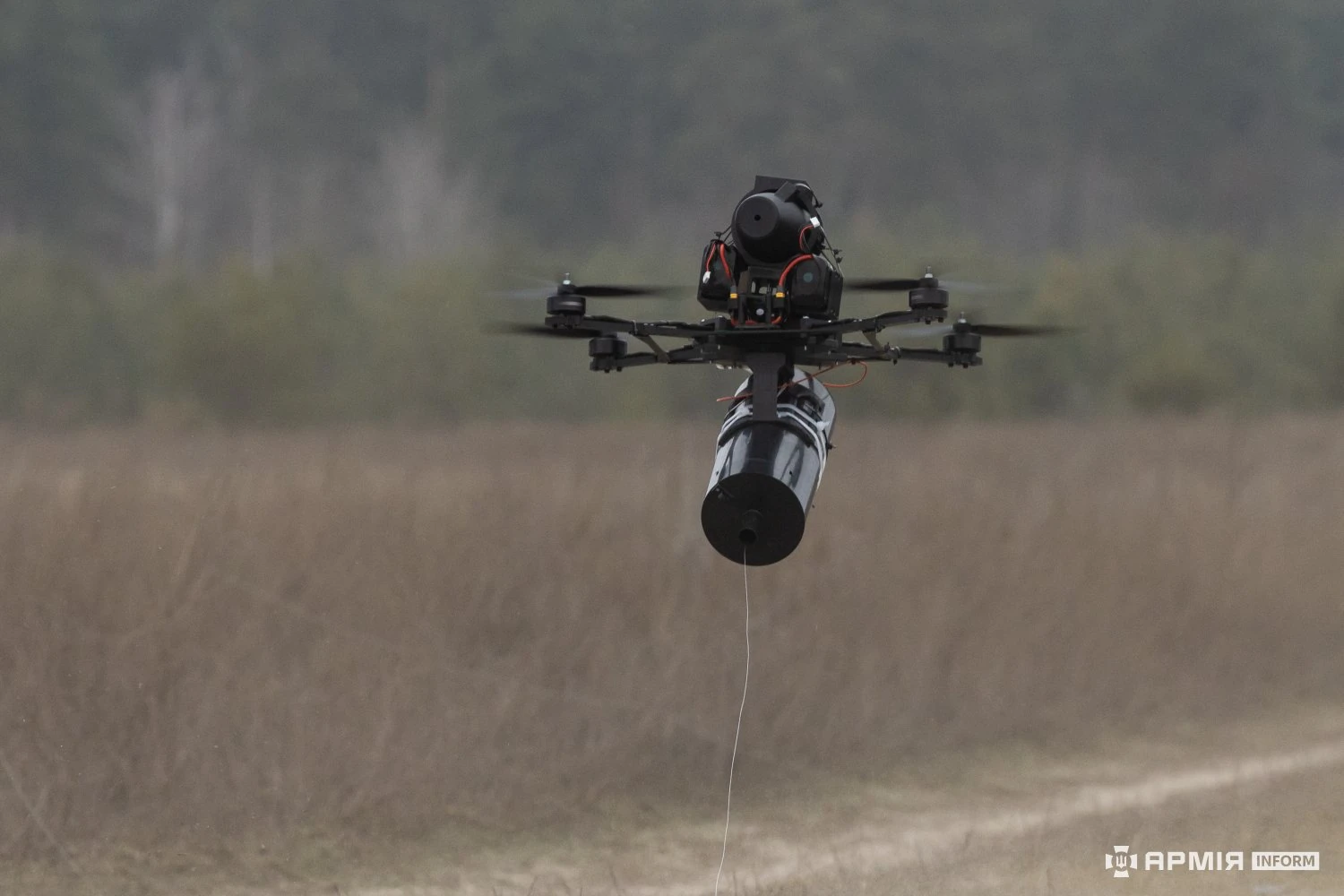
A fibre-optic drone unspools a thin cable as it flies. Commands and video travel through the physical link, making the system largely immune to conventional radio-frequency jamming between the operator and the aircraft.
The approach introduces different limitations. Cable can snag on vegetation, buildings or other lines. The spool adds weight and affects manoeuvrability. The operator’s position may be connected physically to the drone’s route.
Yet on a battlefield saturated with electronic interference, resistance to jamming can outweigh those disadvantages. Some cables stretch for around 20 kilometres, allowing operators to attack vehicles, positions and supply routes at tactical depth.
Every launch leaves a physical trail. Unlike a radio signal, the control link does not disappear when the drone crashes or strikes its target.
The resulting material can drape over roads, woodland and agricultural land. It mixes with mines, unexploded ordnance, destroyed equipment and other contamination that will complicate Ukraine’s recovery long after fighting stops.
Ukraine’s War Museum describes the fibre-optic nest as testimony from the front rather than a curiosity. The object records a technological adaptation through its effect on ordinary wildlife.
Researchers have not yet established the full ecological consequences. Synthetic strands may create entanglement risks, persist in soil or fragment over time. The scale will depend on material composition, the number of launches and whether cable can be collected safely.
Discarded fibre cannot simply be gathered from an active or recently active battlefield. A line may lead towards unexploded munitions, mined ground or a damaged drone carrying explosives.
Demining teams will need procedures for distinguishing cable debris from tripwires and other hazards. Tangled lines can impede machinery, obscure the ground and make visual inspection more difficult.
Ukrainian environmental reporting has already warned that fibre-optic debris could complicate demining and restoration. Mapping heavily contaminated areas may become part of post-war clearance planning.
This creates a cost not reflected in the drone’s purchase price. A cheap weapon may leave behind kilometres of material that must later be surveyed, removed and processed under dangerous conditions.
Defence Matters has examined how Ukraine’s mid-range drones are taking over missions once reserved for scarce precision missiles. Fibre-optic systems represent another part of the same change: low-cost aircraft are being modified rapidly to survive the opponent’s countermeasures.
Electronic warfare encourages physical control links. Physical links create new tactics and new debris. The opponent then develops ways to detect operators, cut cables or protect routes. Each adaptation generates another.
European forces studying Ukraine should therefore look beyond drone airframes and payloads. The control architecture determines where systems can operate, how easily they can be jammed and what logistical footprint they leave.
The nests sent to the museum sit at the boundary between evidence, memorial and environmental sample. Future researchers may use similar objects to identify where fibre-optic systems were employed and how their use spread.
Cable patterns can potentially reveal launch directions, zones of intense drone activity and the changing density of electronic warfare. The material is not a complete operational record, but it is a physical trace that can supplement documents and testimony.
The same trace may matter for accountability when fighting damages protected landscapes or agricultural land. Environmental assessment requires evidence of where contamination occurred and which military practices contributed.
Fibre-optic drones solve an immediate operational problem. They allow a pilot to maintain control through intense jamming and attack targets that radio-linked systems may not reach reliably.
Their afterlife is much longer. Cable remains in the landscape, enters nests, catches on vegetation and becomes another layer of hazardous war debris.
That does not make the technology uniquely destructive compared with mines, explosives or fuel contamination. It makes the environmental footprint visible in a different way.
The bird’s nest is therefore more than a poignant image. It demonstrates how thoroughly industrialised drone warfare reaches into the physical environment. The battlefield is being rewired during combat, and Ukraine will inherit that wiring when the shooting stops.