Ukraine has reported a new series of strikes against Russian fuel and transport infrastructure in occupied Crimea, targeting oil facilities and a key road bridge used to move personnel, ammunition and fuel between the peninsula and occupied southern Ukraine.
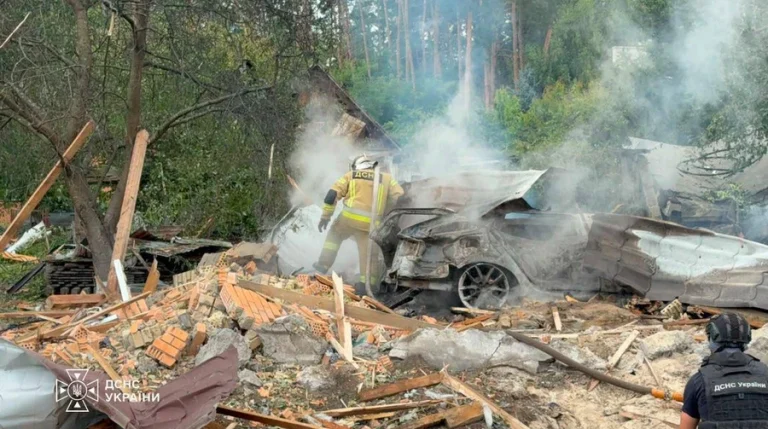
The strikes overnight on 7 June included attacks on the Semikolodezianska oil depot in Yedy-Kuiu, known under Russian occupation as Lenine, and the marine oil terminal in Feodosia. Both sites are located deep inside occupied Crimea and are described by Kyiv as part of Russia’s fuel supply system for military operations.
Ukraine’s Special Operations Forces said the Semikolodezianska depot had been used as a storage and transshipment point for fuel oil, diesel, bitumen and other petroleum products. The site reportedly contains nine tanks with capacities ranging from 700 to 3,000 cubic metres, with rail tankers loaded there for movement across Crimea and other occupied territories.
The Feodosia facility is a larger maritime terminal used to transfer oil and petroleum products from railway tankers to vessels. Ukrainian forces said the site contained seven large fuel tanks, with capacities of 10,000 and 20,000 cubic metres. The terminal has previously been hit, and damage to fuel storage at Feodosia has become part of a wider pattern of Ukrainian attacks on the peninsula’s energy and logistics network.
At the same time, Ukrainian units struck the Chonhar road bridge, one of the most direct road links between occupied Kherson region and Crimea. Russian-installed officials said the bridge deck had been damaged by drones, forcing traffic through the Dzhankoi checkpoint to be suspended and redirected through alternative routes via Armiansk and Perekop.
New details released by Ukrainian military units indicate that the bridge attack was carried out by the 475th Separate Assault Regiment “CODE 9.2” together with pilots of the 1st Separate Assault Regiment named after Dmytro Kotsiubailo. The units said the strike was conducted with Ukrainian-made “Behemot” drones and Fire Point FP-2 drones.
The commander of the 475th regiment, using the call sign “Flint”, said the bridge was selected because Russian forces opposing Ukrainian troops on the Huliaipole axis were using it as part of their logistics route. According to the unit, the crossing was being used to move personnel, ammunition and fuel.
Another commander, using the call sign “Perun”, said the strike was also intended to interrupt fuel supplies to Russia’s 37th Motor Rifle Brigade. Ukrainian personnel assessed, based on images circulating after the attack, that the bridge’s structural ribs had not been destroyed, but that the strikes had created holes of around one metre in diameter in the bridge slabs.
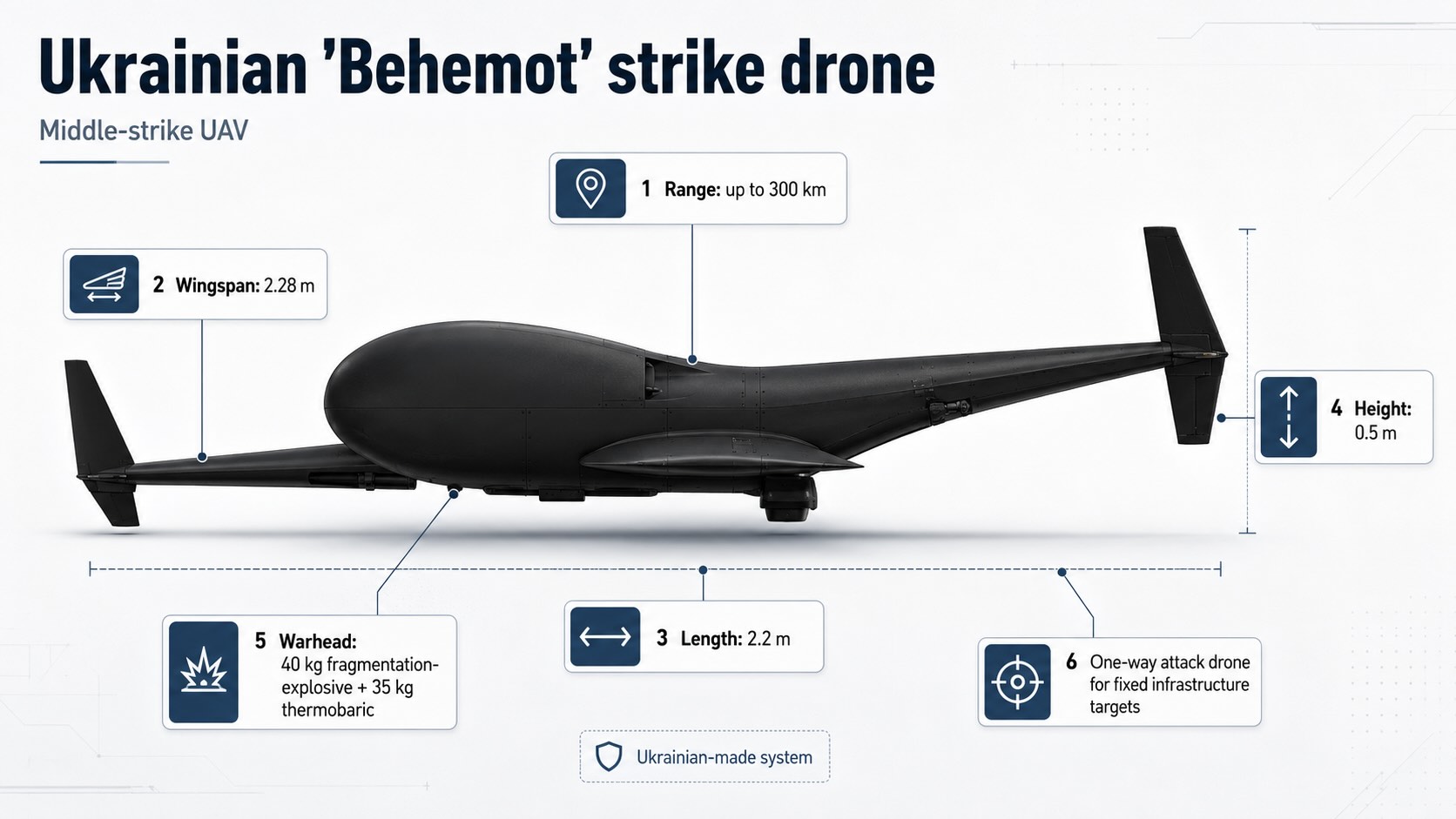
The weapons used in the strike point to the growing role of Ukraine’s domestic mid-range drone industry. The “Behemot” drone, presented in late May 2026 by GLEFA and Culver Aerospace, is described as a middle-strike system with a range of up to 300 kilometres. It has a wingspan of 2.28 metres and carries two warheads: a 40kg fragmentation-explosive charge and a 35kg thermobaric charge.
The Fire Point FP-2 is also a middle-strike drone. It has a stated range of up to 200 kilometres and can carry a warhead of up to 170kg. The system is designed to hit fixed targets using autonomous guidance, while moving targets can be attacked under operator control by radio link. It can operate by day or night and is based on the design of Fire Point’s longer-range FP-1 drone.
The Chonhar strike is significant because the crossing provides one of the shortest routes from occupied southern Ukraine into Crimea. If it remains vulnerable to repeated attack, Russian logistics may be forced to rely more heavily on longer and more exposed routes through Armiansk and Perekop. Those alternative approaches are closer to areas within range of additional Ukrainian systems.
The fuel depot strikes come against the background of worsening shortages in Russian-controlled Crimea. Earlier this month, occupation authorities tightened fuel rationing, suspending cash sales of petrol and halting the issue of new coupons. Existing coupons were limited to purchases of 20 litres. Queues at filling stations had already been reported across the peninsula after Ukrainian drone attacks affected supply routes from Russian-occupied territory in southern Ukraine.
President Volodymyr Zelenskyy said on 1 June that Ukrainian forces were now able to hit Russian logistics across almost the full depth of occupied territory. In his remarks on strike capability, he said there were “almost no safe roads” left for Russian forces in the south and east, and linked recent operations to fuel shortages in Crimea and other occupied areas.
For Russia, the immediate effect of the latest attacks will depend on the scale of physical damage, the speed of repairs and the availability of alternative fuel stocks. A single bridge strike may cause only a temporary disruption. A repeated campaign against bridges, depots, tankers and road routes would be more difficult to offset.
The wider pattern suggests that Ukraine is not relying on isolated strikes alone, but is attempting to impose cumulative pressure on Russia’s supply system in Crimea. Fuel depots can be repaired, and bridge decks can be patched. But repeated attacks can reduce throughput, delay transport, force longer routes and draw Russian air defence and engineering resources away from other priorities.
Crimea remains central to Russia’s military posture in southern Ukraine. The peninsula hosts ports, airfields, logistics hubs and transport corridors used to support operations across the Black Sea and the occupied south. Ukrainian strikes on fuel storage and road links therefore have both practical and strategic relevance.
Moscow has not confirmed Ukraine’s full account of the damage to the oil facilities or the Chonhar bridge. Russian-installed authorities have acknowledged disruption to transport infrastructure, while providing limited information about military logistics sites.
The latest operation underlines the changing character of the war behind the front line. Ukraine’s expanding use of domestically produced drones has given Kyiv more options to target Russian logistics without relying solely on scarce Western-supplied missiles. For Russia, the challenge is now broader: protecting not only command posts and airfields, but also bridges, depots, railheads, tanker routes and fuel storage across occupied territory.