Ukrainian and foreign-linked start-ups are developing systems ranging from sea-drone swarms and robot trucks to reusable strike drones. The projects are intended to address immediate operational needs in a war where unmanned systems, electronic warfare and rapid adaptation have become central to battlefield survival.
BlueShadow, a Danish maritime intelligence company founded by former US submarine commander Charles Maher, is working on autonomous naval vessels intended for operations near Odesa. The system would use groups of unmanned vessels positioned around 10 to 12 kilometres offshore, equipped with missiles and interceptor drones. The first units are expected to become operational in early 2027.
That project reflects a wider shift in Ukraine’s defence ecosystem. Rather than relying only on large state procurement programmes, Ukraine has created a network of accelerators, military feedback channels and online marketplaces that allow units to identify and order equipment more quickly. The result is a procurement environment that looks less like a traditional ministry-led weapons programme and more like a rapid battlefield marketplace.
The Defence Builder accelerator provides start-ups with modest funding, mentoring and access to military users. The Ukrainian Council of Defence Industries Investor Club estimates that publicly disclosed defence investment in Ukraine rose from $1.1 million in 2023 to $105 million in 2025. That remains small compared with the budgets of major Western defence groups, but it indicates how quickly Ukraine’s defence-technology sector is attracting capital.
The more important change is not the investment figure alone. It is the link between soldiers, developers and procurement. Ukrainian units are able to test systems under combat conditions, return immediate feedback and influence the next design cycle. In a war shaped by drones, jamming, counter-drone systems and changing Russian tactics, that speed can matter as much as technical sophistication.
Ukraine’s official procurement tools are central to this shift. The Defence Ministry said in May that units taking part in the Drone Line initiative can order UAVs and other equipment through DOT-Chain Defence, a weapons marketplace run through the Defence Procurement Agency. In less than two weeks, participating units had ordered equipment worth UAH 184.8 million, including initial deliveries worth UAH 40.8 million, according to the ministry.
The system is now available to combat brigades, allowing military units to select equipment for missions in their own sectors of the front. Arsen Zhumadilov, director of the Defence Procurement Agency, said the system allows units to choose what they need directly. In an interview with LB.ua, Zhumadilov described DOT-Chain Defence as “almost perfect”, while acknowledging that price competition among manufacturers is still not functioning properly.
That caveat is important. Market-style procurement does not remove all risks. It can accelerate delivery, but it also requires quality control, testing standards, financial discipline and clear rules on eligibility. If units can order quickly, manufacturers also need to prove reliability under battlefield conditions. A cheap drone or robot that fails under jamming, mud, artillery fire or poor logistics can still cost lives.
Land drones have become a priority because they can reduce soldiers’ exposure to some of the most dangerous frontline tasks. Reuters reported that Estonia’s Telearmy is retrofitting vehicles for remote control, while other systems are being developed for logistics, evacuation and combat support. Ukraine has also used robotic ground platforms for transport, mine-laying and casualty evacuation in areas where human movement is highly dangerous.
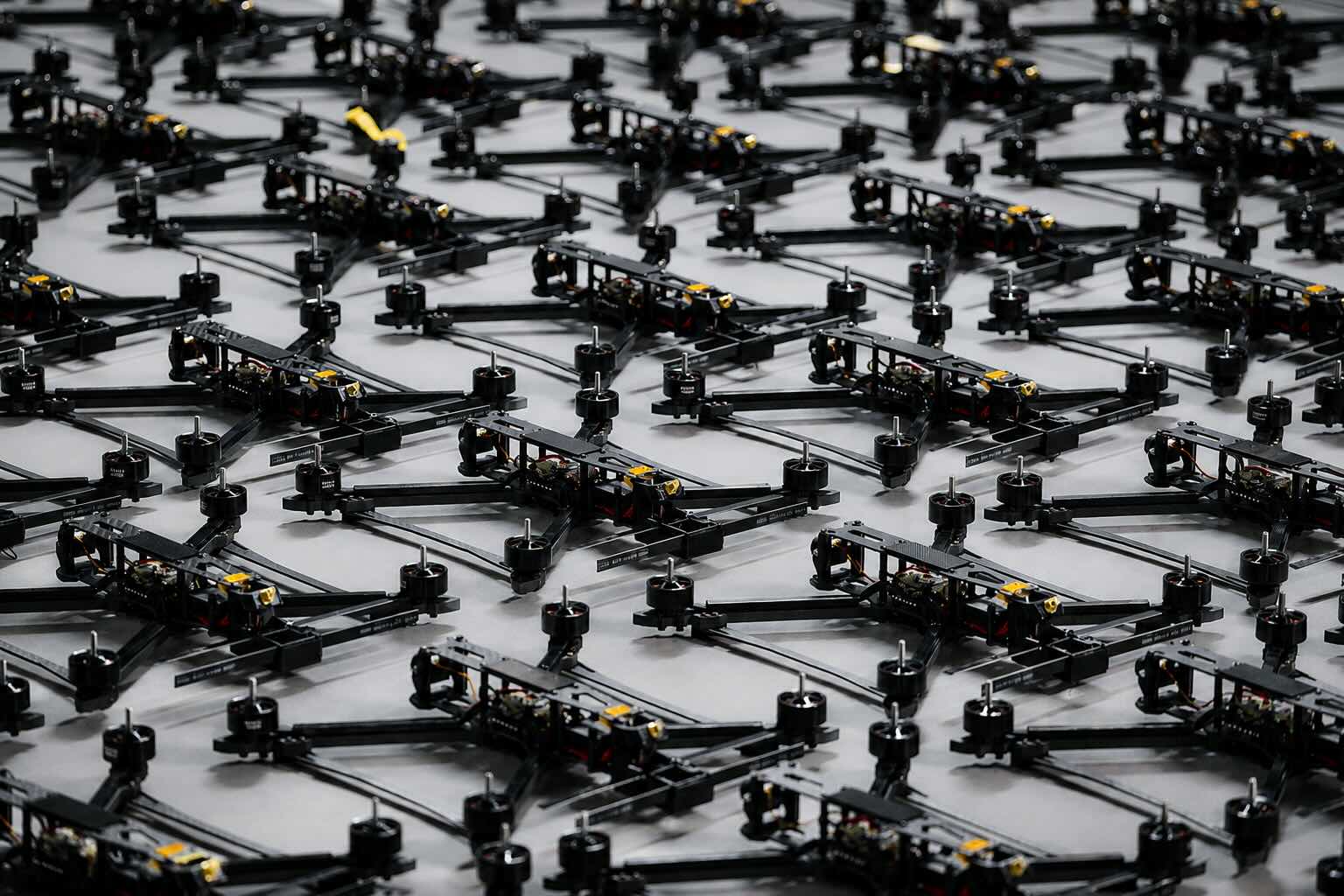
The same logic applies to reusable strike drones. Reuters cited Wingtech’s Haba drone bomber, which is reported to be resistant to jamming and already in use. Reusable systems can reduce the cost per mission and increase flexibility, provided they can survive electronic warfare and battlefield attrition. Ukraine’s experience shows that drones are no longer treated as expendable accessories to conventional forces. They are becoming core elements of reconnaissance, strike, logistics and defence.
For European militaries, the Ukrainian model raises uncomfortable questions. Many NATO countries still rely on long procurement cycles, detailed pre-contract specifications and centralised acquisition processes. Those systems are designed to ensure accountability and interoperability, but they are poorly suited to technologies that change every few months. Ukraine is demonstrating a different model: rapid testing, direct military feedback, battlefield adaptation and procurement through digital platforms.
This does not mean European states can simply copy Ukraine’s wartime system. Peacetime procurement operates under legal, budgetary and safety constraints. NATO members also have to consider standardisation, classified systems, long-term maintenance and alliance integration. But the direction of travel is clear. Defence ministries that cannot shorten procurement cycles will struggle to keep pace with drones, autonomous systems and electronic warfare.
The war has also turned Ukraine into a testing ground for Western and Ukrainian technologies. That gives Kyiv practical knowledge that many larger defence establishments lack. Systems that work on demonstration ranges may fail when exposed to jamming, artillery, weather and constant tactical adaptation. Conversely, relatively simple systems that survive battlefield use can become more valuable than expensive platforms designed for earlier assumptions.
Ukraine’s defence start-up ecosystem is therefore significant beyond the individual technologies now being developed. It shows how procurement, investment and battlefield learning are merging into a faster cycle. The result is not a replacement for tanks, artillery, air defence or long-range missiles. It is a new layer of military capability that can be developed and adjusted at a speed traditional defence systems rarely achieve.
For Europe, the lesson is practical. Defence innovation cannot remain confined to conferences, grants and long-term industrial strategies. It has to connect directly to users, testing, procurement and operational feedback. Ukraine’s start-ups are not only producing drones and robots. They are showing how modern warfare is changing the way weapons are bought, improved and deployed.