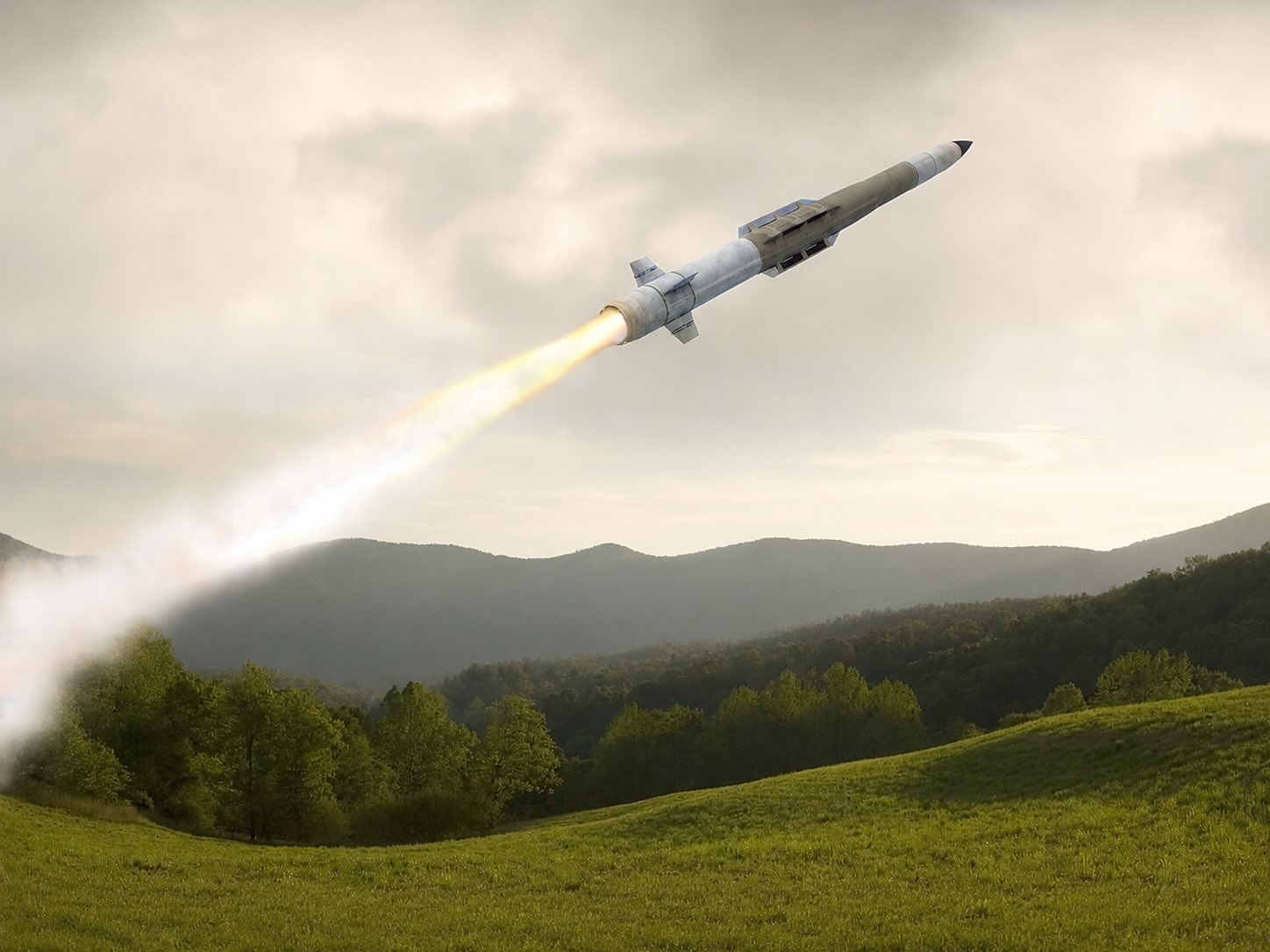
Ukraine is pursuing two parallel routes towards greater control over its air and missile defences: licensed production of the US-designed Patriot system and the development of a European anti-ballistic capability based on Ukrainian technology.
President Donald Trump announced at the NATO summit in Ankara that the United States would allow Ukraine to manufacture Patriot interceptors under licence. The proposal could eventually give Kyiv a domestic or European production base for one of the few systems proven capable of intercepting the ballistic missiles used by Russia.
However, establishing licensed production would be an industrial programme lasting years rather than an immediate answer to Ukraine’s interceptor shortage.
The Patriot system is divided between several manufacturers and supply chains. RTX produces the radar, command-and-control equipment and GEM-T interceptor, while Lockheed Martin manufactures the PAC-3 family of hit-to-kill interceptors. Production involves controlled technology, specialist machinery, qualified suppliers, secure software and extensive testing.
A political decision by the White House is therefore only the beginning. Any transfer would require agreement on which components Ukraine could manufacture, what technology would remain under US control and where production facilities could safely operate.
The licensing process would also be subject to American export-control procedures. The US government would have to approve the release of technical information, manufacturing equipment and controlled components. Congress could also have a role, depending on the legal and commercial structure selected.
The limits of existing production illustrate the scale of the problem. Lockheed Martin delivered 620 PAC-3 MSE interceptors in 2025, an increase of more than 20 per cent over the previous year.
Under a seven-year agreement with the US government, the company intends to raise annual capacity from approximately 600 to 2,000 interceptors. Even that expansion will take time and must meet demand from the US armed forces and numerous allied operators as well as Ukraine.
Licensed Ukrainian production would face the same bottlenecks. Missile motors, military-grade microelectronics, seekers, energetic materials and specialised manufacturing equipment cannot be obtained simply by building an assembly hall.
Ukraine could potentially manufacture airframes, control surfaces, wiring, containers and some mechanical assemblies relatively quickly. Its aerospace and missile industries retain experience from the Soviet period and from more recent programmes including Neptune and Vilkha.
The most sensitive PAC-3 elements would probably continue to arrive as sealed American-made components, at least during the early stages of localisation. Final assembly from imported kits would be more achievable than complete independent production, but it would remain dependent on an already constrained supply chain.
Security presents another complication. A Patriot production facility inside Ukraine would become a priority target for Russian ballistic missiles, cruise missiles and drones. Placing some manufacturing stages in another European country could reduce that risk, although it would limit the degree to which production was genuinely domestic.
The second route emerged in Paris on 13 July, when Ukraine and nine European countries announced an Integrated Anti-Ballistic Defence Coalition.
Denmark, France, Germany, Italy, the Netherlands, Norway, Spain, Sweden and the United Kingdom joined Ukraine in proposing an integrated European architecture based on common requirements, technological openness and industrial co-operation.
The coalition is associated with Freyja, Ukraine’s proposed lower-cost anti-ballistic system. Its planned interceptor, known as FP-7.x, is intended to draw on Ukraine’s wartime experience and European components. Supporters want to achieve an initial operational capability within a year, although this remains an ambitious development target rather than a confirmed production schedule.
The concept is not necessarily a substitute for Patriot. It could instead provide an additional layer designed for mass production, leaving scarce PAC-3 MSE interceptors for the most demanding ballistic threats.
Europe has already moved to expand production of the earlier Patriot GEM-T interceptor. In 2024, the NATO Support and Procurement Agency awarded COMLOG — a joint venture between RTX and MBDA Germany — a contract potentially covering up to 1,000 missiles. The programme includes new suppliers, test equipment and expanded European manufacturing capacity.
Ukraine’s two projects consequently address different timescales. Deliveries from existing stocks and current production lines remain essential for the defence of Ukrainian cities during the coming months. Licensed Patriot manufacturing could provide a long-term strategic capability. Freyja offers a separate attempt to create a more affordable European interceptor in larger numbers.
The decisive questions will be how quickly governments convert announcements into contracts, how responsibilities are divided among participating industries and whether production can expand faster than interceptors are being expended.