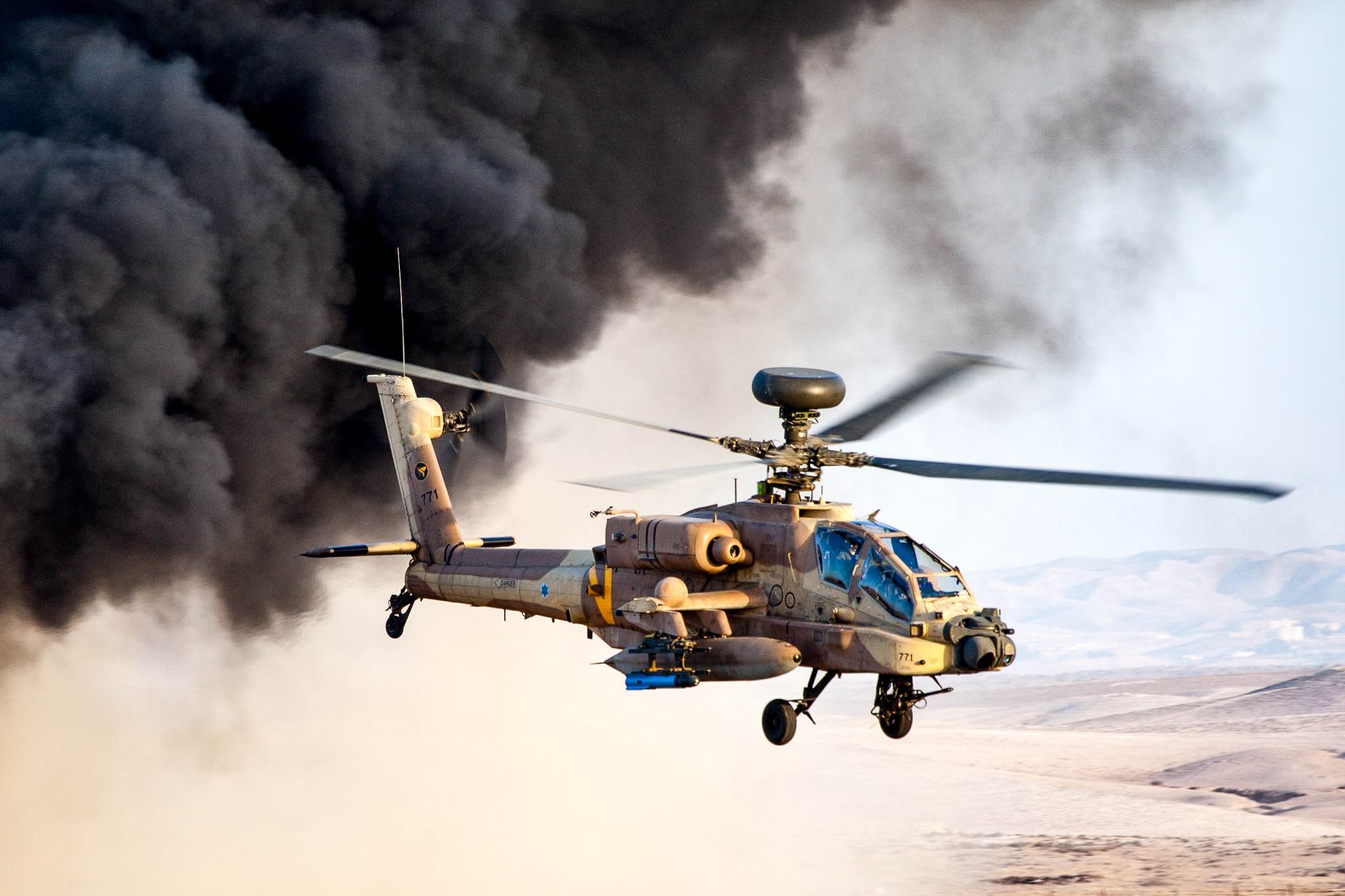
The deal, awarded via the U.S. Army’s Foreign Military Sales (FMS) programme, includes 96 of the AH-64E Apache attack helicopters destined for the armed forces of Poland — the single largest Apache order placed outside the United States in the history of the programme.
Deliveries are slated to begin in 2028. Poland, which already leases eight Apaches from the U.S. Army, is now ramping up pilot training and maintenance-crew preparation at home.
For a start, the size of the order immediately reshapes the landscape of attack-helicopter rosters beyond U.S. forces. Once delivered, Poland will field the largest Apache fleet outside America — a potent symbol of both deterrence and defence investment.
Moreover, the contract ensures the AH-64E’s production line in Mesa, Arizona, stays active well into the next decade — a telling vote of confidence in the enduring relevance of rotary-wing strike capability in an age of drones and cyber-warfare. The contract runs until at least May 2032.
The “E” model Apache remains widely regarded as among the most capable attack helicopters in existence: advanced avionics, sensor suites, weapons compatibility, and networking features yield a balance of lethality, survivability and battlefield flexibility hard to match with cheaper or unproven platforms. More than 1,300 Apaches currently operate worldwide.
Poland’s acquisition comes amid heightened security concerns across Eastern Europe. With decades of uncertainty since the Cold War — and a neighbour to the east that has once again shown readiness to deploy force — Warsaw appears intent on erasing any doubt about its military preparedness.
By investing in a formidable, modern attack-helicopter fleet, Poland is sending a message: it plans not only to deter threats but to respond if deterrence fails. Given the Apache’s versatility — anti-armour missions, close air support, reconnaissance, anti-drone/air-defence roles — the fleet gives Warsaw a flexible tool rather than a single-role asset.
For other European capitals, the massive scale of this contract should be a clarion call. If a frontline NATO member believes it needs such a leap in capability, perhaps others should at least consider whether their own deterrence — or lack thereof — remains adequate.
Poland is not alone. Under the same contract, Apaches will also be supplied to allied states beyond NATO’s core, including in the Middle East — reportedly Egypt and Kuwait — demonstrating the growing global appetite for advanced strike helicopters.
That global demand suggests the Apache remains a strong, relevant workhorse for any military facing modern threats — from armoured formations to drones, insurgencies to hybrid warfare. For Europe, bolstering allied air-attack capacity may become increasingly central in a security environment long unsettled by Russia’s resurgence.
This contract is also important for defence manufacturing and supply chains. In recent years, many in Europe have fretted over dwindling domestic defence-industrial capacity or overreliance on U.S. suppliers. The Boeing deal demonstrates that demand for classic platforms — and for proven, upgradeable systems — remains robust.
For countries seeking to build or rebuild their air-attack wings, the Apache may serve as a bridge: a proven, interoperable platform that can also interlink with Western tactics, training regimes and logistics systems. That interoperability matters in joint operations, NATO exercises and potential multi-front deterrence scenarios.
Still, such capability comes at a price — and not just in dollars. Each Apache is a complex, maintenance-heavy investment. Logistic support, spare parts supply, pilot and crew training, long-term sustainment — these all demand heavy and continuous expenditure from buyers.
Moreover, reliance on foreign-built attack helicopters carries strategic dependencies. The ordering countries must accept terms defined by U.S. export and supply policy. In a crisis, that might prove an awkward bargaining point, especially if Washington’s priorities diverge from those of EU capitals.
Finally, an over-reliance on a single platform-type can leave gaps. The Apache is formidable — but it is not a substitute for integrated air defence, drones, cyber capabilities or strategic deterrence. In the long run, nations must avoid building forces around a single “silver bullet.” A mix — helicopters, drones, air defence, resilience — remains the wiser path.
Today’s contract should serve as a wake-up call for European defence planners. As border tensions simmer, hybrid threats persist and the lessons of Ukraine remain stark, reliance on legacy cold-war era deterrence or minimal air-lift capacity may no longer suffice.
If Europe hopes to remain credible — capable of deterring aggression before it becomes a full-blown invasion — it will need to modernise across all domains. Attack helicopters are just one part of that puzzle, but a loud and viscerally powerful one.
The Apache order also underlines a broader truth: conventional platforms still matter. While much attention has turned to drones, cyber-warfare and unmanned systems, AM-64E helicopters demonstrate that traditional, crewed weapon systems remain central when speed, flexibility and firepower are required.
In securing this $4.7 billion order, Boeing has not just won a sale — it has helped shape the evolving security architecture of 2026 and beyond. For Poland, it represents a major leap in capability and credibility. For NATO and allied states, it is a reminder that deterrence, readiness and modern strike capability must be constant priorities.
If European governments read the signs wisely, this contract may mark the start of a broader re-armament — not in hopes of war, but in deterrence, preparedness and preservation. And in a dangerous world, readiness may prove to be the best peace-keeping policy of all.
Main Image: By Nehemia Gershuni-Aylho www.ngphoto.biz, CC BY-SA 3.0, https://commons.wikimedia.org/w/index.php?curid=116153831