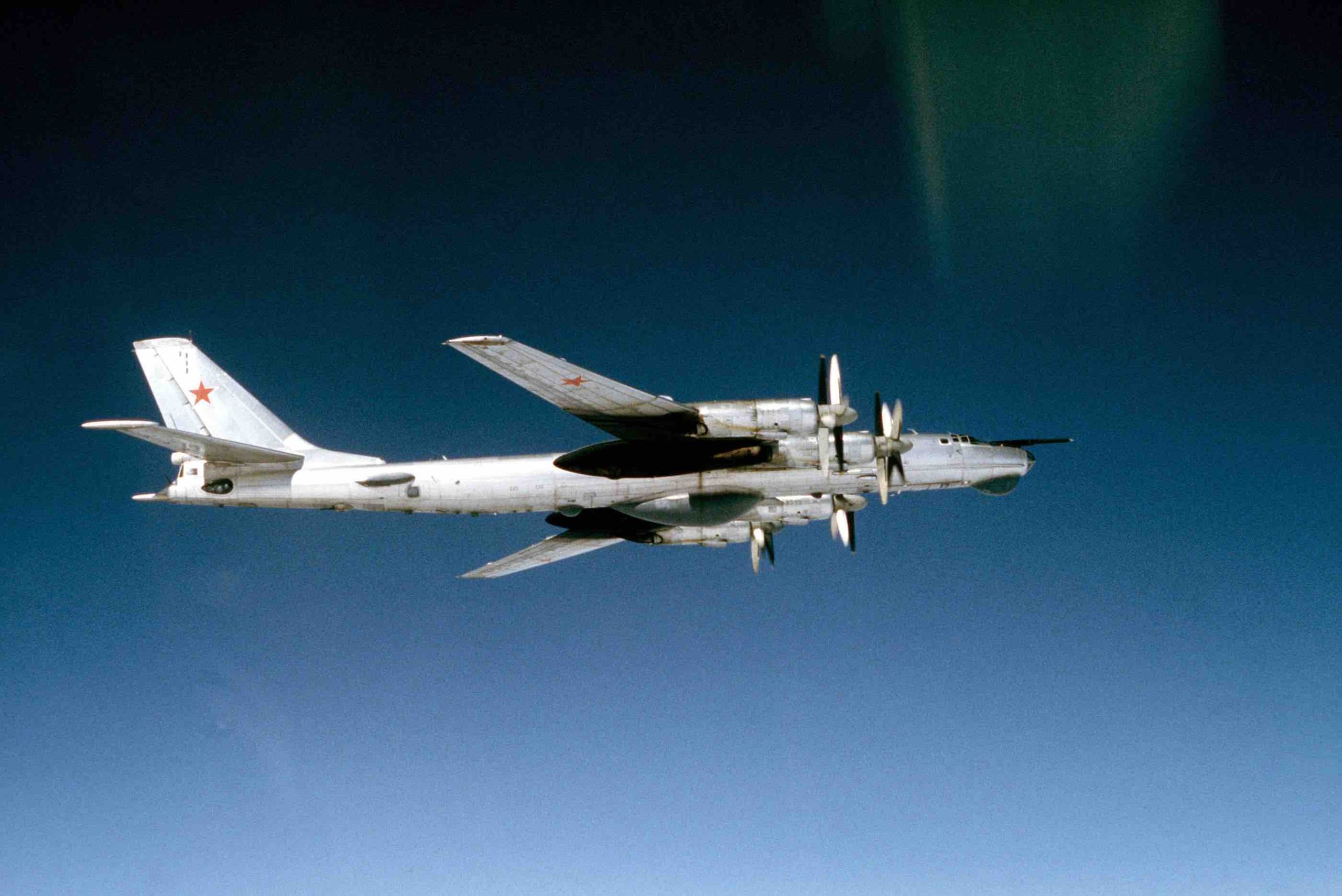
According to a NORAD statement, the Russian detachment comprised two Tu-95 long-range bombers, two Su-35 fighter aircraft and an A-50 airborne early warning and control plane. All five aircraft remained in international airspace but flew within the Alaskan Air Defense Identification Zone (ADIZ), a buffer region that begins where sovereign airspace ends and serves as a first line of aerial awareness for North American defence.
In response, NORAD launched a substantial escort and identification mission: two F-16 Fighting Falcons, two F-35 Lightning IIs, one Boeing E-3 Sentry airborne warning aircraft and four KC-135 Stratotanker refuellers were deployed to intercept and shadow the Russian formation until it exited the ADIZ.
Though the episode lasted only as long as the Russian detachment’s transit through the zone, it served as a stark reminder of the enduring friction between Moscow and the trans-Atlantic security architecture — particularly in the High North, where melting ice and new maritime routes have drawn renewed strategic interest. Experts note that such incursions are “routine” from a strict procedural standpoint, but they nonetheless underscore the tense choreography of modern great-power contestation.
The Alaska ADIZ is not sovereign airspace; it comprises stretches of international sky where aircraft must identify themselves to avoid misapprehension. Far from being an arbitrary construct, the zone extends hundreds of miles from Alaska’s western coastline, encompassing sweeping reaches of the Bering and Chukchi Seas.
While flights within the ADIZ are legal under international law so long as they remain outside sovereign airspace, they demand attention. NORAD’s remit — a binational partnership between the United States and Canada dating back to the Cold War — is to detect, validate and, if necessary, respond to such aircraft movements to preempt potential surprises.
Over the past few years, incursions by Russian military aircraft in the ADIZ have become a familiar occurrence. In September 2025, for example, two Tu-95 bombers escorted by Su-35 fighters prompted a comparable NORAD response. In previous months, surveillance aircraft — including an IL-20M “Coot-A” reconnaissance platform — have also been tracked and intercepted.
Despite this cadence of activity, North American command officials have consistently emphasised that these events do not constitute a direct threat. Rather, they are viewed as part of a pattern of mutual awareness and preparedness that feeds into broader defence planning.
Yet routine does not mean inconsequential. Russia has revitalised its long-range aviation posture in recent decades, reviving Soviet-era practices of deep patrols and Arctic incursions. The Tu-95 “Bear” bombers — four-engine turboprop behemoths with nuclear capability — remain a potent symbol of Moscow’s far-range reach and strategic intent.
Moreover, the inclusion of an A-50 early warning aircraft in Thursday’s formation suggests a nuanced mission. Early warning planes are sophisticated airborne command and control platforms used to monitor electromagnetic signatures, guide friendly aircraft and collect situational data. Their presence in international airspace near the U.S. signals both capability and intent.
From Moscow’s perspective, such flights serve multiple purposes: training and readiness, signalling resolve, and reminding Western militaries that Russian air assets remain capable and mobile. For Washington and Ottawa, the challenge lies in maintaining vigilance without escalating tensions. The careful, measured response by NORAD — visibly identifying and escorting the Russian formation without confrontation — reflects this balance.
Beyond the airspace above Alaska, global military dynamics are shifting. NATO has recently bolstered its presence in the High North — a region of growing strategic significance thanks to climate-driven access to new resources and maritime corridors. Exercises such as “Arctic Sentry,” launched this month, are designed to reassure allies and demonstrate collective readiness amid increasing competition from Russia and, to some extent, China.
For policymakers, the North American Arctic serves as both a reminder of enduring great-power rivalry and a test case for contemporary defence diplomacy. Encounters such as Thursday’s intercept are unlikely to abate — but they also do not portend imminent conflict. Rather, they form part of a complex dance, one where presence and perception matter as much as outright force.
In an age where the skies above the pole are busier than at any time since the twilight of the Cold War, the vigilance of NORAD remains as essential as ever — a silent sentinel over some of the world’s most unforgiving airspace.
Main Image: Public Domain, https://commons.wikimedia.org/w/index.php?curid=1817366
The New Polar Front: Why Greenland Matters Again to Western Defence