The attack occurred in international waters off Sri Lanka’s southern coast, and prompted a Sri Lankan search-and-rescue operation after the vessel issued a distress call.
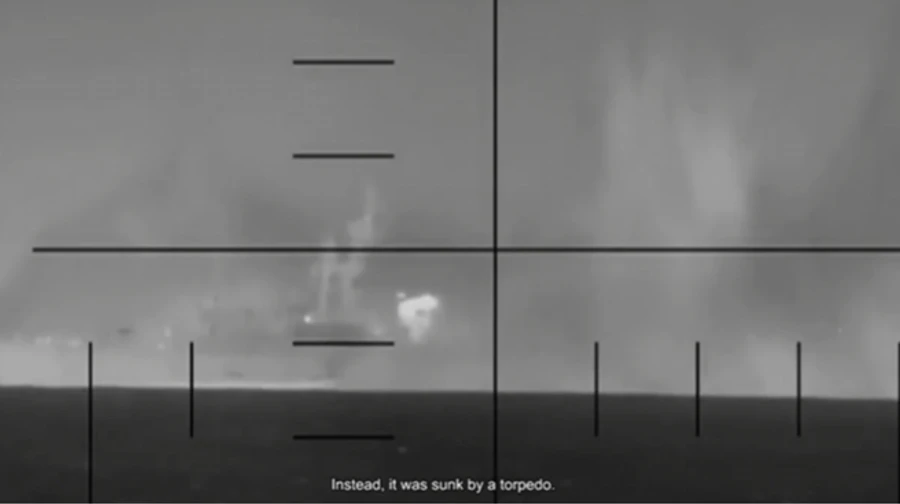
U.S. Defense Secretary Pete Hegseth confirmed that an American submarine was responsible for the sinking, describing the strike as a torpedo attack. Sri Lankan authorities said they recovered bodies and rescued survivors, while a significant number of crew remained unaccounted for hours after the incident. The Associated Press reported that Sri Lanka’s navy recovered 87 bodies and rescued 32 people, with survivors taken to hospital.
The sinking came amid an expanding confrontation involving the United States, Israel and Iran. U.S. and Israeli operations have focused primarily on targets linked to Iran, while Iran has responded with missile and drone attacks, according to international reporting. The attack on Dena extended the operational geography beyond the Gulf and Levant into the wider Indian Ocean.
Where the ship was, and why
Reporting indicated that Dena was travelling back towards Iran after participation in an Indian-hosted naval event. The ship had been returning from a naval exercise in India. The AP described Dena as a prominent Iranian naval vessel and noted that Sri Lanka’s navy responded after a distress signal, arriving to find debris and survivors.
The location—off Sri Lanka, far from Iran’s territorial waters—raised questions in diplomatic and military circles about Iranian naval deployments during the current conflict and about the reach of U.S. undersea surveillance and strike capability. Sri Lanka, which is not a party to the conflict, found itself conducting recovery operations for a foreign warship sunk in nearby international waters.
What is known about the strike
A rare form of naval combat
U.S. officials described the sinking as historically unusual. Several reports said it was the first time since the Second World War that a U.S. submarine had sunk an enemy vessel with a torpedo, though characterisations varied by outlet. Modern naval engagements more commonly involve anti-ship missiles, aircraft-delivered munitions, and—in recent conflicts—uncrewed surface systems.
Casualties and rescue
The available figures remained provisional through Wednesday afternoon. Reuters reported that 32 people were saved and that roughly 60 were still missing at the time of its reporting, after bodies were recovered during the search. AP’s account stated 87 deaths and 32 rescued. Differences in early casualty reporting are common in maritime disasters, particularly where recovery is ongoing and crew manifests are contested or incomplete.
Strategic signalling
The incident is likely to be read in Tehran as both a tactical loss and a strategic message about U.S. undersea superiority and the risks to surface ships operating beyond Iran’s immediate coastal shield. For regional states, including India and Sri Lanka, it underscores the prospect that the current war could affect sea lanes and naval operations across the northern Indian Ocean, not only the Gulf.
U.S. officials have also framed the wider campaign as degrading Iranian maritime capacity. AP reported a U.S. claim that 17 Iranian vessels had been sunk so far in the conflict, while specialist reporting cited higher tallies attributed to U.S. Central Command.