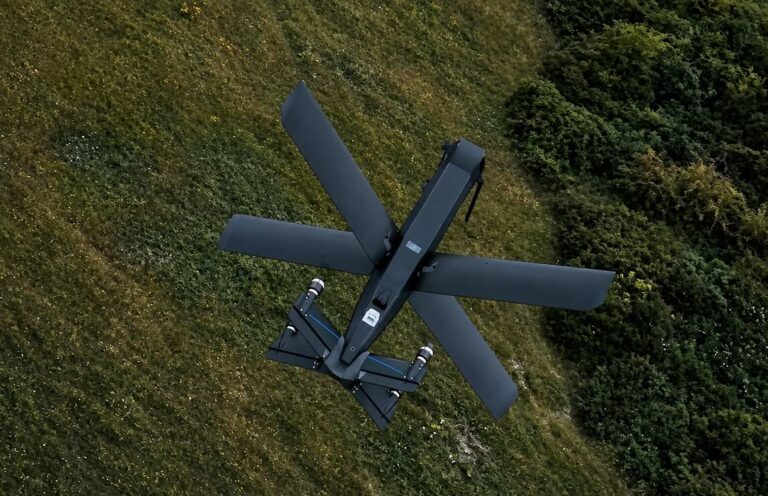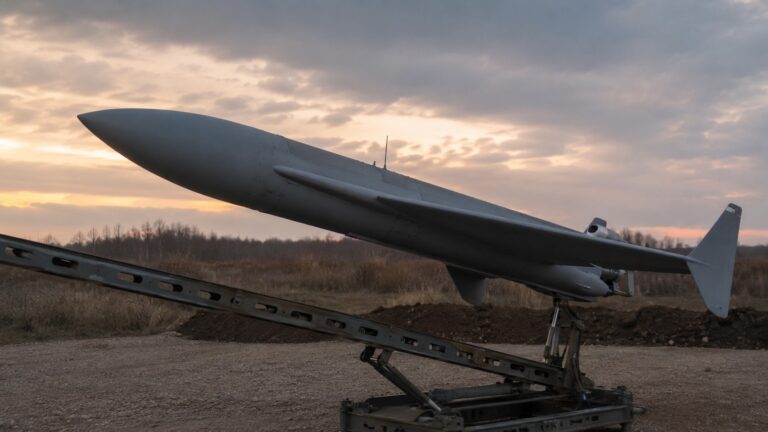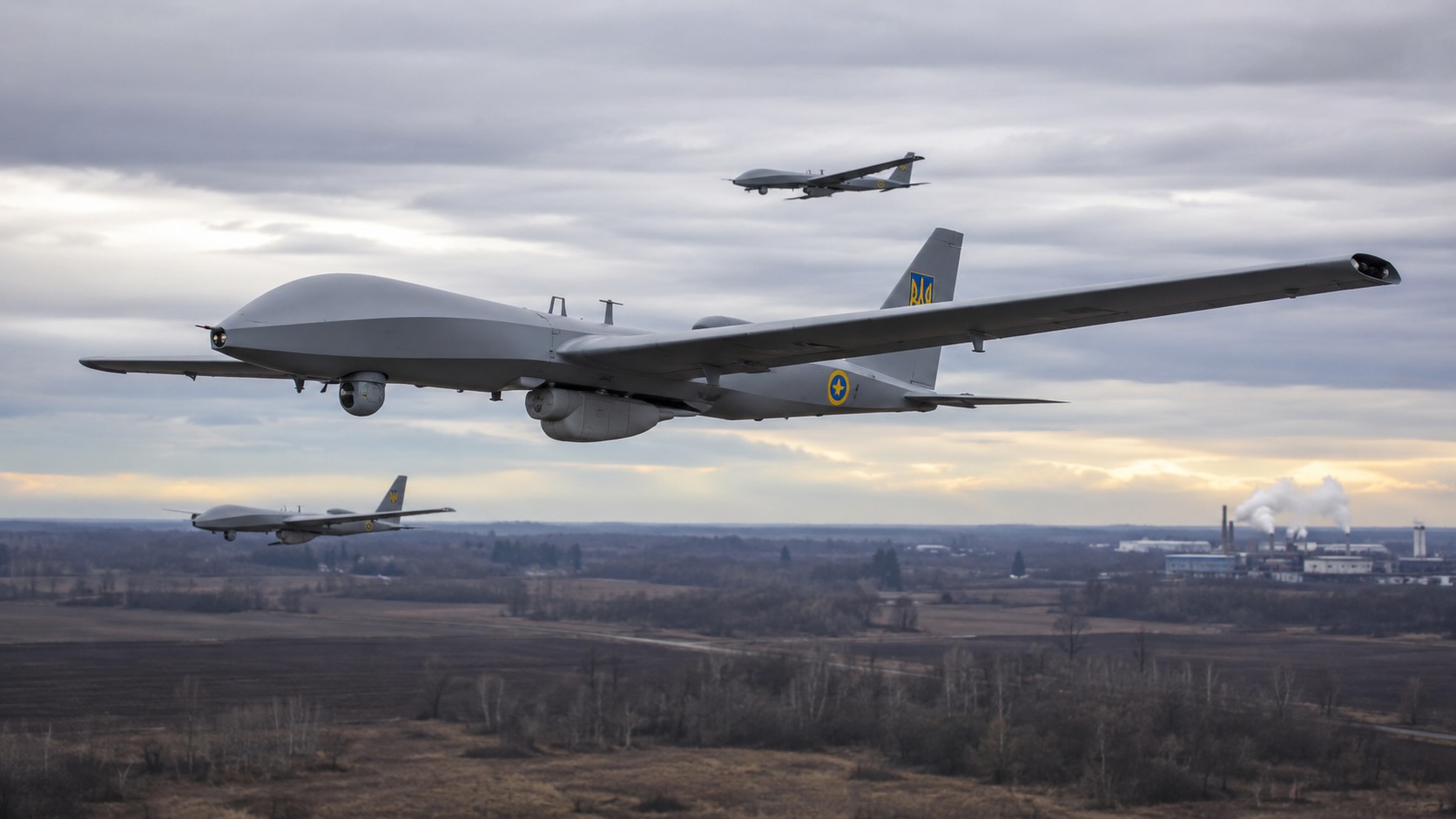
Ukraine’s expanding use of mid-range drone strikes is beginning to impose a wider cost on Russia’s war effort, disrupting logistics, air defences and energy infrastructure at distances beyond the reach of standard frontline systems.
The strikes, typically conducted between 30 and 180 kilometres behind Russian lines, have become a more prominent part of Ukraine’s campaign to slow Russian advances and weaken the systems that sustain them. According to Reuters reporting from Kyiv and London, Ukrainian commanders say the increased use of such drones has allowed them to hit ammunition dumps, radar systems, air-defence positions, command posts and logistics nodes that are too far for short-range first-person-view drones but still close enough to affect battlefield operations.
The development matters because it fills a gap in Ukraine’s strike architecture. Short-range drones have changed infantry and armoured warfare at the front, while long-range drones have struck refineries, depots and industrial sites deep inside Russia. Mid-range systems sit between those two categories. They can reach behind Russian forward positions, but can also be produced and adapted more quickly than larger, more complex weapons.
Ukrainian President Volodymyr Zelenskyy has said the number of mid-range strikes has increased sharply since February. Ukrainian units have also reported a wider variety of drones and faster feedback between developers and battlefield operators. That matters in a war where electronic warfare, jamming and counter-drone adaptation can quickly reduce the usefulness of any single platform.
The effect is not limited to individual targets. By striking radar and air-defence systems, Ukraine can create gaps that make other operations easier. Those gaps may help longer-range drones reach oil refineries and other energy facilities inside Russia. They may also force Moscow to spread scarce air-defence assets across more locations, reducing the density of protection around the front.
The pressure on Russia’s energy sector is already an important part of Ukraine’s wider strategy. Kyiv has targeted refineries and oil infrastructure in an effort to reduce Russia’s fuel supply, disrupt exports and increase the cost of the war. Separately, Russia has continued to strike Ukrainian energy, port and transport infrastructure. On Tuesday, Russian forces attacked Ukraine’s Danube port city of Izmail while Russian authorities reported Ukrainian drones approaching Moscow, according to further reporting on the overnight attacks.
That pattern shows how infrastructure has become central to the war. Both sides are trying to affect the other’s capacity to move fuel, ammunition, exports and military equipment. Ukraine’s mid-range drones are not a substitute for artillery, missiles or air power, but they give Kyiv another way to attack the systems that support Russian operations.
For Russia, the challenge is cumulative. A single drone strike may not change the front line. Repeated attacks on logistics hubs, air-defence radars, fuel sites and command points can slow tempo, complicate planning and force defensive redeployments. Russian forces have invested heavily in jamming and air defence, but the number and variety of Ukrainian drones makes complete protection difficult.
Moscow has claimed large numbers of Ukrainian drones are being intercepted or destroyed. Russian state media, citing the defence ministry, said Russia had destroyed more than 3,000 Ukrainian drones in a week, according to Reuters coverage of the Russian claim. Such figures are difficult to verify independently, but they indicate the scale of the drone war and the burden it places on both sides.
Ukraine’s advantage lies partly in adaptation. Its drone sector has developed around rapid testing, battlefield feedback and domestic production. Smaller systems can be changed quickly in response to Russian countermeasures. That does not make them immune to losses, but it allows Ukraine to keep pressure on Russian defences and alter tactics faster than traditional procurement cycles would normally allow.
There are limits. Mid-range drones alone will not decide the war. They cannot hold ground, replace air superiority or remove Ukraine’s need for artillery, ammunition, air defence and Western support. Their effect depends on intelligence, target selection, production capacity and the ability to keep adapting under pressure.
Even so, the strategic value is clear. Ukraine is building a strike layer that reaches beyond the trench line but does not depend entirely on Western long-range weapons. That gives Kyiv more options, particularly at a time when allied military aid can be delayed by political and budgetary disputes.
For European defence planners, the lesson is broader. Cheap, adaptable drones are no longer only tactical tools. Used at scale and across different ranges, they can affect logistics, energy systems, air defence networks and command structures. The war in Ukraine is showing how a state under pressure can use relatively low-cost systems to impose costs on a larger opponent.
Ukraine’s mid-range strike campaign is therefore best understood not as a series of isolated drone attacks, but as part of a wider effort to stretch Russia’s military system. It targets the machinery behind the front: fuel, command, surveillance, air defence and transport. If sustained, that pressure could make Russia’s war effort more expensive, more exposed and harder to coordinate.