A warning from Airports Council International (ACI) Europe, reported by Reuters, that the continent could face a “systemic” jet fuel shortage within three weeks has exposed a deeper vulnerability—one that reaches into the heart of Europe’s air defence capabilities.
At first glance, the issue appears commercial: airlines trimming schedules, ticket prices rising, and summer travel under threat. Yet the same supply chains that sustain civilian aviation underpin the operational readiness of Europe’s air forces. The prospect of constrained jet fuel availability therefore raises uncomfortable questions about the continent’s preparedness at a moment of heightened geopolitical tension.
The immediate cause is well understood. The closure of the Strait of Hormuz amid conflict in the Middle East has disrupted a vital artery through which a significant share of global jet fuel flows. Europe, heavily reliant on imports from Gulf refineries, finds itself particularly exposed. Prices have surged sharply, and supply certainty has evaporated, with industry leaders warning that deliveries beyond the coming weeks cannot be guaranteed.
What is more striking, however, is how little margin for error appears to exist. ACI Europe’s admission that there is no comprehensive EU-wide system for monitoring jet fuel availability speaks to a structural weakness. The absence of coordinated oversight suggests that stockpiles, distribution networks, and contingency planning have not kept pace with either rising demand or increasing geopolitical risk.
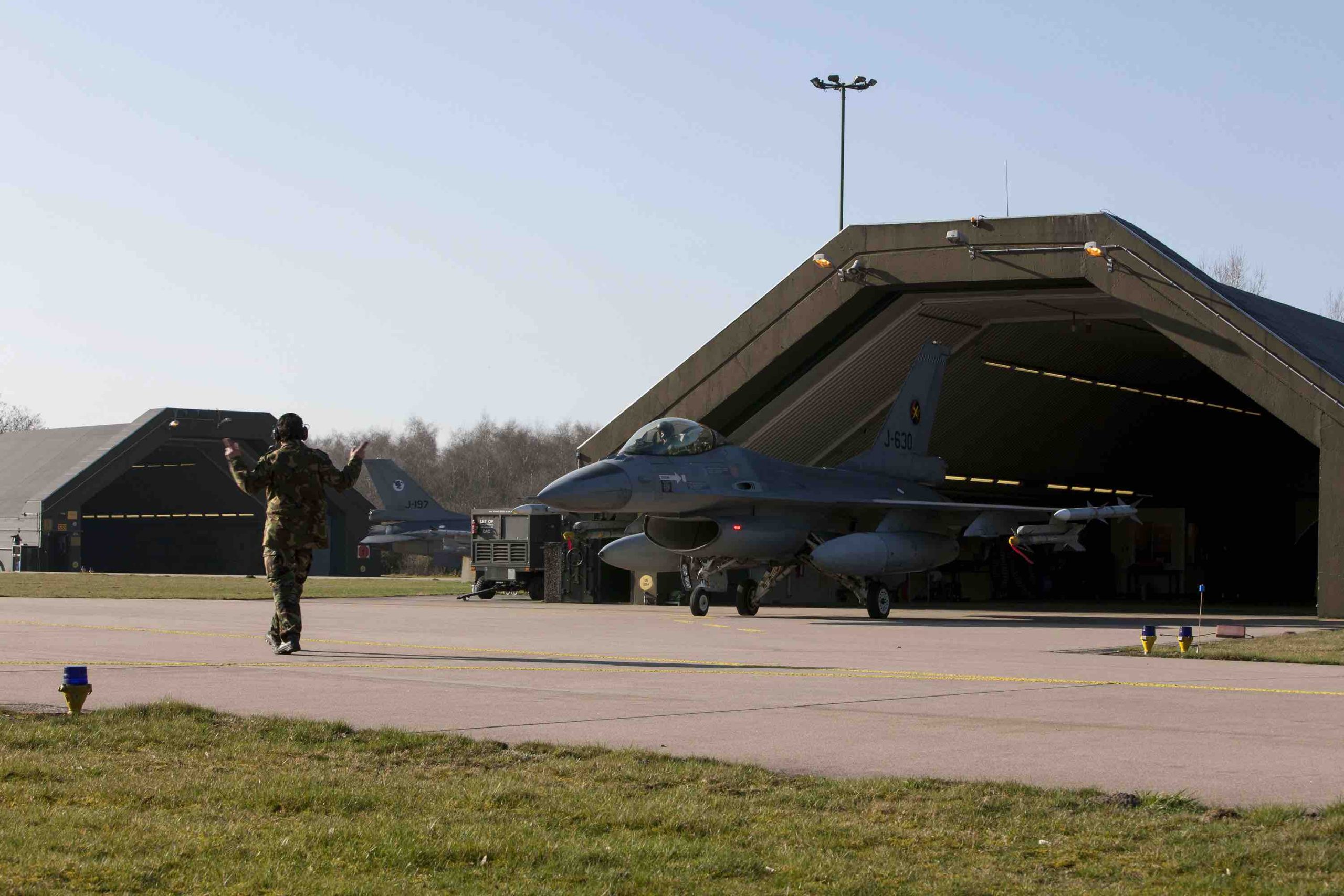
For Europe’s air defence forces, this is not an abstract concern. Modern air power is fuel-intensive by design. Fast jet fleets—from Eurofighters to Rafales—require vast quantities of aviation fuel not only for operational sorties but for routine training, readiness exercises, and rapid deployment. Unlike munitions, which can be stockpiled over time, fuel is a consumable that demands constant replenishment.
A sustained shortage would therefore have immediate operational consequences. Training hours would likely be curtailed first, as air forces prioritise frontline readiness over pilot proficiency cycles. This, in turn, would erode long-term capability. Pilots require regular flying hours to maintain combat effectiveness; any reduction risks diminishing skill levels at precisely the moment they may be needed most.
Beyond training, the implications for deterrence are equally significant. NATO’s air policing missions, quick reaction alert systems, and forward deployments rely on assured fuel supply. If availability becomes constrained, commanders may be forced to ration sorties or reposition assets closer to supply hubs, reducing flexibility. In a crisis, such limitations could prove costly.
There is also a logistical dimension. Europe’s military fuel infrastructure is not entirely separate from civilian systems. Refineries, storage facilities, and transport networks are often shared or interdependent. A disruption in the civilian market inevitably spills over into military supply chains, particularly when both sectors draw from the same imported sources.
This interdependence highlights a broader strategic miscalculation. Over recent decades, Europe has pursued efficiency and cost reduction in both its commercial and defence sectors. Refining capacity has declined, stockpiles have been trimmed, and supply chains have become leaner—optimised for peacetime economics rather than crisis resilience.
The result is a system that functions smoothly under normal conditions but struggles under stress. The current jet fuel crunch is not merely the product of external shocks; it is also the consequence of internal choices. The pursuit of cost savings—whether through reduced storage, limited redundancy, or reliance on just-in-time delivery—has left Europe exposed to precisely the kind of disruption now unfolding.
This is not a new pattern. Europe’s earlier energy crises, particularly in natural gas, revealed similar vulnerabilities: heavy dependence on external suppliers, insufficient strategic reserves, and fragmented policy responses. The aviation fuel shortage appears to follow the same script, albeit with potentially sharper implications for defence.
To be clear, there is no immediate suggestion that European air forces will be grounded. Military planners typically maintain dedicated reserves and prioritised access in times of shortage. Yet the margin of safety may be thinner than assumed, especially if the disruption persists or intensifies.
Moreover, the psychological effect should not be underestimated. The perception of constrained resources can influence decision-making, encouraging caution where confidence is required. Deterrence, after all, depends as much on perceived capability as on actual strength.
What emerges from this episode is a reminder that energy security and defence readiness are inseparable. Jet fuel may seem a mundane commodity, but in the context of modern warfare it is as critical as any advanced weapon system. Without it, even the most sophisticated aircraft are little more than static displays.
The policy implications are clear. Europe must reassess its approach to strategic fuel reserves, refining capacity, and supply diversification. Greater coordination at the EU level—something notably absent at present—would be a logical starting point. Investment in resilience, though costly, is likely to prove far cheaper than the consequences of continued vulnerability.
In the meantime, the unfolding shortage serves as a cautionary tale. It illustrates how quickly external shocks can expose internal weaknesses, and how decisions taken in the name of efficiency can carry hidden costs. For Europe’s air defence forces, the lesson is particularly stark: readiness cannot be sustained on a lean supply chain.
Strategic Refuelling and Strategic Choices: Poland’s Defence Dilemma
Main Image: By Defensie – https://commons.wikimedia.org/w/index.php?curid=72136725