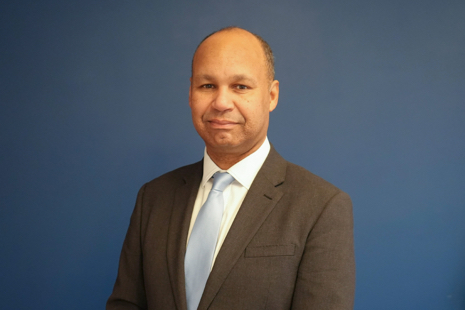
Speaking in New York, James Kariuki, Britain’s chargé d’affaires to the UN, used unusually direct language to characterise the conflict. Russia, he said, is not merely a participant in the war—it is “the aggressor” and must therefore be the one to step back, de-escalate and engage seriously in diplomacy.
The intervention reflects a hardening of tone in Western capitals as the war grinds on with no clear end in sight. While calls for dialogue have been a recurring feature of diplomatic exchanges since the invasion of Ukraine, the British statement sought to reframe the debate: peace cannot be achieved through moral equivalence between the belligerents, but only through a recognition of responsibility.
Kariuki warned that the stakes extend far beyond the battlefields of eastern Europe. Should Russia succeed in altering Ukraine’s borders by force, he argued, it would set a precedent with profound implications for international order. The rules underpinning global security—territorial integrity, sovereignty, and the prohibition of aggression—would be weakened, perhaps irreparably.
Such arguments are not new, but their repetition at the Security Council carries symbolic weight. The chamber, often paralysed by vetoes and geopolitical rivalry, remains the foremost stage on which competing visions of world order are contested. “What we say in this chamber matters,” Kariuki observed, in a pointed reminder that rhetoric can shape reality as much as it reflects it.
The British statement also underscored the human cost of the conflict. Recent waves of Russian missile and drone strikes have inflicted significant civilian casualties, reinforcing London’s assertion that Moscow continues to prosecute the war with little regard for international humanitarian norms.
Yet beyond condemnation, the speech carried a strategic purpose. By insisting that Russia must “engage in meaningful dialogue”, the UK sought to pre-empt any suggestion that Kyiv or its allies are obstructing peace efforts. The implication is clear: negotiations remain possible, but only if Russia demonstrates genuine intent rather than using talks as a tactical pause.
This framing aligns with a broader Western narrative that casts the Kremlin as both aggressor and spoiler—willing to escalate militarily while invoking diplomacy rhetorically. It is a narrative that has gained traction as previous attempts at ceasefires or negotiations have faltered.
There is, too, an implicit message to the wider international community. Many countries in the Global South have adopted more ambivalent positions on the war, calling for restraint on all sides while resisting alignment with Western sanctions. By placing the burden of de-escalation firmly on Russia, Britain is attempting to sharpen the moral clarity of the conflict and rally broader support.
Whether such efforts will succeed is another matter. The Security Council itself remains divided, with Russia’s veto power ensuring that no binding resolution can pass without its consent. In this context, statements such as Kariuki’s serve less to produce immediate outcomes than to shape the diplomatic environment in which future decisions are made.
Nevertheless, the speech highlights a persistent dilemma at the heart of the Ukraine war. Diplomacy is universally invoked as the path to peace, yet the conditions under which it can occur remain deeply contested. For Ukraine and its allies, negotiations must be grounded in respect for sovereignty and territorial integrity. For Russia, they are often framed in terms of security guarantees and geopolitical influence.
Bridging that gap will require more than rhetoric. Yet rhetoric, as Kariuki suggested, is not without consequence. The language used in international forums helps define legitimacy, apportion blame, and set expectations. In that sense, Britain’s intervention is part of a broader effort to ensure that, when the war does eventually end, its narrative is already written.
For now, however, the gulf between the parties remains wide. Calls for de-escalation continue to echo through the halls of the United Nations, even as the fighting persists on the ground. The challenge, as ever, lies in transforming those words into action.