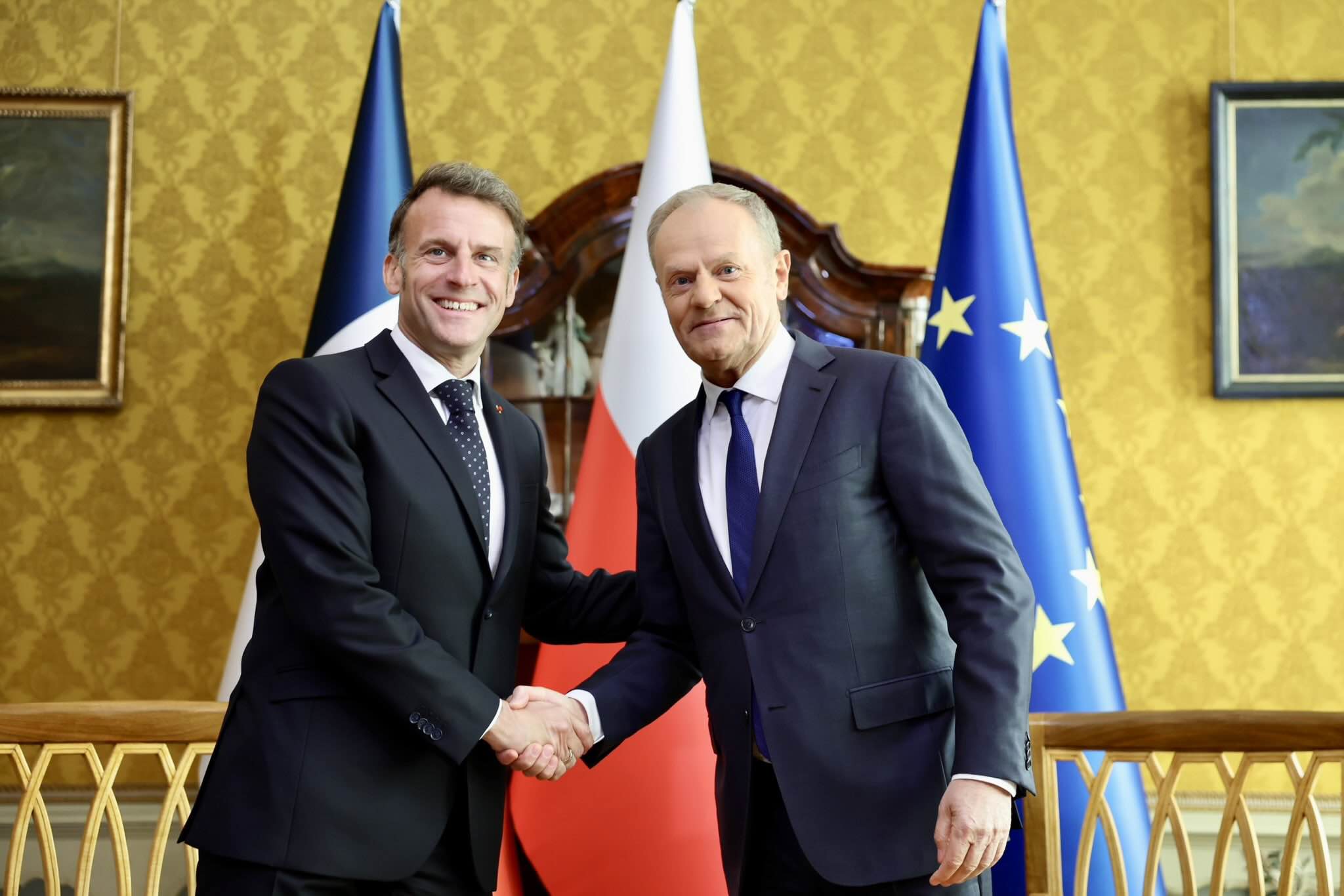
France and Poland moved to deepen their defence partnership on 20 April, using their first bilateral summit under the Treaty of Nancy in Gdańsk to set out a more ambitious agenda on military capability, industrial cooperation and European security. The most concrete line was an agreement in principle to pursue a joint military satellite communications programme, presented by both sides as part of a wider effort to strengthen European resilience and strategic autonomy.
The summit marked the first annual intergovernmental meeting foreseen by the friendship and cooperation treaty signed in Nancy on 9 May 2025. That treaty entered into force on 22 January 2026 and created a framework for regular high-level meetings, annual Friendship Day observance on 20 April, and structured cooperation across defence, energy, industry and culture. The Gdańsk meeting therefore mattered not only as a bilateral event, but as the operational start of a new institutional relationship between Paris and Warsaw.
In their joint declaration, the two governments described Russia as the most serious and durable threat facing both the EU and NATO, reaffirmed support for Ukraine, and committed themselves to strengthening Europe’s deterrence and defence posture. The text goes beyond general language. It sets out plans for closer work on air and missile defence, long-range strike, drones and counter-drone systems, munitions, cyber security, space, early warning, logistics and critical infrastructure protection. It also states that France and Poland intend to open a high-level bilateral strategic dialogue on advanced deterrence, covering both conventional and nuclear dimensions.
The satellite project stands out because it links operational need with industrial policy. The declaration states that the two sides are ready to deepen industrial cooperation in military satellite communications through a joint capability-development programme. Separate reporting published on the day of the summit indicated that the work would involve a geostationary telecommunications satellite for the Polish armed forces, bringing together French and Polish industrial partners. No financial details were disclosed, but the move points to a practical attempt to anchor more sensitive defence capability inside a European industrial framework rather than rely entirely on external providers.
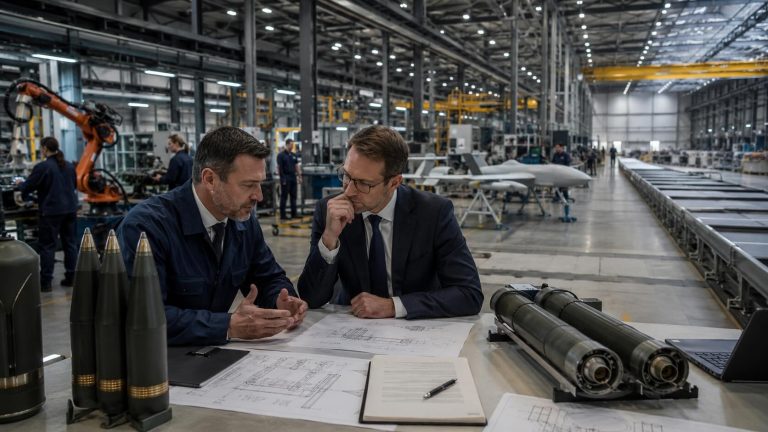
That industrial dimension runs through the rest of the document. Paris and Warsaw said they want to accelerate work on EU defence readiness, support a stronger European defence technological and industrial base, and make fuller use of instruments such as the European Defence Fund, EDIP and SAFE. They also backed a more targeted European preference in strategic sectors and argued for instruments in the next EU budget that would reduce technological dependence and reinforce sovereignty. For Poland, which has spent heavily on rapid rearmament and has sourced major equipment from outside Europe as well as within it, that language is significant because it suggests a willingness to place more of its next phase of capability development inside European programmes where practical.
For France, the summit is part of a wider attempt to turn political calls for European defence autonomy into concrete bilateral and industrial arrangements. For Poland, it offers access to deeper defence-industrial cooperation with one of Europe’s main military powers while keeping the relationship firmly anchored in NATO language. The declaration repeatedly frames bilateral initiatives as a contribution to the European pillar of the alliance, not as an alternative to it. That balancing act is central to the document: more European capability, but inside the existing alliance structure.
The text also shows that the bilateral agenda is not confined to defence. France and Poland used the summit to align around competitiveness, investment, simplification of business regulation, economic security and support for a stronger single market. They endorsed a “Made in Europe” approach in strategic sectors and called for tougher responses to distortion, coercive trade practices and industrial overcapacity. Even so, defence is clearly the main immediate news line because the summit produced a direct capability signal, an industrial signal and a strategic signal at the same time.
What follows will matter more than the ceremony in Gdańsk. The declaration is broad and some elements remain political intent rather than executed policy. But the satellite project, the planned deterrence dialogue and the emphasis on munitions, space and air defence give the summit enough substance to stand as more than a symbolic friendship event. It suggests that France and Poland are trying to build a denser security relationship at a time when the EU is under pressure to turn defence rhetoric into programmes, production and deployable capability.