

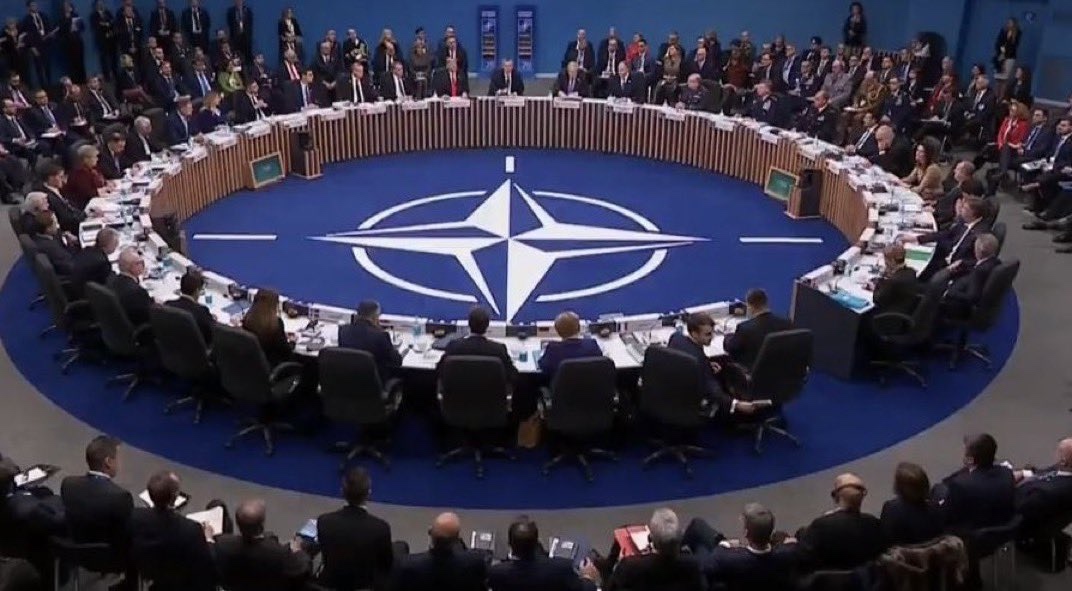
An internal Pentagon email, circulated among senior officials, has outlined a series of options aimed at allies deemed insufficiently supportive of American operations in the conflict with Iran. Among the more striking suggestions is the suspension of Spain from NATO — a proposal that, while largely symbolic, underscores the depth of irritation within parts of the US defence establishment.
The dispute centres on what military planners regard as the fundamentals of alliance cooperation: access, basing and overflight rights. Known in defence parlance as “ABO”, these provisions are considered the minimum expectation among NATO partners. Yet several European governments, most notably Madrid, have declined to grant such permissions for operations linked to the Iran war, citing legal and political concerns.
Spain’s refusal has been particularly conspicuous given its hosting of key US military facilities at Rota and Morón. From Washington’s perspective, the denial of their use represents not merely a logistical inconvenience but a breach of the alliance’s spirit, if not its letter. Spanish officials, for their part, have framed their position as consistent with international law and a broader reluctance to become entangled in a widening Middle Eastern conflict.
The Pentagon note reportedly canvasses a range of responses. Alongside the idea of suspending Spain from NATO structures, it suggests reassessing longstanding US diplomatic positions, including support for Britain’s claim to the Falkland Islands — a move that would carry considerable symbolic weight.
Such measures remain hypothetical, and there is no indication that formal steps have been taken. Indeed, NATO’s founding treaty contains no mechanism for expelling a member state, a legal constraint that renders talk of “suspension” more a matter of political signalling than practical policy.
Nevertheless, the tone of the discussion is telling. The email reflects a perception among some US officials that European allies have been willing to benefit from American security guarantees while hesitating to share the burdens of military action when called upon. This sentiment, often voiced in more guarded language, appears here in unusually stark terms.
The broader context is a conflict that has strained alliances as much as it has reshaped regional dynamics. The US-led campaign against Iran, and efforts to secure the Strait of Hormuz, have exposed differing appetites for risk among NATO members. While some have offered limited support, others have opted for diplomatic caution, wary of escalation and domestic opposition.
For President Trump, whose scepticism towards NATO predates the current crisis, the episode reinforces longstanding doubts about the alliance’s utility. Reports suggest he has entertained more far-reaching options, including a reassessment of America’s overall commitment, though the Pentagon communication stops short of advocating withdrawal or the closure of bases in Europe.
European governments, meanwhile, have sought to defend their positions without deepening the rift. Many argue that NATO was conceived as a collective defence pact for the North Atlantic area, not as an automatic vehicle for operations beyond it. The distinction, though often blurred in practice, has taken on renewed significance in the present circumstances.
Diplomats in Brussels privately acknowledge that tensions have risen, but caution against overstating the implications. NATO has weathered disputes before — over Iraq, Libya and burden-sharing — and has shown a capacity for pragmatic compromise when strategic interests align.
Yet there is a difference in tone this time. The combination of an ongoing conflict, an unpredictable US administration, and diverging European priorities has created a more brittle atmosphere. Even symbolic gestures, such as the mooted “suspension” of a member state, risk unsettling a framework built as much on political trust as on formal obligations.
For Spain, the episode is unlikely to alter its immediate stance. The government has signalled a preference for diplomatic engagement and adherence to international law, even at the cost of friction with Washington. Whether that position proves sustainable in the face of sustained American pressure remains to be seen.
What is clear is that the alliance finds itself navigating familiar questions in unfamiliar circumstances: how to reconcile unity with national sovereignty, and how to define collective responsibility in an era of increasingly diffuse threats.

Britain’s Consistent Message on Ukraine Carries Growing Weight at the OSCE