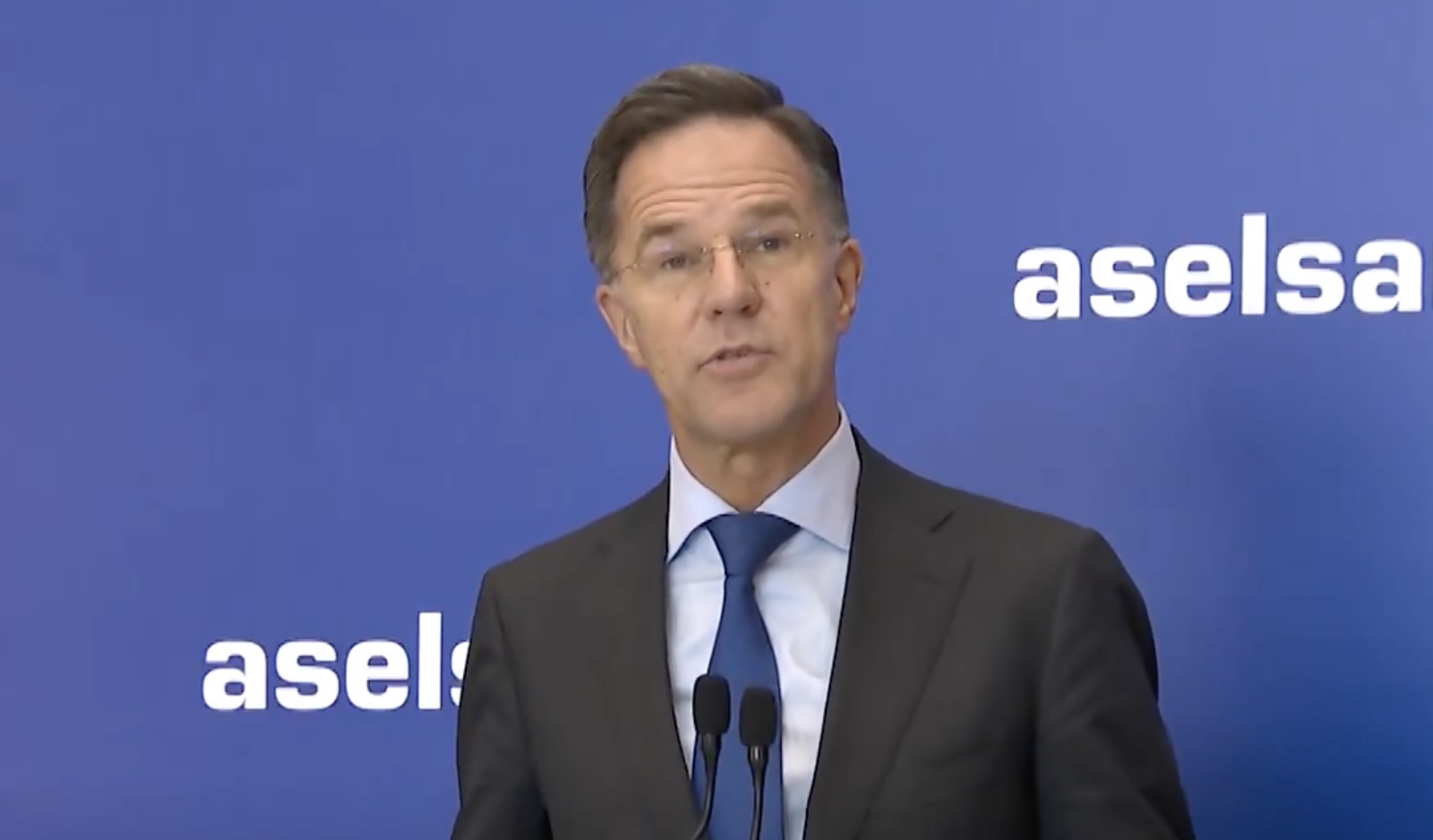
NATO Secretary General Mark Rutte used a two-day visit to Türkiye to combine summit diplomacy with a defence-industrial message, meeting President Recep Tayyip Erdoğan in Ankara and visiting the facilities of ASELSAN as the alliance prepares for its next leaders’ summit in the Turkish capital. The visit took place on 21 and 22 April and was intended to support preparations for the forthcoming Ankara Summit.
In its public account of the trip, NATO said Rutte met Türkiye’s national leadership and underlined the country’s contribution to the alliance. The brief NATO readout states that, in his meeting with Erdoğan, the Secretary General discussed preparations for the upcoming summit in Ankara and emphasised Türkiye’s role within NATO. The Turkish presidency said the meeting at the Presidential Complex covered summit preparations, current NATO agenda items, and regional and global developments.
The visit also included meetings with Foreign Minister Hakan Fidan and Defence Minister Yaşar Güler, according to NATO’s published media material. That gave the trip a broader purpose than a single courtesy call. It served both as advance summit coordination and as a signal that Ankara remains central to current alliance discussions on regional security, industrial capacity and force support.
The defence-industry element was particularly explicit. Speaking to engineers during his visit to ASELSAN, Rutte said he was “extremely impressed” by what he had seen and argued that NATO needed industry across Europe and North America “from Alaska to Ankara” to keep producing, innovating and buying from one another. He referred to recent ASELSAN exports and activity in allied markets including Poland, Albania, Romania and Croatia, using the visit to present Turkish industrial output as part of a wider transatlantic supply base rather than a purely national capability.
That message matters because NATO has been placing increasing emphasis on production capacity, armaments output and the ability of allied industry to sustain deterrence over time. Rutte told the ASELSAN audience that stronger transatlantic industrial cooperation was a “key priority” for the Ankara Summit. In doing so, he linked the visit directly to one of the alliance’s most practical current concerns: how to expand production fast enough to support readiness, replenishment and long-term capability growth.
The Turkish side’s public wording was more restrained, but it pointed in the same direction. In the presidential statement, Ankara said the conversation with Rutte covered the NATO leaders’ summit to be held in Ankara, items on the alliance agenda, and wider regional and global developments. That framing leaves room for multiple live issues without over-defining the talks, but it confirms that summit preparation was at the centre of the meeting.
Taken together, the meetings and the ASELSAN visit suggest that Rutte wanted to use the trip for two connected purposes. The first was political: to keep momentum behind the July summit in Ankara and consult closely with the host country. The second was industrial: to reinforce the case that allied defence production, including Turkish production, now sits close to the centre of NATO’s practical agenda.