Each resurgence tends to coincide less with any meaningful shift in international law than with domestic pressures in Buenos Aires. The latest iteration appears no different: a carefully calibrated blend of nationalist rhetoric, historical grievance, and opportunistic calculation.
At the heart of the matter lies a legal position that is, despite Argentina’s protestations, remarkably settled. The Falkland Islands are a British Overseas Territory, administered by the United Kingdom since 1833. Argentina bases its claim on inheritance from the Spanish Empire and geographical proximity. Yet these arguments sit uneasily alongside the central principle of modern international law: the right of peoples to self-determination.
This principle was tested unequivocally in 2013, when the Falkland Islanders held a referendum on their political status. The result was not merely decisive; it was overwhelming. With a turnout exceeding 90 per cent, 99.8 per cent of voters chose to remain a British Overseas Territory.
It is difficult to conceive of a clearer democratic expression. For London, this vote has become the cornerstone of its legal and moral case. For Buenos Aires, it is an inconvenient fact, often dismissed as irrelevant on the grounds that the islanders are a “transplanted population”. Such an argument, however, finds little sympathy beyond Argentina’s own diplomatic circles.
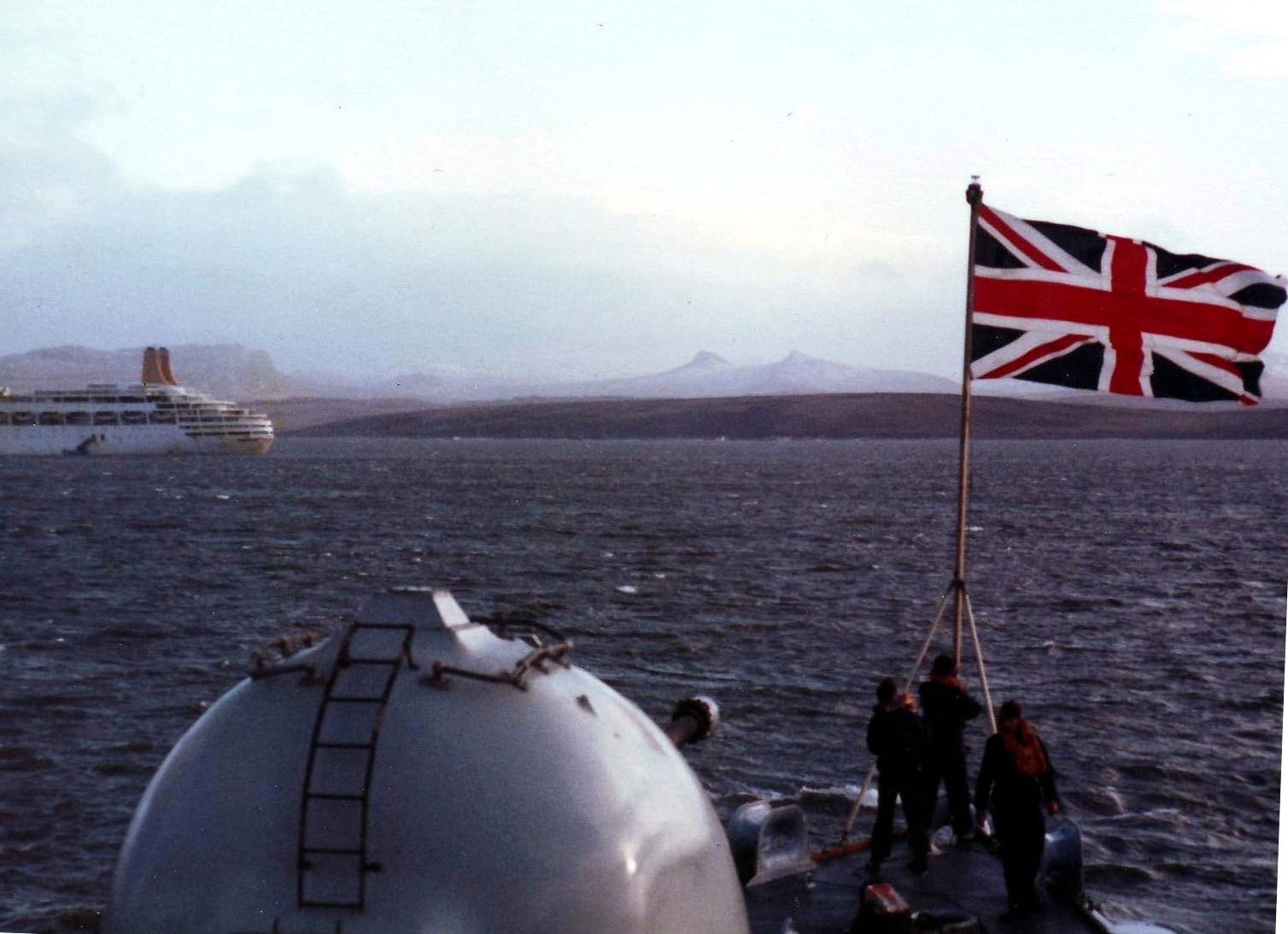
The shadow of the Falklands War still looms large. Argentina’s brief occupation and subsequent defeat by British forces not only reaffirmed British control but also underscored the risks inherent in military adventurism. Four decades on, there is scant appetite in either country for a repeat of that conflict. Yet rhetoric, unlike war, is cheap—and often politically expedient.
For Argentina’s leadership, the Falklands—known domestically as Las Malvinas—serve as a unifying cause in times of economic strain or political fragility. Inflation, debt crises, and social unrest have been recurring features of Argentine life. In such an environment, invoking sovereignty over the islands offers a convenient distraction, a rallying point that transcends partisan divides. It is, in many respects, classic political theatre.
That said, to dismiss Argentina’s posture entirely as empty grandstanding would be to overlook a more nuanced calculation. Buenos Aires may well perceive a changing strategic landscape. The Royal Navy, though still formidable by most global standards, is undeniably diminished compared with its Cold War zenith. The fleet that sailed south in 1982 was assembled with urgency but from a broader base of capability than exists today. Modern Britain retains advanced assets—submarines, air power, and a professional expeditionary force—but the margin for sustained, large-scale operations is thinner.
This perception, whether accurate or exaggerated, may embolden Argentine rhetoric. It is one thing to challenge a superpower at the height of its naval strength; quite another to test a nation perceived to be managing decline. Yet any suggestion that Britain could not defend the islands would be a grave miscalculation. The UK maintains a permanent military presence in the Falklands, including air defence systems and rapid reinforcement capabilities. More importantly, the political cost of losing the islands—domestically and internationally—would be prohibitive for any British government.
Here, however, enters the question of leadership. Critics of Keir Starmer have been quick to suggest that Argentina may view the current British administration as less resolute than its predecessors. Such assessments are, inevitably, coloured by partisan perspectives. Nevertheless, in international politics, perception often carries as much weight as reality. If Buenos Aires believes that London’s political will is uncertain, it may be tempted to press its case more assertively on the diplomatic stage.
Yet there is a significant gap between diplomatic assertiveness and military action. Argentina’s armed forces, like Britain’s, face their own constraints. Years of underinvestment have left capabilities limited, particularly in terms of power projection. Any attempt to seize the islands by force would not only risk military defeat but also invite international condemnation and economic repercussions. In an interconnected global economy, such costs are far from trivial.
The more plausible scenario, therefore, is one of continued rhetorical escalation rather than concrete action. Argentina will raise the issue in international forums, seek support from regional allies, and frame the dispute as a lingering colonial injustice. Britain, for its part, will reiterate the principle of self-determination and point to the 2013 referendum as definitive.
In the end, the Falklands question remains less a live territorial dispute than a frozen symbol—of history, identity, and political utility. For the islanders themselves, the matter is settled. They are British, by choice as much as by law. For Argentina, the claim endures, sustained by national sentiment and political expediency. And for Britain, the challenge lies not in legal ambiguity or military weakness, but in maintaining the clarity of purpose that has defined its position for nearly two centuries.
From Cyprus to the Falkland Islands: Britain’s Defence Failures Are Slowly Mounting