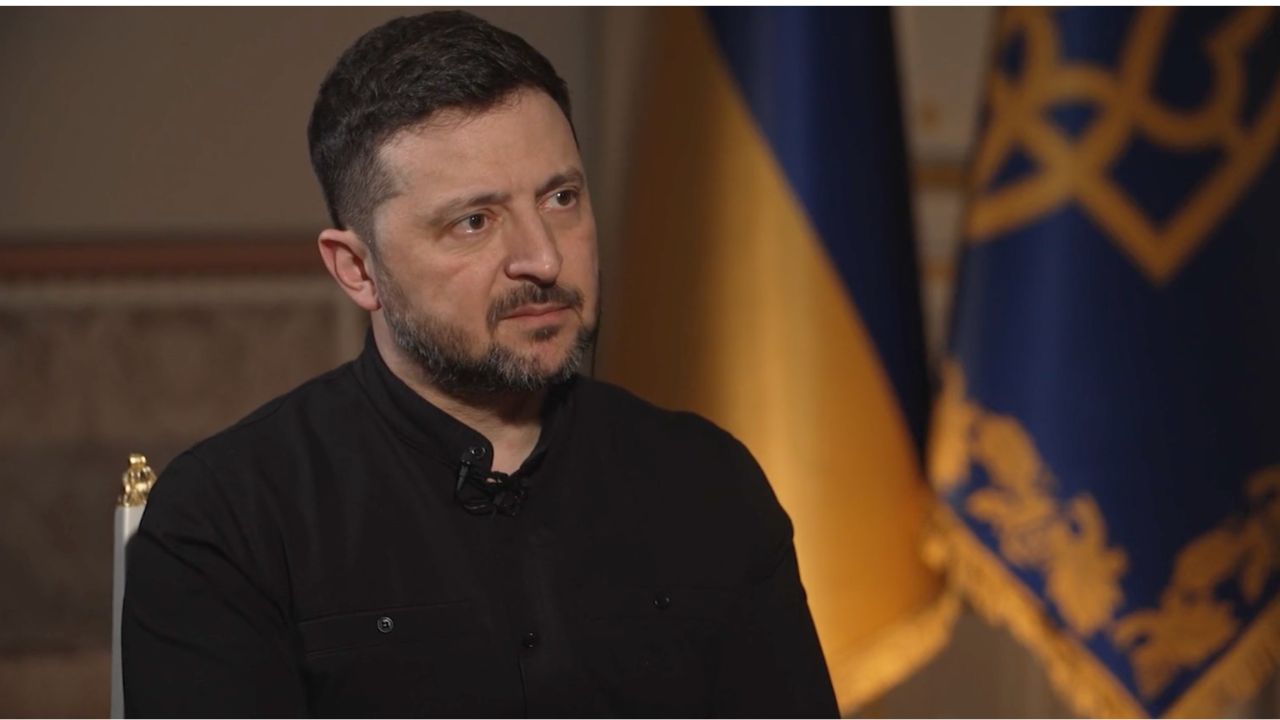
President Volodymyr Zelenskyy has warned that Russia is seeking to draw Belarus deeper into the war and is weighing possible operations either against northern Ukraine or against a NATO country from Belarusian territory.
The warning, issued after a meeting with Ukraine’s military and intelligence leadership, points to renewed concern in Kyiv over Moscow’s use of Belarus as a strategic platform. Zelenskyy said Ukraine had documented Russian efforts to persuade Belarusian leader Alexander Lukashenko to support what he described as further aggressive operations. According to the Ukrainian president, the possible directions under consideration include the Chernihiv-Kyiv axis in northern Ukraine or an operation against one of the NATO states bordering Belarus.
Ukraine has not named a specific NATO target. However, the geography is clear. Belarus borders Poland, Lithuania and Latvia, all of them members of NATO and the European Union. Any military pressure from Belarusian territory would therefore immediately raise questions not only for Ukraine’s northern defences, but for the alliance’s eastern flank.
The warning comes at a sensitive moment. Russia has intensified missile and drone attacks on Ukraine, while NATO’s eastern members remain focused on air defence, border security and the ability to move reinforcements quickly in a crisis. It also follows the United States’ decision to halt planned troop deployments to Poland and Germany, including a 4,000-strong armoured brigade rotation to Poland, adding to wider uncertainty over the future pattern of American military presence in Europe.
Trump Administration Halts Planned US Brigade Deployment to Poland Amid Wider European Troop Cuts
Belarus has already played a central role in the war. In February 2022, Russian forces used Belarusian territory as one of the launch points for the full-scale invasion of Ukraine, advancing south towards Kyiv before being pushed back. Since then, Minsk has avoided direct formal entry into the war, but has remained a close Russian military partner and has hosted Russian forces, weapons systems and joint exercises.
That history explains why Kyiv treats renewed Belarus-related planning as more than rhetoric. A renewed threat from the north would force Ukraine to divert attention, manpower and air-defence resources at a time when it is already under pressure along the front line and from long-range strikes. Even if no attack materialises, the threat itself can impose operational costs.
For NATO, the issue is different but no less significant. Poland, Lithuania and Latvia sit on the alliance’s front line with both Russia and Belarus. The area includes the Suwałki corridor, the narrow land connection between Poland and Lithuania separating Belarus from Russia’s Kaliningrad exclave. The corridor has long been viewed as one of NATO’s most sensitive geographical vulnerabilities because any military pressure there could complicate reinforcement of the Baltic states.
There is no public evidence that Russia is preparing an immediate attack on a NATO country. Zelenskyy’s statement should therefore be treated as a warning from Ukraine’s leadership rather than confirmation of an imminent operation. However, the political effect is still important. It places Belarus back at the centre of the European security debate and underlines how the war continues to create risks beyond Ukraine’s borders.
Moscow and Minsk have not publicly accepted Ukraine’s account. Russia has repeatedly accused NATO of escalating the conflict by supporting Ukraine, while Belarus has presented its security policy as defensive. Those positions have not reassured governments in the region, where Russian and Belarusian military integration is viewed as a long-term structural threat.
Ukraine has said it is strengthening its northern direction and preparing response plans. For Kyiv, the priority is to prevent a repeat of the early phase of the full-scale invasion, when Russian forces attempted to advance on the capital from the north. For NATO states bordering Belarus, the same warning reinforces the need for intelligence-sharing, air surveillance, border monitoring and rapid reinforcement planning.
The wider significance lies in the way Russia can use Belarus even without launching a new front. By keeping Ukraine and NATO uncertain about possible operations from Belarusian territory, Moscow can stretch planning assumptions, increase the burden on border states and complicate Western decisions about troop deployments and weapons supplies.
This is why the warning matters beyond its immediate content. It does not mean that an attack on NATO is inevitable. It does mean that Belarus remains one of the principal pressure points in the European security order, capable of forcing Ukraine and NATO to plan for scenarios that may never occur but cannot be ignored.
For Poland, Lithuania and Latvia, the message is direct. The eastern flank is not only a line on NATO maps. It is a region where Russian military planning, Belarusian alignment, Ukrainian battlefield needs and Western political decisions intersect. Zelenskyy’s warning has returned that reality to the centre of the debate.