Ukraine’s latest strike on the Ryazan oil refinery has underlined a widening campaign against Russia’s energy infrastructure, as Kyiv seeks to weaken one of the principal economic and logistical foundations of Moscow’s war effort.
The refinery, located around 200 kilometres south-east of Moscow, was hit overnight on 15 May, according to Ukrainian military statements. Ukraine’s General Staff said the site is one of Russia’s largest oil refineries, with annual refining capacity of about 17 million tonnes of crude oil, and produces petrol, diesel and aviation fuel used by Russian forces. The same overnight operation also reportedly struck Russian naval assets at the Kaspiysk base on the Caspian Sea.
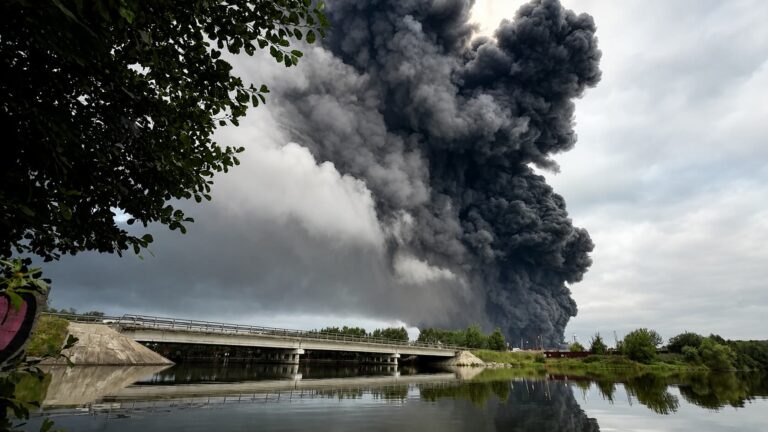
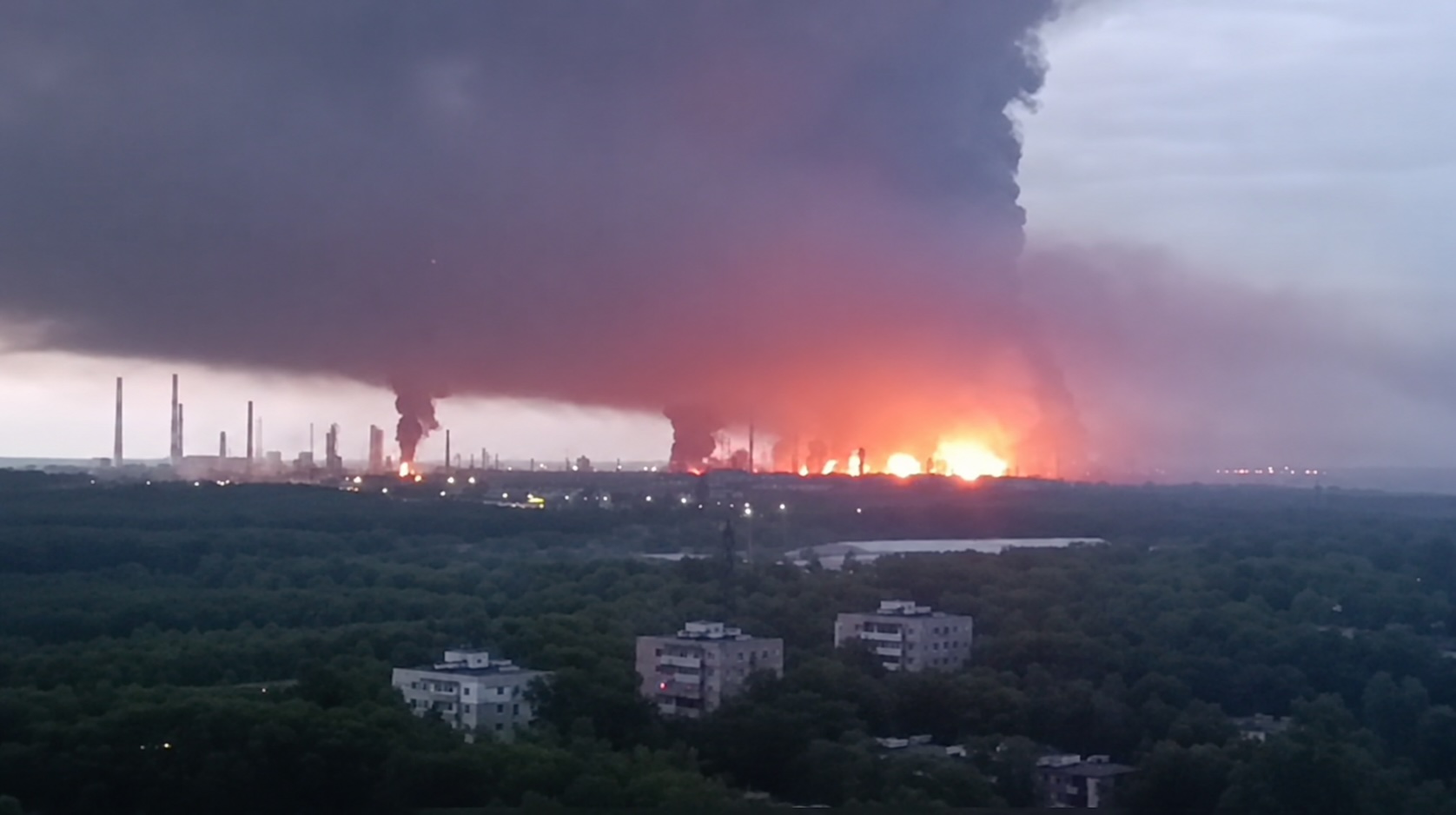
Footage circulating from Ryazan showed a large fire at the refinery, with several apparent points of ignition visible across the industrial site. Open-source assessments have suggested possible damage to primary refining units, although the precise extent of the damage has not been independently confirmed.
The Ryazan attack is significant because of both the scale of the facility and its proximity to Moscow. The plant is part of the fuel supply system serving central Russia, including the capital region. Ukrainian attacks on refineries near Moscow therefore have a different strategic and psychological effect from strikes on more distant export-oriented plants on the Black Sea or in the Urals.
The latest strike also fits a broader pattern. Industry calculations published this week indicate that Ukraine has doubled the number of Russian oil refineries targeted since the start of the year. Between January and May, Ukrainian drone attacks are estimated to have knocked about 700,000 barrels per day of Russian refining capacity offline across 16 refineries, compared with eight refineries during the same period in 2025. Major affected facilities include plants in Kirishi, Nizhny Novgorod, Perm and Tuapse.
The pressure is not limited to individual fires or temporary outages. More than 35 primary distillation units, with combined capacity estimated at nearly 2.85 million barrels per day, have reportedly been halted this year because of drone damage or related disruptions. During the same period last year, 12 such units, with around 1.37 million barrels per day of capacity, were taken out of service.
The operational consequences are increasingly visible in export and production data. The International Energy Agency reported that Russian crude oil output in April fell by 460,000 barrels per day year on year to roughly 8.8 million barrels per day. Russia’s oil product exports also fell by 340,000 barrels per day from March to 2.2 million barrels per day, described as the lowest recorded level in the data cited.
Separate data on seaborne oil product exports showed a sharp April decline, with shipments falling by 9.8 per cent from March and 17 per cent year on year to 7.77 million metric tonnes. Baltic ports were particularly affected after fires at fuel storage facilities disrupted operations, although some volumes were redirected through Black Sea and Azov Sea routes.
For Ukraine, the campaign serves several purposes. It targets fuel supplies for Russian military operations, complicates logistics, damages revenue-generating infrastructure, and forces Moscow to devote additional air defence resources to industrial sites deep inside Russian territory. It also increases the cost of maintaining domestic fuel stability, particularly if repeated strikes reduce refining capacity while internal demand remains high.
For Russia, the immediate challenge is repair. Damage to storage tanks can be serious but relatively contained. Damage to primary refining units is more consequential. If such units are destroyed or heavily damaged, a refinery may be unable to process crude at normal levels for months, and in some cases longer, depending on access to equipment, specialist components and skilled repair teams. Russia’s sanctions environment may further complicate replacement of high-value industrial equipment.
The Ryazan strike also comes after renewed Russian attacks on Ukrainian cities. Kyiv suffered one of the heaviest recent missile and drone attacks earlier this week, with at least 24 people reported killed in a strike on a residential building. Ukrainian officials have framed subsequent strikes on Russian energy and military infrastructure as part of a wider response to Moscow’s continued bombardment.
Russia Fires 731 Aerial Weapons at Ukraine as Kyiv Becomes Main Target
The broader military trend is clear. Ukraine is increasingly using long-range drones to attack assets that support Russia’s war economy beyond the immediate battlefield. Russia still retains substantial energy infrastructure and continues to export crude and petroleum products, but the frequency and geographic spread of Ukrainian strikes are creating cumulative pressure.
If the Ryazan refinery remains impaired, the effect will be felt not only in lost processing capacity but also in the allocation of Russian air defence, emergency response, repair resources and internal fuel management. The strategic value of the attack lies less in a single fire than in the repeated demonstration that Russia’s energy infrastructure, including facilities near Moscow, is no longer insulated from the war.