Poland is to host Europe’s only authorised service centre for Abrams tank engines, in a move that strengthens its role as a maintenance and logistics hub for NATO’s eastern flank.
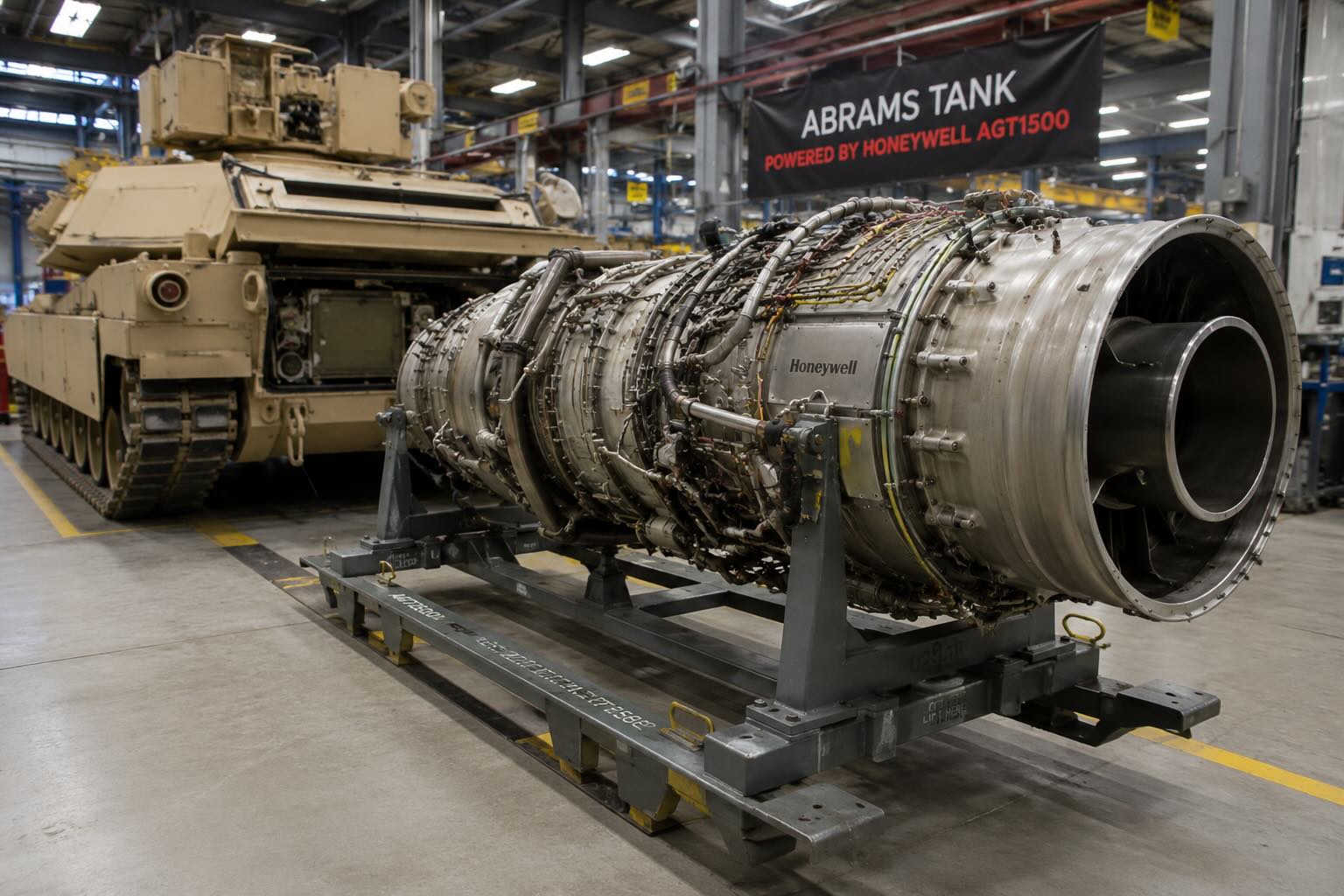
The agreement, signed on Monday between Poland’s Military Aviation Works No. 1 and the US company Honeywell, will establish an authorised centre for AGT1500 gas turbine engines used in M1 Abrams tanks. The facility will be based in Dęblin, in eastern Poland, and is expected to provide repair and overhaul capacity for Poland and other users of Abrams vehicles in Europe.
According to the Polish Press Agency’s report on the agreement, the centre will be the only facility of its kind in Europe. PAP reported that the agreement was signed on May 18th with the participation of Prime Minister Donald Tusk and Defence Minister Władysław Kosiniak-Kamysz.
The timing gives the deal wider political significance. Tusk used the signing to emphasise Poland’s continuing security relationship with the United States, days after Washington cancelled a planned deployment of more than 4,000 US-based troops to Poland. He said transatlantic unity had to survive a difficult period, according to Reuters reporting on the event.
For Warsaw, the engine centre is more than an industrial investment. Poland has bought hundreds of Abrams tanks as part of a rapid military modernisation programme prompted by Russia’s full-scale invasion of Ukraine and the deteriorating security environment on NATO’s eastern border. Heavy armour requires sustained repair, spare parts, trained technicians and engine overhaul capacity. Without that support infrastructure, tanks can quickly become unavailable even if they remain formally in service.
The AGT1500 engine is central to that challenge. Abrams tanks are powerful and mobile, but their gas turbine engines are maintenance-intensive and fuel-hungry. Until now, major servicing and overhaul capacity in Europe has been limited. Establishing a Polish hub reduces dependence on transatlantic repair cycles and shortens the distance between operational units and deep maintenance facilities.
That matters for readiness. In a crisis, the ability to return damaged or worn vehicles to service quickly can be as important as the number of vehicles bought. Maintenance capacity also determines whether allied forces can sustain operations over time rather than simply deploy equipment at the start of a conflict.
Poland’s role is becoming particularly important because it is both a frontline NATO state and one of Europe’s largest defence spenders. Warsaw plans to spend 4.8 per cent of GDP on defence in 2026, according to Reuters. Earlier this month, Poland also became the first EU country to sign a loan agreement under the bloc’s Security Action for Europe initiative, securing €43.7 billion for military investment. Reuters reported that the programme is intended to strengthen European defence capabilities in response to risks from Russia and Belarus.
Poland signs first EU SAFE defence loan agreement as Warsaw secures €43.7bn
The Dęblin facility fits that broader pattern. Poland is not only buying tanks, aircraft, air defence systems and artillery. It is also trying to build the support base needed to keep those systems operational. That distinction is important. European defence debates often focus on headline procurement figures, but readiness depends on ammunition stocks, maintenance capacity, depots, trained personnel and industrial repair networks.
The agreement with Honeywell also shows how US defence equipment continues to shape European military planning. Poland has sought to diversify suppliers, buying equipment from the United States, South Korea and European manufacturers. Yet its Abrams fleet ties part of its armoured capability directly to US industrial and technical support. Localising engine repair in Poland therefore strengthens autonomy in practice, even within a US-designed system.
For NATO, the benefit is also regional. A European Abrams engine service centre could support not only Polish forces but potentially other allied users, depending on future arrangements. It adds depth to a maintenance network that would be critical in any extended confrontation on the eastern flank.
The deal comes as European governments reassess the reliability and scale of US military involvement on the continent. The cancelled troop deployment to Poland has not changed the alliance’s formal commitments, and Polish officials have insisted that US forces remain present in the country. However, the episode has reinforced the argument that European states need greater capacity to sustain their own defence.
That does not mean Poland is moving away from the United States. Tusk’s comments at the signing suggested the opposite: Warsaw wants to preserve the US relationship while increasing its own practical contribution to deterrence. The Abrams engine centre allows the government to present defence industry cooperation as evidence that the alliance still has material substance.
The strategic lesson is that NATO’s eastern flank is being reinforced not only through troop numbers and new weapons purchases, but through the less visible systems that make military power usable. Repair centres, engine overhaul lines and spare-parts networks rarely attract the same attention as tanks or aircraft. In a prolonged crisis, they are essential.
Poland’s new Abrams engine hub therefore marks a practical strengthening of European defence infrastructure. It will not resolve wider uncertainty over US force posture in Europe. But it gives NATO’s eastern flank more maintenance depth, reduces repair dependency and makes Poland a more important support base for allied heavy armour.