Italy’s Defence Minister Guido Crosetto has said Rome has an “essential” need to draw on the European Union’s SAFE defence fund, despite his government’s warning that it could withdraw from the scheme unless Brussels grants more budget flexibility for energy costs.
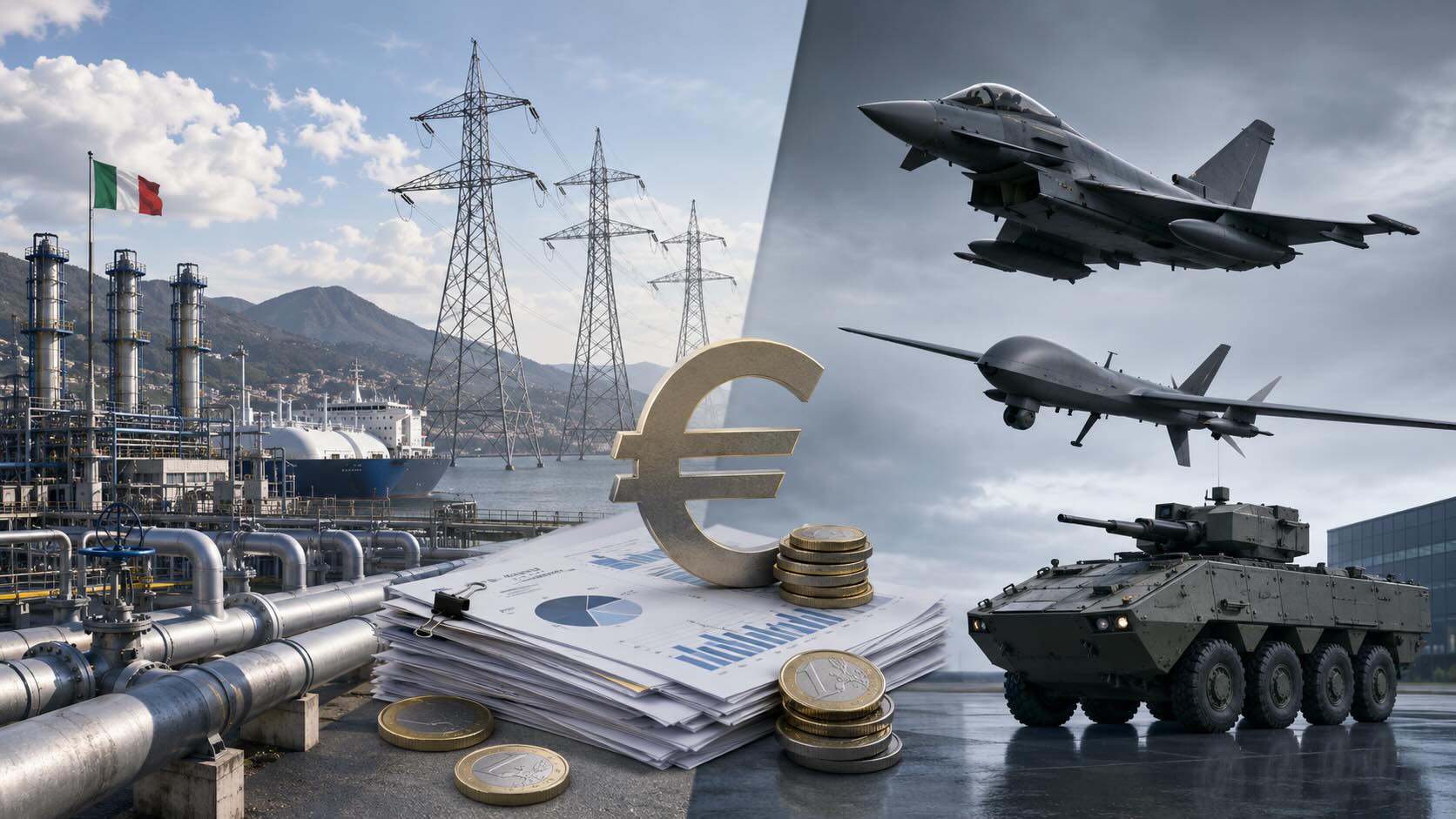
The dispute points to a wider problem for Europe’s rearmament agenda. EU governments have agreed that defence spending must rise, but many are still trying to reconcile that objective with high debt, pressure on household budgets and the political cost of rising energy prices.
SAFE, or Security Action for Europe, is the EU’s joint borrowing instrument for defence investment. The European Commission says the mechanism will provide up to €150 billion in competitively priced, long-maturity loans to member states for urgent and large-scale procurement. The aim is to strengthen Europe’s defence industrial base and support common purchases of equipment.
For Italy, the issue is not whether defence spending is needed. Crosetto told parliament that Italy needs the SAFE scheme to strengthen its military budget, arguing that the country’s defence sector cannot meet current requirements without additional support. Italy has historically spent less on defence than several other major NATO members, while also carrying one of the highest public debt burdens in the eurozone.
The political difficulty lies elsewhere. Prime Minister Giorgia Meloni has linked Italy’s participation in SAFE to a demand for more EU budget leeway on energy spending. In a letter to European Commission President Ursula von der Leyen, Meloni warned that Italy could drop plans to use the defence scheme unless Brussels allowed similar flexibility for measures aimed at cushioning households and businesses from energy costs. Commission had rebuffed Rome’s request for looser treatment of energy-related spending under EU fiscal rules.
That position reflects a domestic political calculation. Defence investment may be a strategic requirement, but energy bills are a direct pressure on voters and companies. If Rome is allowed extra fiscal space for defence but not for energy support, the government risks being seen at home as prioritising military budgets over immediate economic relief.
This is why the Italian dispute matters beyond Rome. Europe’s defence debate is often presented as a question of strategic will: whether governments are prepared to spend more, procure faster and rebuild industrial capacity. Italy’s case shows that the harder question may be fiscal sequencing. Governments may accept the need for rearmament, but still resist decisions that create visible budget trade-offs with energy subsidies, welfare spending, infrastructure or tax policy.
The Commission’s position is also understandable. If Brussels allows one member state to treat energy spending with the same fiscal flexibility as defence, others may demand similar treatment for their own domestic pressures. That could weaken the EU’s fiscal framework at a time when several governments are already under pressure to bring deficits under control.
SAFE was designed in part to avoid this problem. By using EU-backed loans, it gives member states access to cheaper financing for defence procurement without requiring immediate national borrowing on the same terms. The Council of the EU has described SAFE as a way to support defence industrial production through common procurement, with a focus on priority capabilities.
However, the fact that SAFE is based on loans rather than grants still matters. Member states that use the scheme will eventually have to repay the money. For high-debt countries, including Italy, that makes participation a budget decision as well as a defence-policy decision. It also means national finance ministries may be more cautious than defence ministries, even when military needs are clear.
The timing adds further pressure. NATO allies are being asked to move towards higher spending targets, while Russia’s war against Ukraine has exposed gaps in European ammunition production, air defence, military mobility and industrial readiness. European governments are also trying to reduce reliance on the United States for key capabilities, particularly as Washington’s long-term force posture in Europe remains a recurring political question.
Italy is not alone in facing these constraints. Across Europe, governments are being asked to spend more on defence while managing slow growth, ageing populations, higher borrowing costs and energy-market volatility. The political consensus behind higher defence spending is therefore less settled than headline commitments suggest.
The Italian case also exposes a weakness in Europe’s attempt to build a common defence market. Joint procurement can reduce duplication and improve scale, but it depends on national governments being willing to commit funds at the same time and for similar priorities. If fiscal disputes delay participation by major member states, the instrument may struggle to deliver quickly.
For Italy’s defence industry, access to SAFE could matter commercially as well as strategically. Italian companies are involved in land systems, naval production, aerospace, electronics and defence technology. Participation in EU-backed procurement programmes could support investment, production planning and cooperation with other European manufacturers. Delayed participation could leave firms at a disadvantage as other countries move ahead with national plans.
The dispute therefore should not be read as a simple argument over one EU loan scheme. It is an early test of whether Europe’s rearmament plans can survive contact with domestic fiscal politics. Brussels can create financing instruments, but it cannot remove the national political choices behind them.
Crosetto’s intervention shows that Italy’s defence establishment sees SAFE as necessary. Meloni’s warning shows that the same government wants to use participation as leverage in a wider budget argument with Brussels. The result is a dispute that captures the central tension in Europe’s security policy: the continent is being asked to spend more on defence at the same time as governments face pressure to protect citizens and industry from economic shocks.
For the EU, the risk is that defence financing becomes another arena for fiscal bargaining. For Italy, the risk is that hesitation over SAFE weakens its ability to modernise military capacity and participate fully in Europe’s industrial rearmament. The broader question is whether Europe can turn defence spending pledges into procurement decisions before budget politics slows the process.