The US Secretary of State’s arrival at the NATO foreign ministers’ meeting in Sweden has put three linked questions before European allies: Iran, Ukraine and the future reliability of American military support in Europe.
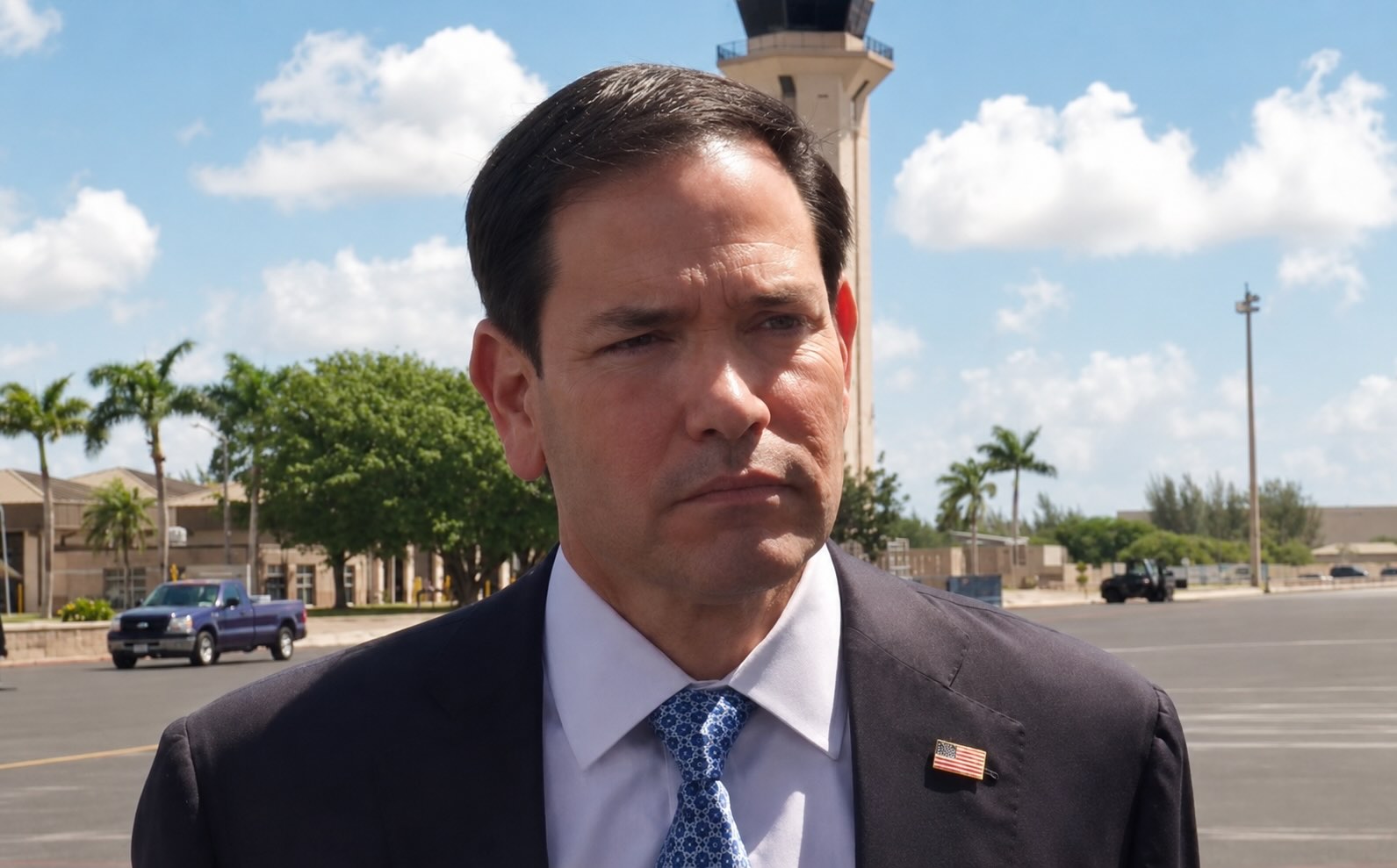
US Secretary of State Marco Rubio has arrived at a NATO foreign ministers’ meeting in Sweden with a message that places new pressure on European allies: Washington expects more support over Iran, higher defence spending, and a clearer European role in sustaining deterrence against Russia.
The meeting in Helsingborg, taking place on 21–22 May, was formally convened to prepare for NATO’s Ankara summit and to review defence investment, industrial production and support for Ukraine. But Rubio’s intervention has shifted the focus towards a wider dispute over burden-sharing and the extent to which European allies are willing to support US military operations beyond the European theatre.
Before travelling to Sweden, Rubio said President Donald Trump was “very disappointed” with NATO members that had refused to allow the United States to use bases on their territory during the war with Iran. According to Reuters, Rubio singled out Spain, saying that if a NATO member denied access to bases, it raised questions about its place in the alliance.
The remarks go beyond a bilateral dispute with Madrid. They touch on a larger question that has become more difficult for NATO: whether European allies can maintain a common position when US security priorities extend from Russia to the Middle East, the Arctic, China and energy routes through the Gulf.
For European governments, the immediate dilemma is that Russia remains the central military threat to the continent. NATO’s eastern flank requires air defence, troop rotations, ammunition stocks, surveillance, logistics and support for Ukraine. Yet Washington is also pressing allies to show solidarity over Iran and the Strait of Hormuz, where disruption could affect global energy markets and European economies.
NATO Secretary General Mark Rutte framed the Helsingborg meeting around capability rather than declarations. In his pre-ministerial press conference, he said the question was no longer whether allies needed to do more, but how quickly they could turn commitments into real military capability. He pointed to defence investment, warfighting capacity and industrial production as the core issues ahead of the Ankara summit.
That message reflects a practical problem for Europe. Defence spending has increased across the alliance, but higher budgets do not automatically produce missiles, drones, artillery shells, air-defence batteries or trained forces. Many European countries are still trying to rebuild stockpiles depleted by support for Ukraine, while also preparing for the possibility of a reduced or less predictable US role.
Rubio’s visit comes after Reuters reported that the United States was preparing to reduce the pool of American capabilities made available to NATO in a major crisis. That report has reinforced European concerns about whether Washington is moving towards a more selective approach to alliance commitments, even as Trump has separately pledged additional troops to Poland.
The result is an increasingly complicated picture. Some US deployments may reinforce parts of NATO’s eastern flank, while the broader American commitment to European defence becomes less certain. For NATO planners, that distinction matters. Deterrence depends not only on the presence of troops, but on the availability of air power, command structures, logistics, strategic lift and reinforcement capacity in a crisis.
The Iran issue adds a further layer. The Trump administration has presented allied access to bases as a test of solidarity. Some European governments, however, are cautious about being drawn more directly into a Middle East conflict, particularly if the legal basis, strategic objectives and exit conditions remain unclear. Spain’s refusal to permit the use of bases has now become a visible example of that tension.
At the same time, Europe cannot ignore the economic consequences of instability in the Gulf. Any prolonged disruption in the Strait of Hormuz would affect oil and gas prices, shipping costs and industrial supply chains. Several European states may support maritime security measures in principle, but eastern-flank countries have warned that any Gulf mission must not weaken deterrence against Russia.
This is the real significance of the Helsingborg meeting. NATO is not facing a single burden-sharing dispute. It is confronting several overlapping pressures: Ukraine’s continuing defence needs, Russia’s threat to Europe, US frustration over Iran, uncertainty over American troop posture, and the gap between European spending promises and actual defence production.
For European allies, the message from Washington is clear enough: the US expects more. What remains unclear is what Europe receives in return. If American commitments become more conditional, more bilateral or more dependent on support for US operations outside Europe, NATO’s internal calculations will change.
The alliance is not close to collapse, and no member has an interest in allowing deterrence against Russia to weaken. But Rubio’s visit has underlined that NATO unity now depends on more than agreeing communiqués. It depends on whether allies can reconcile different threat priorities while producing the military capabilities they have promised.
For Europe, the conclusion is direct. Supporting Ukraine, deterring Russia and responding to instability in the Gulf all require resources. If European governments want to preserve influence inside NATO, they will need to show that defence spending can be converted into deployable forces, industrial output and operational resilience. Otherwise, every new crisis will deepen the argument over who carries the burden.