Marine Le Pen’s call for France to leave NATO’s integrated military command has turned a long-running French debate over sovereignty into a live question for European defence planning, at a time when allies are already assessing the reliability of US security commitments.
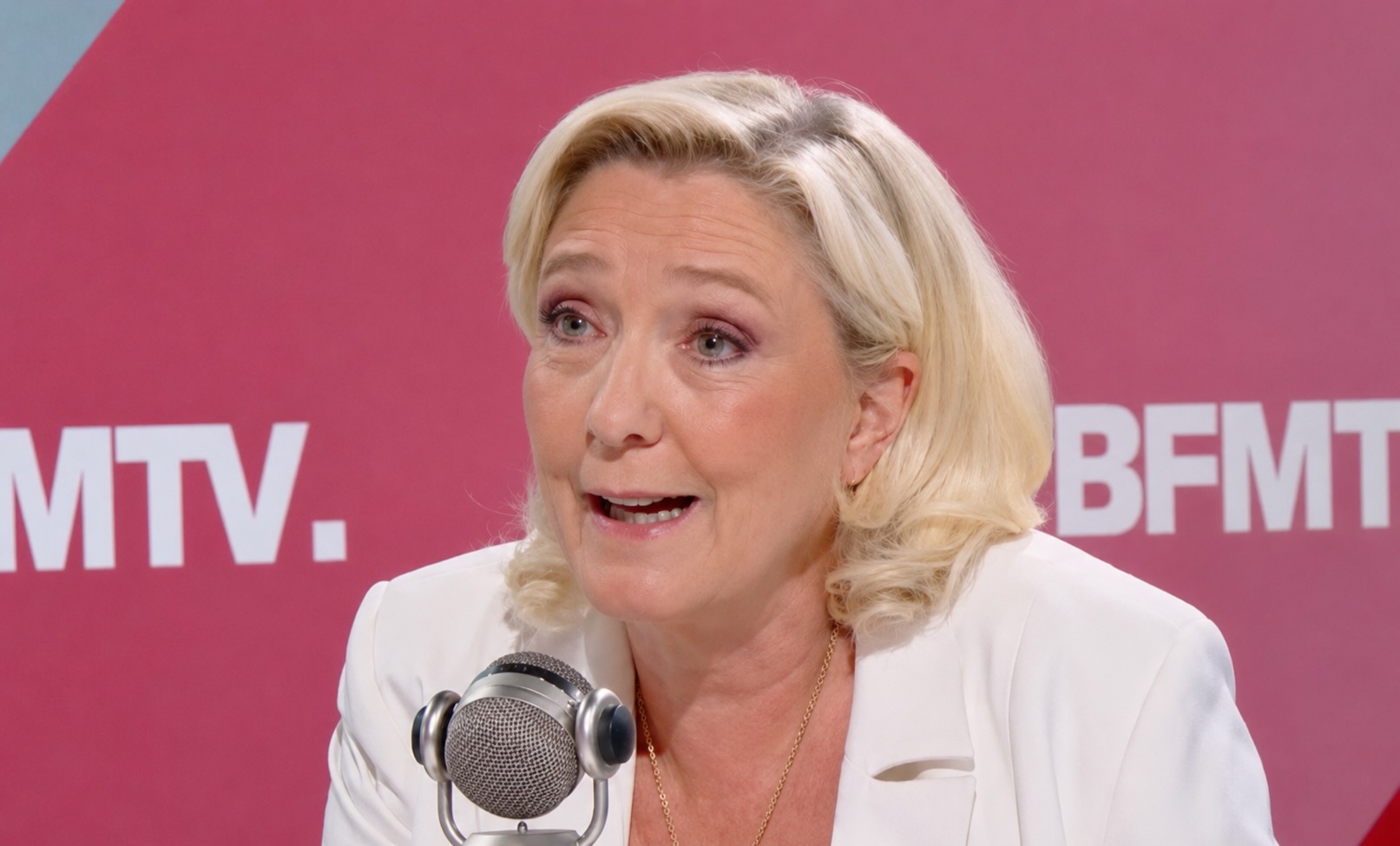
Marine Le Pen has reopened one of France’s most sensitive defence-policy disputes by saying that, if elected president, she would withdraw the country from NATO’s integrated military command while keeping it inside the Atlantic alliance.
Marine Le Pen:
I believe France should withdraw from NATO’s integrated military command.pic.twitter.com/h9z8HBXEhR
— Clash Report (@clashreport) May 22, 2026
The National Rally figure made the remarks as NATO foreign ministers met in Sweden, where allies were discussing deterrence, burden-sharing, Ukraine and the future shape of European security. According to Reuters, Le Pen said France should remain in NATO but leave the command structure, arguing that such a step would not prevent interoperability with allied forces.
The statement is not new in ideological terms. Le Pen has long argued that France’s participation in NATO’s command structure weakens national independence. What makes the intervention more consequential now is timing. It comes as European governments are trying to strengthen NATO readiness, raise defence spending and reduce dependence on Washington, while also facing renewed uncertainty over the direction of US policy under President Donald Trump.
France’s Foreign Minister Jean-Noël Barrot rejected Le Pen’s position as irresponsible, saying NATO unity remained essential in the current security environment. The disagreement illustrates a larger issue for France and its allies: whether strategic autonomy should mean building stronger European capacity within NATO, or loosening France’s role in NATO’s military planning structures.
The distinction matters. France is a founding member of NATO and remains one of Europe’s principal military powers. It is also the EU’s only nuclear-armed member state after the United Kingdom’s departure from the bloc. Any French move away from NATO’s integrated military command would be watched closely by allies, particularly in Central and Eastern Europe, where governments see NATO’s command arrangements as central to deterrence against Russia.
France has a particular history inside NATO. In 1966, President Charles de Gaulle withdrew France from the alliance’s integrated military command, although France remained a NATO member. The decision was framed as an assertion of national sovereignty and strategic independence. France returned to the integrated command structure in 2009 under President Nicolas Sarkozy, while maintaining its independent nuclear deterrent and separate decision-making over the use of French forces.
Le Pen’s proposal would therefore not take France out of NATO. It would not remove France from the North Atlantic Treaty. Nor would it automatically end French military cooperation with allies. But it would change France’s position in NATO planning and command arrangements, at a moment when the alliance is trying to strengthen its ability to move forces, coordinate air defence, protect its eastern flank and support Ukraine.
The political significance is sharpened by France’s domestic calendar. Le Pen’s National Rally remains a central force in French politics, and its foreign-policy positions are closely scrutinised by European partners. A future French president favouring withdrawal from NATO’s command structure would introduce uncertainty into alliance planning even before any formal decision were taken.
The debate also comes against a wider argument about US reliability. At the same NATO meeting, US Secretary of State Marco Rubio said the alliance had to be “good for all involved”, according to Reuters. European capitals are already adjusting to pressure from Washington for higher defence spending and a larger European share of conventional deterrence.
Le Pen’s argument seeks to use that uncertainty to support a sovereignty case: if Europe depends too much on US decisions, France should reduce its exposure by reclaiming more independent control. The counter-argument is that a weaker French role inside NATO command would not reduce US influence so much as complicate European coordination at a time when Europe needs more, not less, military integration.
This is the central tension in French strategic culture. Paris has often argued that Europe must be able to act independently when necessary. That position has broad roots beyond the National Rally. President Emmanuel Macron has also pressed for stronger European defence capabilities and more strategic autonomy. The difference is that Macron’s approach has largely sought to strengthen European capacity while keeping France embedded in NATO’s structures. Le Pen’s approach would move France towards a more detached posture.
For NATO allies, the operational question would be practical rather than philosophical. How would France participate in joint planning? Would French forces remain fully available for NATO defence plans? How would command relationships work in a crisis? Would France still contribute in the same way to alliance deterrence, air policing, rapid reinforcement and exercises? These are not abstract matters when NATO is adapting its posture after Russia’s full-scale invasion of Ukraine.
For the EU, the issue is also political. France has been one of the strongest advocates of a more capable European defence industry and greater European responsibility. If that argument becomes associated with distancing France from NATO command arrangements, it may weaken confidence among member states that rely primarily on the Atlantic alliance for security.
Le Pen’s remarks do not change French policy today. They do, however, show that France’s NATO position may become a live issue in the next presidential contest. That matters because alliance credibility depends not only on budgets and military plans, but on the expectation that major members will remain politically committed to the structures that make collective defence work.
At a time when Europe is being asked to carry more of its own defence burden, the French debate over NATO command is no longer only a question of national sovereignty. It is a question of alliance reliability.