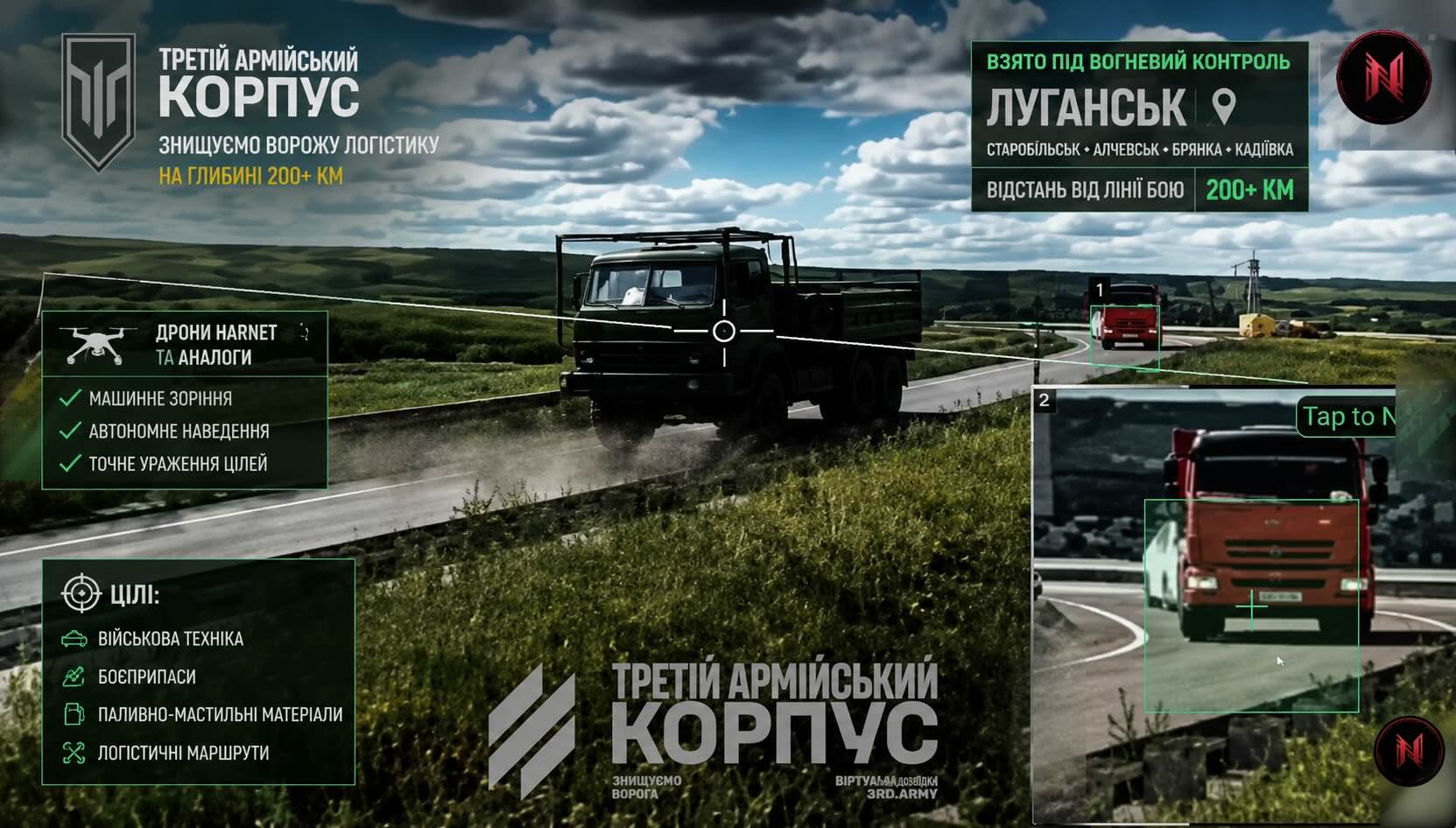
Ukraine’s Third Army Corps has claimed that its drone units have placed key Russian military logistics routes in occupied Luhansk region under surveillance and fire control, including areas previously regarded by Moscow as deep rear territory.
The announcement, reported by the Kyiv Independent, followed the release of footage purporting to show Ukrainian drones striking Russian vehicles, ammunition sites and logistical assets across occupied Luhansk. According to the corps, the operation reached the area of the Izvaryne checkpoint on the Russian-Ukrainian border, more than 205 kilometres from the line of combat.
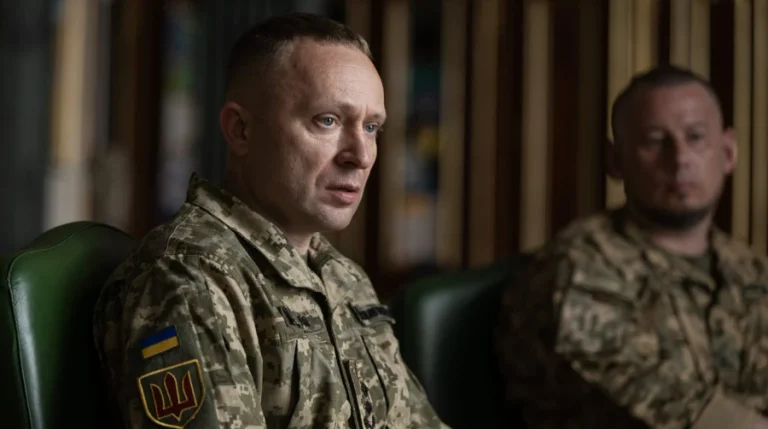
If confirmed, the strikes would mark a significant extension of Ukraine’s tactical drone campaign into one of Russia’s most important occupied rear areas. Luhansk, Starobilsk, Alchevsk, Brianka and Kadiivka were named by corps commander Brigadier General Andriy Biletskyi as areas now within reach of Ukrainian unmanned systems, according to Ukrinform.
The claim should be treated with caution until independently verified. However, it is consistent with a wider pattern seen in recent weeks, in which Ukrainian drone units have targeted Russian supply roads, transport hubs and staging points far beyond the immediate front line. Ukrainian outlet United24 Media also reported the Third Army Corps claim that drone operators had reached targets near Izvaryne.
The significance lies less in the destruction of individual vehicles than in the pressure such operations place on Russian movement. Military logistics in occupied Luhansk depends on predictable road routes linking depots, repair points, ammunition stores, troop concentrations and border crossings. If Ukrainian drones can repeatedly reach these routes, Russian units may be forced to disperse, reroute, conceal movements, or move supplies at a lower tempo.
Luhansk has particular operational importance. It was one of the first major cities seized by Russian-backed forces in 2014 and has served for years as a key administrative, military and logistical centre for Russia’s occupation structure in eastern Ukraine. Its distance from the active front made it less exposed to short-range Ukrainian systems than towns nearer the battlefield. That assumption now appears to be under challenge.
The reported strike near Izvaryne is especially notable because the crossing has long been part of the logistical connection between Russia and occupied Luhansk. A Ukrainian ability to threaten assets in that area would suggest that some small or medium-range drones are now being used in ways that blur the line between tactical and operational reach.
Recent Ukrainian drone operations around the Debaltseve-Alchevsk route point in the same direction. Reports citing Ukrainian drone units said the route had been struck by unmanned systems, with vehicles burning and secondary explosions visible in footage circulated online. The route is an important axis for Russian movement between occupied parts of Donetsk and Luhansk, and Ukrainian media reported that drone strikes had disrupted traffic along the Debaltseve-Alchevsk highway.
The evolving picture is one of a battlefield in which rear-area safety is diminishing. For Russian forces, the problem is not simply whether individual drones can be intercepted. It is whether air defence, electronic warfare, camouflage and movement discipline can be applied across hundreds of kilometres of roads, depots and staging areas. That is a different challenge from defending fixed sites.
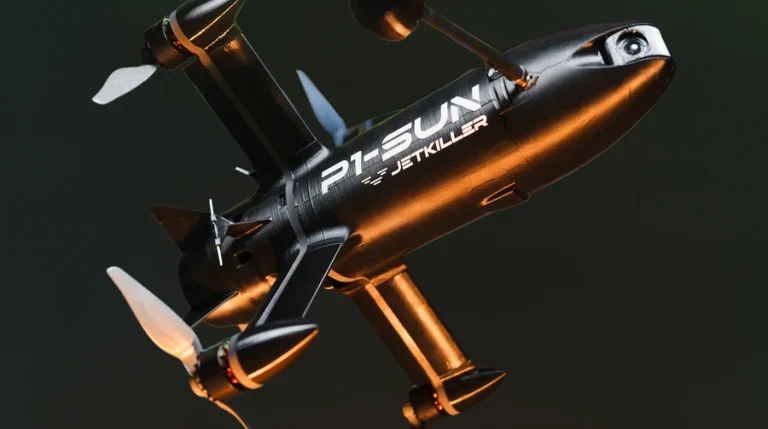
The reported use of AI-assisted drones such as the Hornet has added to the difficulty. Defence-focused Ukrainian outlet Defence Express has described the Hornet as using high levels of autonomy, visual navigation and target detection algorithms. Such features may allow drones to operate in areas where satellite navigation or conventional control links are unreliable.
More broadly, Ukraine has been moving towards AI-assisted drone systems to overcome Russian electronic warfare. Reuters reported in 2024 that Ukraine was deploying AI tools to help drones maintain accuracy in jammed environments, while later reporting has described the growing use of onboard image recognition to allow drones to continue towards targets even when operator control is disrupted.
Ukraine has also been experimenting with low-cost methods to extend drone range, including airborne relay systems and carrier platforms. Some reports have described balloon-assisted concepts that could allow smaller strike drones or communications relays to be moved deeper into Russian-controlled territory before release. Such methods remain difficult to verify in individual cases, but they reflect a broader trend: Ukraine is seeking ways to combine inexpensive platforms with more sophisticated guidance and targeting.
The Third Army Corps’ announcement also has an information dimension. It was presented as a response to Russian claims of full control over Luhansk region. By releasing footage from deep within occupied territory, Ukraine is seeking to demonstrate that Russian control on the ground does not necessarily mean control of the airspace immediately above it.
For Moscow, the operational question is whether this remains a series of isolated strikes or becomes a persistent interdiction campaign. If Ukrainian drone units can continue hitting transport routes, ammunition movement and rear-area vehicles, the effect could be cumulative. It may slow reinforcement, complicate rotation, increase fuel and ammunition costs, and force Russian commanders to devote more resources to rear-area defence.
For Ukraine, the challenge is scale. The value of such operations depends on repetition, target selection and integration with wider battlefield objectives. Drone strikes can disrupt logistics, but they do not by themselves replace artillery, manoeuvre forces or sustained pressure along the front. Their impact becomes more serious when they are used to isolate sectors, delay reserves and degrade Russian freedom of movement before or during ground operations.
The reported Luhansk operation therefore fits into a wider shift in the war. Ukraine is not only using drones for front-line reconnaissance and trench attacks, but increasingly as tools of operational disruption. Roads, depots and border-linked supply corridors are becoming targets for relatively small systems once associated mainly with short-range tactical use.
Whether this marks a durable Ukrainian advantage will depend on Russia’s response. Improved camouflage, decoy traffic, electronic warfare, mobile air defence and stricter movement discipline could reduce the effect. Yet the rapid spread of Ukrainian drone tactics across different sectors suggests that adaptation is already taking place faster than many conventional military systems can respond.
The claim that Ukrainian drones have reached Izvaryne does not mean that Ukraine is close to retaking Luhansk by ground assault. It does indicate, however, that parts of the occupied region which Russia had treated as rear territory are now exposed to regular Ukrainian surveillance and strike capability. In a war increasingly shaped by unmanned systems, that distinction matters.