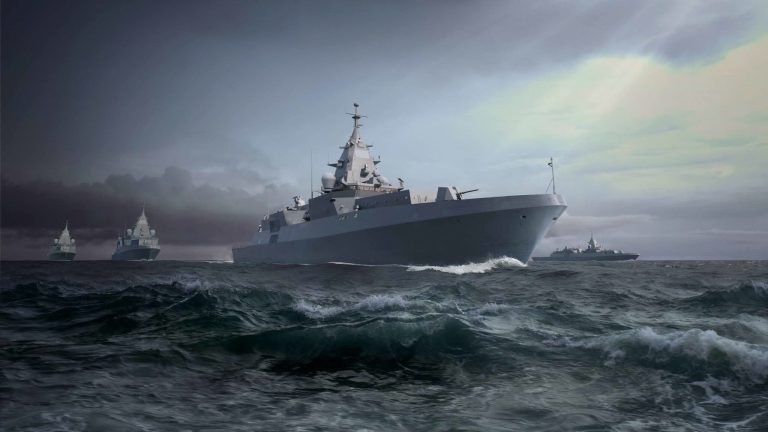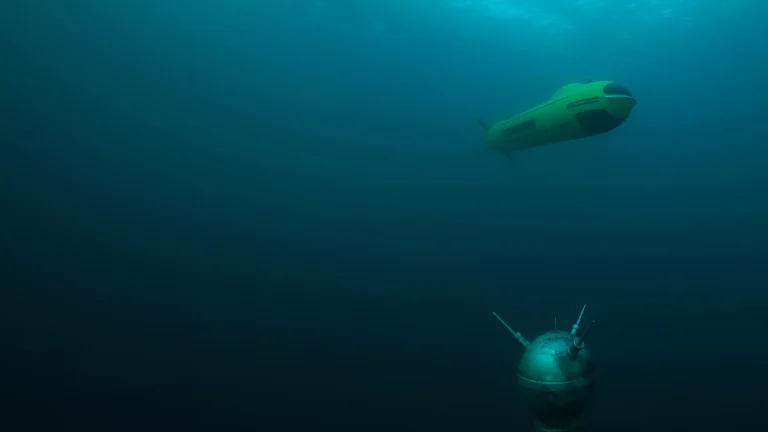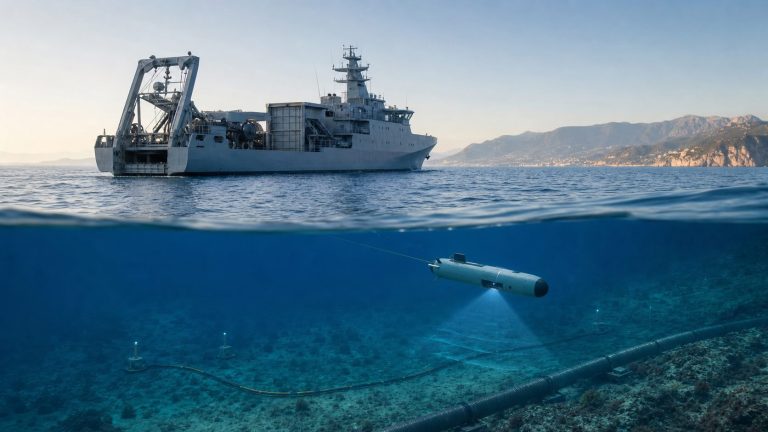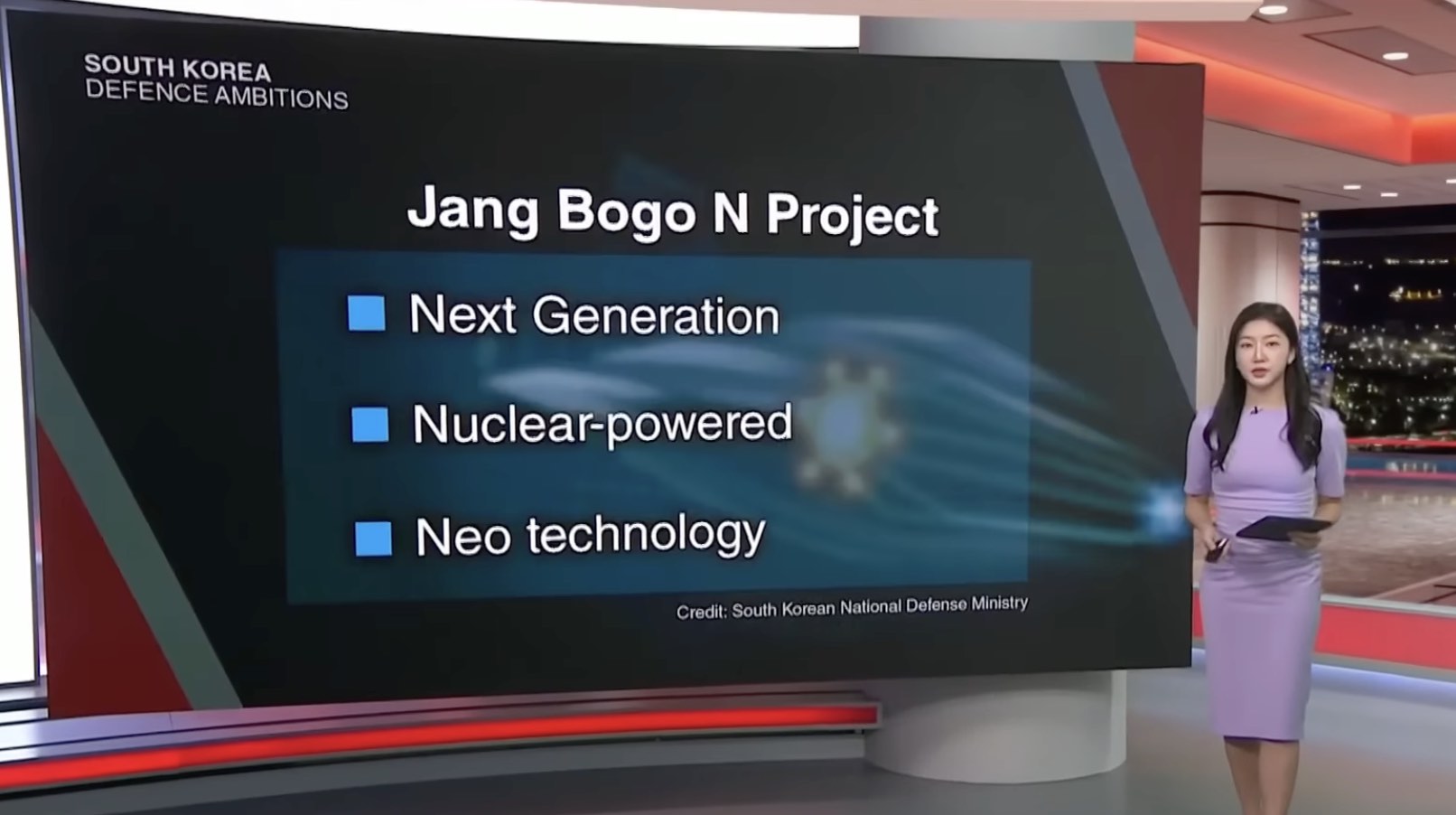
The announcement marks a significant evolution in Seoul’s military planning. Long constrained by political sensitivities, non-proliferation concerns and dependence on conventional submarine technology, South Korea now appears determined to build a domestically designed nuclear-powered attack submarine fleet capable of operating across the wider Indo-Pacific.
The programme, known as Jang Bogo N, aims to produce South Korea’s first nuclear-powered submarine by the mid-2030s, with operational deployment expected later in the decade. Officials have emphasised that the vessels will use low-enriched uranium and remain compliant with international non-proliferation obligations, while maintaining close co-operation with both the United States and the International Atomic Energy Agency.
For Seoul, the rationale is increasingly straightforward.
North Korea’s naval modernisation has accelerated in recent years, with leader Kim Jong Un repeatedly highlighting ambitions for nuclear-capable submarines and sea-based missile forces. Pyongyang’s efforts, combined with China’s rapidly expanding naval presence and the broader militarisation of the Indo-Pacific, have sharpened concerns among South Korean defence planners.
Unlike conventional diesel-electric submarines, nuclear-powered vessels can remain submerged for months rather than weeks, travel greater distances at sustained speed and conduct intelligence-gathering missions far from home waters. These capabilities are particularly attractive to a country whose strategic environment is becoming increasingly maritime in nature.
The decision also reflects South Korea’s growing confidence in its industrial capabilities.
Over the past two decades, the country has transformed itself into one of the world’s leading naval shipbuilders. Companies such as Hanwha, and HD Hyundai Heavy Industries, have developed sophisticated conventional submarines, destroyers and amphibious vessels for both domestic and export markets. Defence officials argue that the country’s advanced nuclear engineering sector and shipbuilding expertise make the transition to nuclear propulsion a challenging but achievable objective.
Yet significant obstacles remain.
Nuclear-powered submarines rank among the most technically complex military platforms ever constructed. Only a handful of nations have successfully developed them. Reactor design, crew training, maintenance infrastructure and safety regulation require enormous financial and technological investment.
The diplomatic dimension may prove equally demanding.
Although Washington signalled support for Seoul’s pursuit of nuclear-powered submarines following high-level discussions between the two allies, practical negotiations over fuel supply, technology transfer and regulatory oversight are continuing. Delegations from both countries are expected to engage in further discussions this month as they seek to convert political agreements into operational arrangements.
The programme also raises broader questions about regional stability.
China is likely to view the emergence of a South Korean nuclear-powered submarine fleet with caution, particularly as strategic competition intensifies throughout East Asia. Meanwhile, Japan will closely monitor developments, even if Seoul insists the initiative is defensive in nature.
Supporters argue that such concerns are outweighed by the changing security environment. They note that South Korea already faces an adversary pursuing nuclear weapons, ballistic missiles and increasingly capable naval platforms. In that context, enhancing undersea endurance and surveillance capabilities is viewed less as escalation than adaptation.
Financial markets have largely interpreted the announcement as a vote of confidence in South Korea’s defence-industrial future. Shares in major shipbuilders rose following the government’s unveiling of the programme, reflecting investor expectations that the project could generate substantial technological spillovers and strengthen the country’s position in global naval exports.
Whether the first submarine enters service on schedule remains uncertain. Large defence projects frequently encounter delays, budget pressures and technical setbacks. Nevertheless, the significance of Seoul’s decision lies less in the precise timeline than in the strategic signal it sends.
For decades, nuclear-powered submarines were discussed in South Korea as a distant aspiration. Today they have become official policy.
In an increasingly contested Indo-Pacific, Seoul is making clear that it intends to play a larger role beneath the waves as well as above them. The result could reshape not only South Korea’s navy, but the balance of maritime power across Northeast Asia for decades to come.