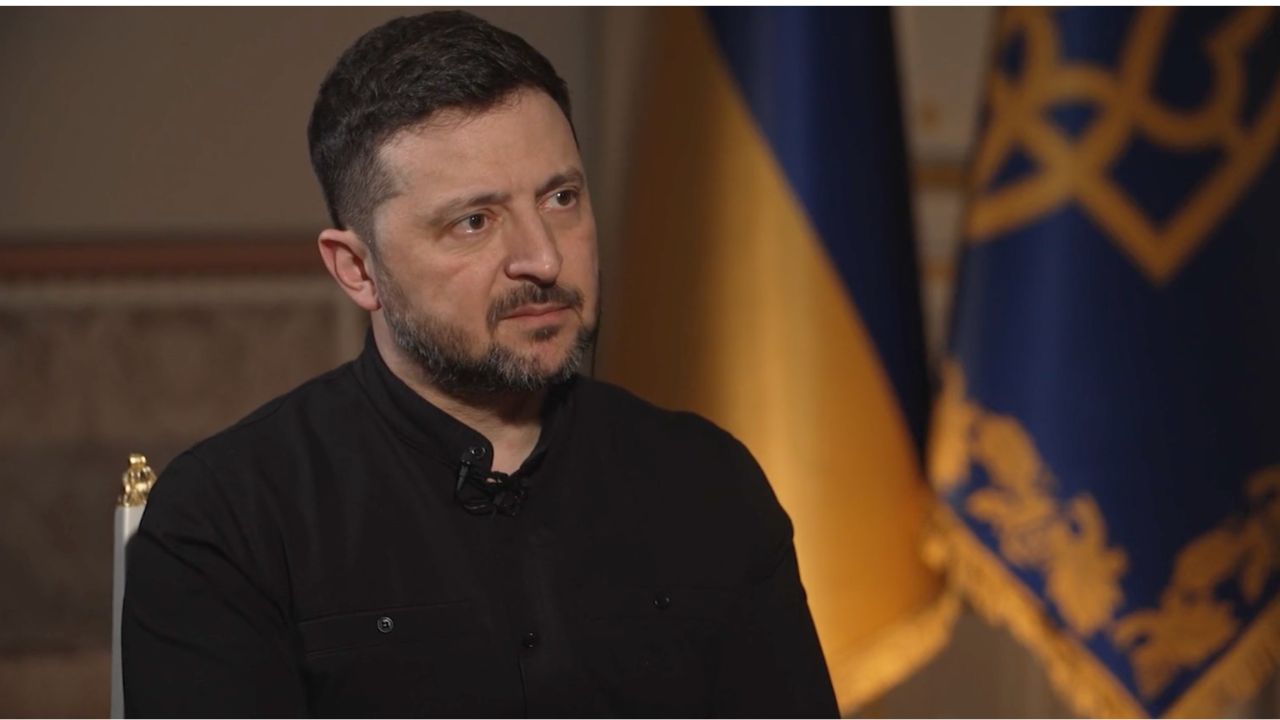
The Ukrainian president’s open letter to the Russian president, published by his office on 4 June, is a rare direct address to Putin and an attempt to shift the diplomatic focus back to Kyiv at a time when Washington is heavily absorbed by the conflict with Iran.
The letter’s timing is central to its significance. Zelenskyy wrote that Ukraine should not wait for the United States to return its attention to Europe, arguing that diplomacy should begin immediately from the current front line. That line is important because it suggests Kyiv is not proposing a symbolic appeal for talks, but a negotiated process based on the military reality that exists today.
The proposal includes a full ceasefire for the duration of negotiations, monitored by the United States, and a full exchange of prisoners. Zelenskyy also called for the return of civilians and children taken from Ukraine during the war, and suggested that talks could be hosted by Switzerland, Turkey or Arab states. He ruled out Moscow and Kyiv as venues.
The Kremlin has acknowledged receipt of the letter. Dmitry Peskov, Putin’s spokesman, said the Russian president had been briefed on it and had reviewed it, while indicating that Putin was likely to address the matter during his appearance at the St Petersburg International Economic Forum. That response does not amount to acceptance, but it means Moscow cannot easily pretend the proposal does not exist.
For Ukraine, the letter serves several purposes at once. It presents Kyiv as the side openly offering direct talks while maintaining its refusal to accept Russian terms imposed by force. It also places pressure on Moscow to answer a concrete proposal rather than continue speaking in general terms about negotiations.
The appeal comes after a period in which Ukraine has sought to improve its negotiating position through longer-range strikes inside Russia. Zelenskyy said earlier this week that Ukraine’s ability to hit military, energy and logistics targets deep in Russian territory allows Kyiv to negotiate “as equals”. That point is implicit in the letter: diplomacy is being offered not from weakness, but from a position in which Ukraine is trying to show that Russia cannot end the war on its own terms.
This matters for Europe because the diplomatic environment around the war is changing. Since the start of the full-scale invasion, Kyiv has relied heavily on US military and political backing. Under President Donald Trump, Washington’s approach to the war has become more transactional and less predictable, while the conflict with Iran has absorbed more of America’s attention. Zelenskyy’s letter can therefore be read as an attempt to prevent Ukraine from becoming a secondary file in US foreign policy.
It is also a message to European capitals. If direct talks are to take place, Ukraine wants Europe involved in any future security architecture rather than left outside a US-Russia conversation. The letter refers to the need for reliable security guarantees involving the United States and European partners. That reflects a long-standing Ukrainian concern that any ceasefire without enforceable guarantees could simply allow Russia to regroup.
For Brussels, Paris, Berlin and London, the proposal raises a difficult question: whether Europe is ready to provide the political and military backing needed to make any negotiation credible. A ceasefire monitored by Washington may be part of the plan, but Ukraine’s longer-term security would require European commitments on air defence, military production, sanctions enforcement and post-war guarantees.
Russia’s likely calculation is different. Putin has repeatedly presented negotiations as possible only if Ukraine accepts conditions that would lock in Russian gains and limit Kyiv’s sovereignty. Moscow may therefore try to portray Zelenskyy’s letter as a public-relations exercise while continuing to demand political concessions before any leaders’ meeting. The Kremlin may also use the proposal to test divisions between Ukraine, Europe and the United States.
The most immediate issue is whether a ceasefire can be separated from a final settlement. Ukraine is offering a temporary cessation of fire during negotiations. Russia has previously used ceasefire discussions to seek relief from military pressure while insisting on terms that Kyiv and its partners regard as unacceptable. Any pause would therefore need monitoring, enforcement and consequences for violations.
The prisoner-exchange element may be more practical. All-for-all exchanges have long been discussed and could provide a limited confidence-building measure even if wider talks fail. The return of Ukrainian civilians and children taken by Russia would be more difficult, but it remains central to Kyiv’s war aims and to international legal scrutiny of Russian conduct.
Zelenskyy’s letter does not mean negotiations are close. It does, however, change the public diplomatic record. Ukraine has placed a direct offer before Putin, named possible venues, proposed initial steps and tied the process to the current front line. The Kremlin now has to decide whether to engage, reject the proposal, delay, or set conditions that expose how far apart the two sides remain.
For Europe, the issue is not only whether Putin answers. It is whether the continent can help shape what comes next. If diplomacy moves without adequate European involvement, the result could be a settlement process driven mainly by Washington and Moscow. If Europe wants a say in Ukraine’s security future, it will have to match political support with concrete guarantees and military capacity.
The letter is therefore less a breakthrough than a test. It tests Putin’s willingness to discuss an end to the war directly. It tests Washington’s ability to stay engaged while focused elsewhere. And it tests whether Europe can act as a security actor rather than a spectator in the next phase of the war.