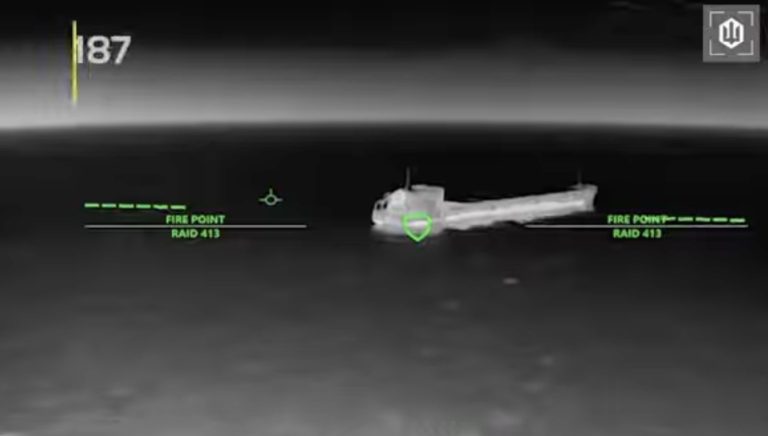
President Volodymyr Zelenskyy said on Saturday that Ukrainian drones had struck Russian naval arsenals and a base in Kronstadt, near St Petersburg, during an overnight operation on 5–6 June. He said the drones had travelled around 1,000 kilometres to reach targets in the St Petersburg region, while other Ukrainian drones struck an oil depot in Russia’s Krasnodar region after flying approximately 500 kilometres. The operation, he said in a statement on the strikes, was carried out jointly by the Armed Forces of Ukraine, the Security Service of Ukraine and Ukraine’s military intelligence directorate.
“This war must be ended. But the Russian leader wants to fight. Therefore Ukrainian sanctions for this aggression are working,” Zelenskyy said, describing Ukraine’s deep-strike operations as “long-range sanctions”.
The attacks came only hours after Russian President Vladimir Putin used the St Petersburg International Economic Forum to downplay the effect of Ukrainian strikes on Russian territory. Putin acknowledged that such attacks caused damage, but argued that they would not create decisive problems for Russia’s economy or armed forces. He said Moscow’s response should focus on strengthening Russian air defences.
The timing of the Ukrainian operation challenged that message. While the Kremlin sought to use the economic forum to project resilience, drones were reported over the Leningrad region and around St Petersburg, bringing disruption to one of Russia’s most important political and economic centres. According to reports from the region, authorities warned residents not to go outside as the drone attack developed.
Kronstadt, situated on Kotlin Island in the Gulf of Finland, is one of Russia’s most historically important naval locations and remains closely associated with the Baltic Fleet. Reports that access to and from the city was restricted during the attack reinforced the symbolic and practical weight of the operation. Russian officials said 141 drones were downed in the Leningrad region and 376 across Russia, while Ukraine said it had intercepted 249 of 272 Russian drones launched against Ukrainian territory overnight.
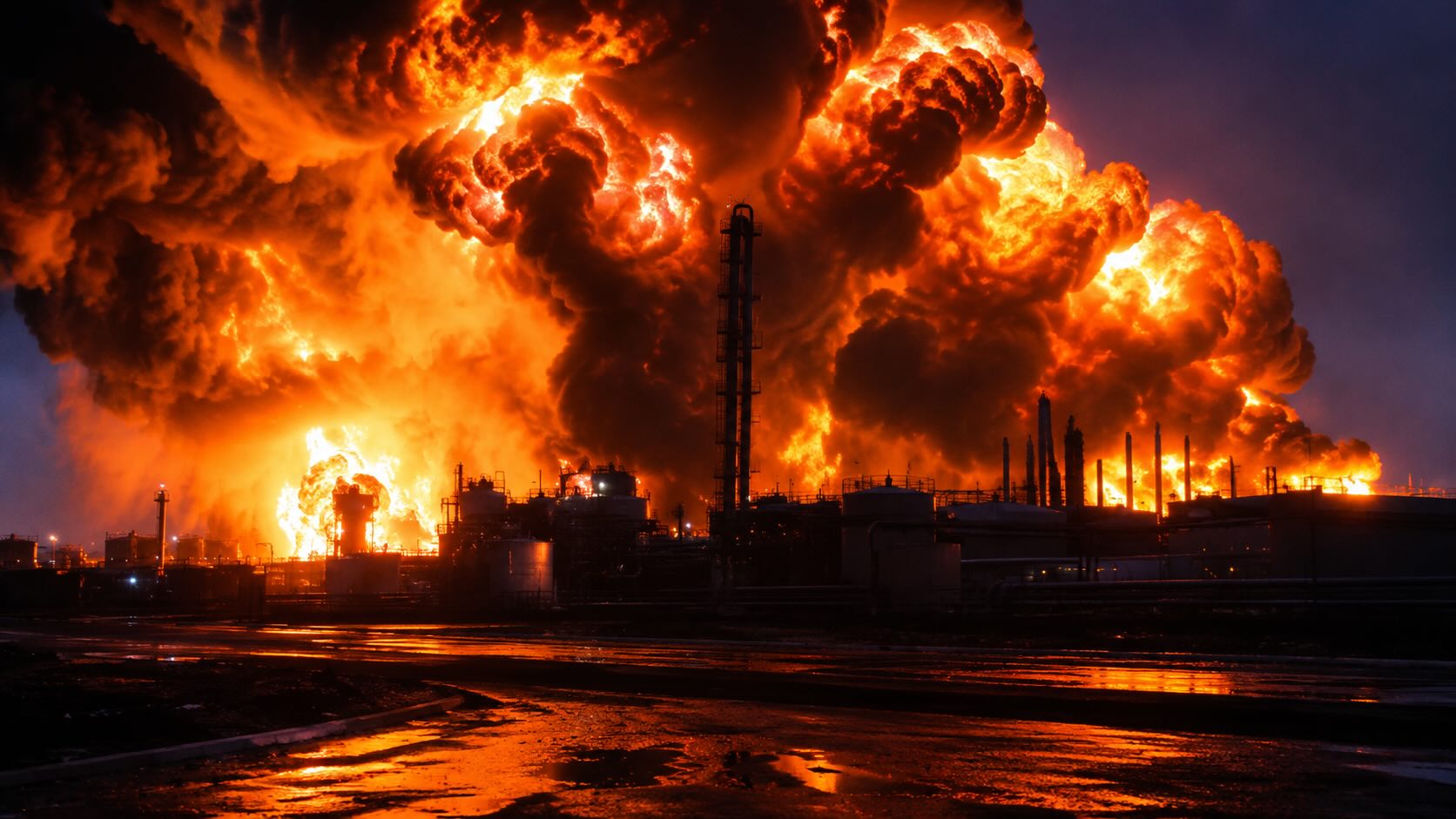
The Ukrainian strike was not limited to the Leningrad region. Ukrainian and Russian sources reported attacks across several Russian regions and Russian-occupied Ukrainian territory. Fires were reported at oil depots, while port infrastructure was said to have been hit in Mariupol and Kronstadt.
The reported strike on Mariupol is strategically relevant because of Russia’s effort to integrate occupied parts of southern Ukraine into a logistics corridor linking Russia with occupied Crimea. Since 2022, Moscow has sought to use the occupied land corridor through southern Ukraine, together with ports on the Sea of Azov, to support military and civilian transport to Crimea.
Ukraine has increasingly targeted elements of that network. Roads, railways, ports, fuel depots and maritime infrastructure in occupied southern Ukraine have become part of Kyiv’s wider campaign to complicate Russian logistics. If these routes remain under threat from Ukrainian drones and missiles, Russia’s ability to move fuel, ammunition, equipment and personnel between Rostov region, occupied Donetsk region, Mariupol and Crimea becomes less secure.
The Sea of Azov is also central to this calculation. Russia has long sought to turn the sea into a controlled internal zone, particularly after its full-scale invasion allowed it to occupy the Ukrainian coast from Mariupol to Berdiansk and beyond. Ukraine’s ability to threaten ports and vessels in the Azov area weakens that assumption and raises the cost of maintaining control over the occupied coastline.
The latest strikes followed earlier Ukrainian operations against Russian naval and energy assets near St Petersburg. Earlier this week, Ukrainian drones targeted the St Petersburg oil terminal and military-linked sites around the city. The region contains major port, refinery and export infrastructure, making it a high-value target for Ukraine’s long-range campaign.
For Kyiv, these strikes serve several purposes. Militarily, they aim to disrupt depots, naval facilities, fuel supplies and transport nodes that support Russia’s war effort. Economically, they increase repair costs and force Moscow to divert resources to air defence across a wider area. Politically, they demonstrate that the war can no longer be contained within Ukraine’s territory or Russia’s border regions.
The strikes also expose a problem for Moscow’s domestic messaging. Putin has repeatedly presented Russia as economically stable despite sanctions, battlefield losses and wartime expenditure. Yet repeated drone attacks near St Petersburg, one of the country’s most visible cities and the venue for a flagship international economic forum, make that claim more difficult to sustain.
Ukraine’s approach reflects the changing character of the war. With Russia continuing mass missile and drone attacks against Ukrainian cities, power facilities, industrial sites, ports and transport infrastructure, Kyiv has expanded its own deep-strike capacity using domestically produced drones. These systems allow Ukraine to reach refineries, depots, ports and military facilities hundreds of kilometres inside Russia, even when Western-supplied long-range weapons remain politically constrained.
Recent Russian attacks have continued to target Ukrainian civilian and industrial infrastructure. A Russian drone strike on a dairy factory in Kyiv region killed four people and wounded several others, while Ukrainian officials have also reported attacks on food warehouses, a school, an ambulance, port facilities and medical infrastructure. Against that background, Kyiv argues that strikes on Russian military and energy infrastructure are part of an effort to degrade Moscow’s ability to continue the war.
The full extent of the damage in Kronstadt, Lomonosov, Mariupol and Krasnodar has not been independently confirmed. Russian authorities have generally acknowledged drone activity while limiting public information about damage to military facilities. Ukrainian officials, however, have framed the operation as another demonstration that Russian rear areas are now exposed to sustained pressure.
The broader implication is clear. Russia’s war of attrition is no longer confined to the front line or to Ukrainian cities under Russian attack. Ukraine is seeking to impose cumulative costs on Russia’s military economy, logistics and energy infrastructure. That does not mean the war is close to ending. It does mean that continued Russian escalation is likely to be met by an expanding Ukrainian campaign against targets that support Moscow’s ability to fight.
For Russia, the challenge is no longer only the defence of occupied territory in Ukraine. It is also the defence of ports, refineries, naval bases, arsenals and transport corridors across an increasingly wide area of its own territory and the territories it occupies.